

By Mike Carsten OFS
Introduction
Through a Franciscan lens, Christmas is more than a celebration of Christ’s birth—it is a profound call to embody divine humility and solidarity with the marginalized. St. Francis of Assisi’s timeless spirituality resonates within Christianity and offers a bridge for ecumenical and inter-religious dialogue. The story of Greccio and the Nativity invites people of all traditions to reflect on the shared values of simplicity, humility, and care for the vulnerable. This article explores the Franciscan approach to Christmas, enriched by its connection to a preferential option for the poor, drawing insights from interfaith values and the transformative power of compassion.
The Greccio Nativity: A Universal Message of Humility
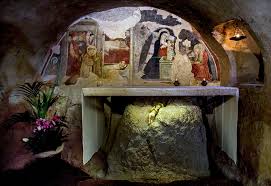
St. Francis of Assisi’s creation of the first Nativity scene in Greccio, Italy, in 1223 transcends its Christian origins. In staging the birth of Christ amidst a humble manger with livestock, Francis sought to awaken a profound sense of shared humanity. This act emphasized that God chose to enter the world not through power or wealth but in utter simplicity and poverty. For Francis, the manger was not just a Christian symbol—it was a universal emblem of humility and the dignity inherent in all life (Thomas of Celano, First Life of St. Francis).
The Greccio reenactment invites reflection across faith traditions. In Judaism, humility is extolled as a central virtue (Proverbs 22:4), while Islam emphasizes care for the vulnerable and an egalitarian view of humanity (Qur’an 49:13). Likewise, Buddhist teachings on simplicity and detachment from materialism align with Francis’s message of Christ’s humble birth (Buddha’s Dhammapada). Focusing on shared values, the Nativity scene becomes a space where ecumenical and inter-religious communities can gather in solidarity and dialogue.
A Preferential Option for the Poor
At its heart, the Christmas story aligns with a “preferential option for the poor”—a principle that prioritizes the needs of society’s most vulnerable. The birth of Christ in a manger speaks powerfully to God’s identification with the marginalized. Francis’s life and teachings echoed this commitment, as he chose to live among the poor, serving them with humility and love (Bonaventure, Major Life of St. Francis).
In today’s world, this message remains urgent. Whether advocating for economic justice, addressing systemic inequality, or extending care to those displaced by conflict, the Nativity invites us to engage in transformative action. The Greccio Nativity was not merely a reenactment—it was a call to see the face of God in the poor and to respond with compassion and justice (Pope Francis, Fratelli Tutti).
The Altar: A Place of Rebirth and Solidarity
The Franciscan tradition connects the manger to the altar, highlighting the Eucharist as the community’s perpetual rebirth of Christ. The altar, adorned with the Nativity scene during Christmas, symbolizes the unity of divine love and human dignity. This connection challenges believers to embody Christ’s humility and extend it through acts of justice and mercy (Springer Link: Theological Reflections on Franciscan Traditions).
In this light, the Eucharist becomes not just a sacred ritual but a reminder to address the pressing needs of our world. For Francis, celebrating Mass over the manger was a bold declaration that Christ is present wherever people strive to uplift the poor and heal the broken. This message transcends denominational boundaries, inviting all who seek justice to find common ground.
Interfaith Reflections on Poverty and Justice
The Nativity story resonates with the ethical teachings of many faith traditions. In Judaism, the concept of tikkun olam (repairing the world) calls for addressing poverty and inequality (Mishnah Avot 2:21). Islam’s zakat (charitable giving) underscores the obligation to care for the poor (Qur’an 2:177), while Hinduism’s principle of dāna emphasizes selfless giving (Bhagavad Gita 17:20). These shared commitments to justice and compassion echo Francis’s vision of Christmas as a time for humility and service.
Modern interfaith efforts have embraced these shared values. Pope Francis’s encyclical Fratelli Tutti calls for global solidarity and dialogue, urging people of all faiths to unite in caring for the vulnerable (Pope Francis, Fratelli Tutti). This vision aligns seamlessly with St. Francis’s teachings, making the Nativity a powerful symbol of unity in diversity.
The Call to Action
Christmas is not merely a historical event but an ongoing invitation to embody divine love and solidarity with the poor. The Nativity challenges us to examine our lives and communities, asking how to make a “preferential option for the poor a reality.” Whether through advocacy, service, or interfaith collaboration, we are called to reflect the humility of the manger in our actions.
Conclusion
From this Franciscans perspective, Christmas celebrates humility, justice, and solidarity. The Nativity at Greccio offers a universal message that transcends religious boundaries, calling us to embrace a “preferential option for the poor” and to build a more compassionate world. As we gather around the altar or reflect on the manger, may we be inspired to act with humility and love, drawing strength from the shared values that unite humanity.
May the peace and justice of Christ’s birth guide us all this Christmas season.
“Glory to God in the highest, and on earth peace to all people of goodwill.”
Discover more from Chasing The Wild Goose
Subscribe to get the latest posts sent to your email.


Mike,
I believe you have found a perfect place for your talents and God’s gift to you.
MarieAmore
LikeLike