Maine

The roadmap lost its argument miles back, yielding to salt and stone. Now the ceramic warms weathered hands, steam rising against a sky of pearl and slate.

Here in York, Sister Water keeps her steady litany, rolling in over dark, patient rock, each crest breaking into cold white foam, each retreat drawing back the shore like a slow breath.

A soft Atlantic breeze stirs the gray morning, carrying the scent of brine and kelp, saturating the quiet corners of the chest until the soul is washed clean in the salt air.

No compass pointed toward this ledge; no planned itinerary marked the hour. Yet the gray horizon opens wide, turning a mistaken turn into an altar, a straying detour into holy ground.

Blessed error, gentle gift, to lose the planned direction entirely, and find creation waiting with open hands.

The Prophet and the Statesman

The Saintly Paradox of King Louis Mike Carsten OFS's Speechify Podcasts

King Louis IX wore a hair shirt beneath his royal robes while commanding armies that left thousands dead. This jarring contradiction reveals why modern leaders can never use good deeds to offset moral failure.
  1. The Saintly Paradox of King Louis
  2. Why History’s Greatest Heists Vanish
  3. Stop Joining, Start Becoming
  4. Becoming: The Franciscan Path
  5. From Religious Joining to Becoming

A Franciscan Reflection

There is a profound, almost jarring tension at the heart of the Secular Franciscan vocation—one that becomes increasingly apparent after decades of striving to live the Rule. We look to St. Francis of Assisi, who walked away from every ounce of earthly power and privilege to embrace the pure, prophetic ideal of absolute minority. Yet, alongside him, the Church offers us King Louis IX as our co-patron. Louis wore a crown, governed a vast nation, and tragically led armies into crusades that resulted in devastating loss of life.

This juxtaposition is not a historical accident; it is a necessary mirror for those of us called to the secular state. The prophetic ideal of Assisi was born outside temporal structures, but our vocation is forged squarely within them. The true testing ground for our Rule is not a remote hermitage, but the beautiful, demanding realities of marriage, the generations of children and grandchildren gathered around the table, and the quiet responsibilities of local civic life. We cannot simply retreat from the world. We must incarnate the Gospel in its messy, practical realities.

The following reflection explores this Franciscan paradox. Rooted in Catholic moral theology and the essential documents of the OFS, it examines the dangers of the “moral offset” in modern leadership and the uncompromising demands of our vocation. We are challenged to bridge the gap between the prophet and the statesman, demanding a seamless Gospel in a fractured world—remembering always that we are called not to conquer the culture, but to wash its feet.

The Crown and the Hair Shirt: The Life of King Louis IX

To understand the paradox of St. Louis, one must first understand the man beneath the royal regalia. Born in 1214, Louis inherited the French throne at just twelve. His early reign was fiercely protected by his mother, Blanche of Castile, who instilled in him a moral absolute that would define his entire life: “I would rather see you fall dead at my feet,” she told him, “than ever commit a single mortal sin.”

Louis took this to heart. As he grew into his kingship, he became a living contradiction to the despotic monarchs of his era. He possessed the greatest treasury and military in Europe, yet he wore a coarse hair shirt beneath his fine robes. He built the magnificent Sainte-Chapelle in Paris to house the Crown of Thorns, but he also quietly slipped out of his palace to wash the sores of lepers. He personally fed over a hundred destitute citizens from his own table every day.

For Louis, royal power was not a privilege; it was a heavy burden of Christian stewardship. He revolutionized French law by abolishing trial by combat, instituting the presumption of innocence, and forbidding his officials from taking bribes. He famously held an open court under an oak tree in the forest of Vincennes, allowing the poorest serfs to bypass the corrupt nobility and appeal directly to their king for justice.

The Crusader King

Yet, this same man was entirely captive to the tragic theology of his era. In 1244, while suffering from a near-fatal illness, Louis made a vow to take up the cross and liberate the Holy Land. To the 13th-century mind, a crusade was viewed as the ultimate act of caritas (charity) and defensive penance.

In 1248, he launched the Seventh Crusade, mobilizing a massive armada and invading Egypt. After an initial victory at Damietta, the campaign turned into a catastrophic failure. His army was outmaneuvered, starved, and decimated by disease at Mansourah and Fariskur. Thousands of his men were killed or captured, and Louis himself was taken prisoner. Ransomed at an exorbitant price, he did not return home in defeat. Instead, he spent four years in the Levant, humbly rebuilding the defenses of Christian cities like Acre and Jaffa.

Years later, his zeal remained unquenched. In 1270, an aging, frail Louis launched the Eighth Crusade, landing in Tunis under the misguided hope that the local emir might convert to Christianity. Almost immediately upon landing, a fierce epidemic of typhus and dysentery swept through the crusader camp. Thousands died. On August 25, 1270, King Louis IX succumbed to the disease, dying as a penitent on a bed of ashes scattered on the floor of his tent, whispering the words of the Psalmist: “Lord, I will enter into your house…”

Dismantling the “Moral Offset” Trap

Holding these two figures—the unarmed Francis and the Crusader King—together requires confronting a dangerous trap: the idea of a “moral offset.” It can be tempting to look at Louis’s personal charity and use it to excuse his crusades, but doing so risks providing theological cover for the hypocrisy of modern politicians and Church leaders.

Catholic moral theology is absolute: the ends never justify the means, and a good act does not permit or excuse an evil one.

  • No Cover for Modern Hypocrisy: Modern leaders—both secular and religious—often point to their championing of a specific righteous cause (e.g., passing a specific law, funding a charity, or defending a traditional value) to demand a “free pass” for their corruption, aggression, or neglect of the marginalized. St. Louis must never be weaponized to justify this.
  • The Context of Era vs. Modern Accountability: When evaluating Louis, one must acknowledge that he was trapped by the limitations of a 13th-century theology that falsely equated warfare with charity. Modern leaders, however, benefit from centuries of clarified Catholic Social Teaching. They do not have the excuse of medieval ignorance; they are fully accountable for the harm they cause today.
  • Canonizing the Penitent, Not the Policy: The Church canonizes a saint for their interior penitence, their radical prayer life, and their willingness to subject their ego to Christ—not their geopolitical decisions or military strategies. Acknowledging that Louis fed the poor does not make the deaths of tens of thousands in his crusades acceptable. It simply reveals that human beings—even saints—are profoundly fractured.

A Vocation Lived in the World

The Secular Franciscan path is not lived in a hermitage; it is often forged in the family and the local community. The true testing ground for the Rule is within the walls of the home and the daily interactions of ordinary civic life.

Secular Franciscans are called to possess Francis’s radical reliance on God and perfect joy, but must apply it with Louis’s profound sense of stewardship over the souls, resources, and systems entrusted to their care. This means demanding a seamless Gospel. A Secular Franciscan cannot accept compartmentalized leadership or give a pass to leaders who claim to be “pro-life” but ignore the poor, or “pro-peace” but ignore the unborn.

Washing Feet, Not Wielding Swords

The OFS’s essential documents are uncompromising in their call. Article 19 demands that Secular Franciscans be messengers of peace, seeking unity through dialogue. Looking at Louis’s historical failures alongside his intimate charity challenges the modern believer to strip away any remaining combativeness in their own hearts.

St. Francis did not flatter the rich or excuse the violent. The modern Franciscan is called to hold temporal and spiritual leaders accountable to the entire Gospel, stripping away the “cover” of their selective good deeds. The Franciscan is not called to conquer the culture; they are called to wash its feet.

Resources for Further Study

1. The Franciscan Paradox: Prophet vs. Statesman

2. The Messy Reality of Secular Responsibility & The Duty of Justice

  • OFS Rule, Article 15 (Systemic Justice): The Rule calls Secular Franciscans to promote justice through the testimony of their lives and courageous initiatives.
  • The Spiritual Testament of St. Louis: A direct look at how Louis advised his son to rule with justice, lean toward the poor man over the rich man, and govern with compassion—actions born from his secular vocation.

3. The Vocation Lived in the Home

4. Washing Feet, Not Wielding Swords (Peacemaking)

Listen.

The owl calls from the darkness,
not to break the silence
but to deepen it.

The cedar answers with its breath.

Beneath fern and root,
small creatures move through hidden passages,
keeping mysteries older than our names for them.

Somewhere beyond the trees
the laughter of children rises,
lingers among the branches,
and vanishes—

like spirits passing gently
through the thinning veil.

Do not follow.

Simply listen.

The night knows the way.

Above us
the nocturnal choir gathers—

wind and wing,
water and stone,
insect and branch,
root descending,
moon ascending,
the distant trembling of stars.

Each sounds its single note
within a hymn too vast
for any creature to hear whole.

Perhaps prayer has always been this:

not speaking into the Mystery,

but becoming quiet enough
to discover
that the Mystery
has been speaking all along.

Here, beyond the machinery of the world,
beyond its clocks, demands,
possessions and restless noise,

my poverty becomes our feast.

Nothing is possessed.

Nothing needs to be.

The empty hand
receives everything.

The open heart
becomes a bowl beneath the moon.

I am no longer an offering
poured endlessly
upon the altars of exhaustion.

The earth receives me differently.

She asks nothing.

She simply opens.

Love returns me to loam,
to blood and breath and bone,
to the dark soil from which Adam was shaped,
to the ancient clay of our becoming,

and to that first holy breath
by which dust awakened
and discovered itself alive.

Beneath the resinous cedars,
come near.

Not to possess.

Not to conquer the loneliness.

Only to enter the circle together.

North before us,
keeper of stone, bone, root, and winter.

East awakening,
keeper of breath, dawn, feather, and beginning.

South burning quietly within us,
keeper of fire, desire, courage, and transformation.

West descending toward darkness,
keeper of water, dream, surrender, and return.

And beneath our feet,
Earth.

Above our heads,
the immeasurable heavens.

Within us,
the hidden center
where all directions meet.

The circle is cast
without walls.

Nothing is imprisoned within it.

Nothing holy
is kept outside.

Brother Sun has gone beyond the trees.

Sister Moon rises
to keep her silver vigil.

Earth turns beneath us.

The waters remember the moon.

The blood remembers the waters.

The body remembers the earth.

And the soul remembers
something it cannot name.

Come close enough
that I may remember
there was never meant to be a war
between flesh and spirit.

The body, too,
is a threshold.

Skin is not the enemy of holiness.

Breath is not separate from prayer.

Desire itself,
held gently and without possession,
may become a lantern
carried into the sanctuary of another.

Let me taste the sacred earth
upon your skin.

Let your breath mingle with mine
until the boundaries soften,

until I cannot tell
which of us is breathing
and which of us
is being breathed.

Perhaps this, too,
is sacrament:

the warmth of your body beside mine,

the trembling tenderness of touch,

the courage of remaining open,

the surrender of one guarded soul
into the keeping of another.

Not possession.

Presence.

Not hunger that consumes.

Attention that receives.

For what is love
if not the ancient discipline
of standing before another mystery
without demanding
that it reveal everything?

So we remain beneath the trees.

No temple but the forest.

No walls but darkness.

No incense but cedar and pine.

No candles but fireflies
and the wandering stars.

No bell but the owl.

No chalice
but the hollow of our hands.

No scripture
but the language written
in water, skin, stone, feather,
root, blood, moon, and tide.

The elements gather around us.

Earth beneath.

Air within.

Fire between.

Water remembering.

And Spirit

unnamed,
uncontained,

moving through them all.

When silence finally takes us,
may we enter willingly.

Past every name we have given God.

Past every image.

Past every certainty.

Past the need
to divide sacred from ordinary,
heaven from earth,
spirit from flesh,
human from creature.

Past even the words
with which we have tried
to hold the Holy.

Into the radiant darkness.

Into the womb of Mystery.

Into that fertile night
where endings become beginnings
and nothing truly dies
without becoming doorway.

There beneath the turning heavens,
may every breath become canticle.

Every touch, blessing.

Every wound, opening.

Every tear, water.

Every desire, flame.

Every silence, earth.

Every whispered prayer, air.

And may the hidden Spirit
move among them
as gently as moonlight
crossing the forest floor.

Until Brother Sun
and Sister Moon,

North, South, East, and West,

earth, air, fire, and water,

cedar and hemlock,

owl and moth,

the creatures sleeping beneath leaves,

the agates dreaming along the shore,

the ancestors whose names
have disappeared into the earth,

the children whose laughter
drifts beyond the trees,

your body
and mine,

our longing
and our letting go—

all become
one great circle of prayer.

And somewhere within that circle,
beyond possession,

beyond doctrine,

beyond fear,

beyond even the distance
between lover and beloved,

may we hear
the oldest Voice beneath all voices—

not commanding,

not judging,

not explaining,

but whispering through root and river,
blood and moonlight:

You were never separate.

The earth was always beneath you.

The heavens were always within you.

The waters were always remembering you.

The fire was always waiting
inside your bones.

Love was here
before you knew how to call it love.

Love moved through the darkness
before the first creature opened its eyes.

Love whispered through cedar roots
before there were human prayers.

Love danced upon the waters
before anyone divided
the sacred from the wild.

And all things—

stone and star,
animal and angel,
body and spirit,
living and dead,
remembered and forgotten—

are turning together
within the Great Mystery.

Season into season.

Moon into moon.

Dust into body.

Body into earth.

Earth into green.

Green into breath.

Breath into prayer.

Prayer into silence.

Silence into Mystery.

And Mystery
back into Love.

So remain with me awhile
beneath the turning moon.

There is nowhere
we need to go.

The circle has no beginning.

The circle has no end.

Only this breath.

This earth.

This night.

This tenderness.

And the ancient Holy
moving quietly through everything,

singing the many
back toward the One,

and the One
again and again

into the beautiful,
bewildering,

sacred many.

Daughter

Like the oak that stands through winter’s chill,

Rooted deep beneath the silent snow,

There is a strength inside you, steady still,

A quiet light that never ceases to glow.

The seasons turn, the earth begins to shift,

And changes pull at everything we knew,

But hear this promise as a constant gift:

My love remains an anchor, firm and true.

You do not bear the weight of storm or sky,

Nor must you walk this path or grief alone;

Beneath the open heavens, reaching high,

Your sacred heart is safe, your spirit known.

So take a breath, and rest upon the ground,

Let nature hold you when the shadows fall

In every cycle, hope is always found,

And in my love, you are cherished through it all.

Granddaughters

Under the deep Norwegian Spruce, where branches weave a green sanctuary, a canvas swing hangs wild and loose, and small hands scale the climbing tree.

A secret tent amidst the roots becomes a home for sisters, while moss-damp earth beneath their feet whispers the wisdom of the Mother.

The ancient Pine, the matriarch, stands tall, baptized with solemn grace; They trace the ripples in her bark and find their own, abiding place.

From toes that press the fertile floor to noses filled with resin-sweet, the forest opens up its door and makes their sacred bond complete.

With Love, Papa

Granddaughters

Under the deep Norwegian Spruce, where branches weave a green sanctuary, a canvas swing hangs wild and loose, and small hands scale the climbing tree.

A secret tent amidst the roots becomes a home for sisters, while moss-damp earth beneath their feet whispers the wisdom of the Mother.

The ancient Pine, the matriarch, stands tall, baptized with solemn grace; They trace the ripples in her bark and find their own, abiding place.

From toes that press the fertile floor to noses filled with resin-sweet, the forest opens up its door and makes their sacred bond complete.

With Love, Papa

The Marian Heart of the Secular Vocation: A Reflection on OFS Rule, Article 9

“The Virgin Mary, humble servant of the Lord, was open to His every word and call. She was embraced by Francis with indescribable love and declared the protectress and advocate of his family. The Secular Franciscans should express their ardent love for her by imitating her complete self-giving and by praying earnestly and confidently.”

Rule of the Secular Franciscan Order, Article 9


Article 9 of the Rule of the Secular Franciscan Order calls us to look to the Blessed Virgin Mary, recognizing her as the model of perfect openness to God’s word and call. St. Francis embraced her with an “indescribable love” and made her the protectress of his family. The Rule instructs us to express our own ardent love for her not merely through words, but by the active imitation of her “complete self-giving.”

Mary’s fiat—her complete self-giving—takes on flesh in the daily reality of our specific, lived vocations. In the everyday commitments of secular life, work, and community, the imitation of Mary’s self-giving is found in the constant, quiet yielding to love, patience, and the needs of others. The General Constitutions of the OFS (Article 16) remind us that Mary is the supreme “model of listening to the Word and of faithfulness to vocation.” Faithfulness over a lifetime requires her kind of deep, abiding listening amidst the noise and demands of the world.

The Franciscan Intellectual Tradition has always placed Mary at the center of the Incarnation. Blessed John Duns Scotus championed her Immaculate Conception, seeing her not as an afterthought of redemption, but as God’s masterpiece of grace, perfectly preserved to be the dwelling place of the Word. St. Bonaventure similarly emphasized that Mary conceived the Word in her heart through faith before she conceived Him in her womb. This underscores our own daily calling: before we can act as effective Secular Franciscans in the world, we must, like Mary, cultivate an interior stillness that allows Christ to be conceived in our own hearts.

This living tradition of the Order has long been recognized by the Church as a powerful leaven for the laity. Pope Leo XIII, a great champion of the Third Order, wrote in his encyclical Auspicato Concessum (1882) that if the institutes of St. Francis were revived, “every Christian virtue would easily flourish.” He saw the secular Franciscan vocation—and by extension, the deeply Marian and Christocentric virtues it upholds—as the antidote to the spiritual and social ills of the modern era.

Today, this profound connection continues to be echoed by the Magisterium, including our current Holy Father, Pope Leo XIV. In his apostolic exhortation Dilexi Te, he reminds us of our urgent obligation to the poor and marginalized—a call that aligns seamlessly with the Secular Franciscan commitment to justice and solidarity. Building upon the legacy of Pope Francis, who beautifully called Mary the “Mother of Evangelization” in Evangelii Gaudium, Pope Leo XIV challenges us to be a missionary Church with open arms. Just as Mary brought the warmth of a home to the cold stable in Bethlehem, Secular Franciscans are called to bring the warmth of the Gospel to a fractured modern world.

To imitate Mary’s self-giving, as Article 9 asks, is to embrace the daily, hidden acts of service that mirror her own life in Nazareth. It means praying the Rosary not just as a devotion, but as a confident tether to her maternal protection. Ultimately, it is a lifelong commitment to saying “yes” to God—whether in the quiet moments of prayer, in the bustling center of daily life, or in extending Christ’s peace to those most in need.

Peace and Every Good

Mike


References

Fiałkowski, M. (2022). Formation of lay Catholics: Franciscan inspirations. Religions, 13(8), 686. https://doi.org/10.3390/rel13080686

Once I saw this guy on a bridge about to jump.

Christians have many ways to bridge our differences – ranging from local ministerial to worldwide networks like the Global Christian Forum (the organization I serve). But we often fail to take advantage of them, identifying ourselves with our narrowest affiliations rather than with the wider Christian community.

Comedian Emo Philips told a joke that captures this problem well:

Once I saw this guy on a bridge about to jump. I said,
“Don’t do it!” He said, “Nobody loves me.” I said, “God loves you. Do you believe in God?” He said, “Yes.” I said, “Are you a Christian or a Jew?” He said, “A Christian.” I said, “Me, too! Protestant or Catholic?” He said, “Protestant.” I said, “Me, too! What franchise?”
He said, “Baptist.” I said, “Me, too! Northern Baptist or Southern Baptist?” He said, “Northern Baptist.” I said, “Me, too! Northern Conservative Baptist or Northern Liberal Baptist?” He said, “Northern Conservative Baptist.” I said, “Me, too! Northern Conservative Baptist Great Lakes Region, or Northern Conservative Baptist Eastern Region?” He said, “Northern Conservative Baptist Great Lakes Region.” I said, “Me, too! Northern Conservative Baptist Great Lakes Region Council of 1879, or Northern Conservative Baptist Great Lakes Region Council of 1912?” He said, “Northern Conservative Baptist Great Lakes Region Council of 1912.” I said, “Die, heretic!” And I pushed him over.1


Quoted from the November/December 2025 issue of Ecumenical Trends Magazine. The Paul Wattson Lecture, Chicago The Global Christian Forum: Reshaping the Global Ecumenical Landscape

A Hunter’s Heart, A Franciscan’s Call: Why We Must Support Michigan’s New Gun Safety Agenda


I have lived in Michigan my entire life. Like many of you, I grew up with the rhythm of the seasons—the crisp air of October, the quiet of the woods, and the anticipation of deer season. I am a lifelong gun owner and a hunter. I respect firearms for what they are: tools that require responsibility, training, and deep respect.

But I am also a Secular Franciscan.

A few years ago, Br. George OFM Cap asked me a question that has stuck with me ever since. He asked about the possibility of the Secular Franciscan Order (OFS) being more aggressive in the area of gun control legislation and regulation. At the time, I gave a thoughtful answer, but looking at where we are today—in late 2025—I feel compelled to give a more public, urgent response.

The answer is yes. It is time for us to be aggressive. And as a gun owner, I am telling you that the agenda currently moving through Lansing is not the enemy of the Second Amendment; it is the ally of the Gospel.

The Myth of the “Anti-Gun” Agenda

There is a narrative often pushed by groups like Great Lakes Gun Rights that any regulation is a slippery slope to confiscation. As a hunter, I find this disingenuous. The legislation we are seeing in 2025 targets specific, modern threats that have nothing to do with my ability to fill a freezer with venison.

Take Senate Bills 331 and 332, for example. These bills seek to ban “ghost guns”—firearms built from kits or 3D-printed at home without serial numbers. These weapons bypass background checks entirely. They are designed for one purpose: to evade the law. No ethical hunter needs a ghost gun. Yet, these bills are currently stalled in the State House, with leadership threatening they are “dead on arrival”. Why? Why should we tolerate untraceable weapons flooding our streets in the name of “freedom”?  

Similarly, we recently saw the passage of Public Act 157, which prohibits firearms in polling places. Critics screamed about disarmament, but the law actually includes an exemption for CPL holders to carry concealed. It strikes a balance: it prevents the intimidation of open carry at the ballot box while respecting the rights of licensed carriers. This is sensible policy, not tyranny.  

The Task Force Report: A Public Health Roadmap

What strikes me most, however, is the courage shown by the Governor’s Gun Violence Prevention Task Force, led by Dr. Natasha Bagdasarian. On November 24, they released a report that treats gun violence not as a political football, but as a public health crisis—similar to how we tackled car accidents in the 20th century.  

Their recommendations go beyond the “safe” political choices. They are calling for:

  • A ban on assault weapons: Weapons of war have no place in our communities.  
  • Raising the minimum purchase age to 21: The data shows that young brains are still developing impulse control. Raising the age saves lives, particularly regarding suicide.  
  • Closing the CPL loophole: Ensuring that every firearm purchase includes a background check, even for license holders, so that those who have become prohibited persons since getting their license can’t slip through the cracks.  
  • Universal Waiting Periods: A “cooling-off” period to prevent impulsive acts of violence and self-harm.  

As a hunter, none of these proposals threaten my way of life. But as a Franciscan, they align perfectly with our Rule.

A Pro-Life Stance

We Franciscans are called to “create conditions of life worthy of people redeemed by Christ” (OFS Rule, Art. 13). We cannot claim to build a culture of life if we ignore the instruments of death that kill over 40,000 Americans a year.

The U.S. Bishops have consistently called for a ban on assault weapons and stricter controls on handguns. The Franciscan Action Network has declared gun violence a “pro-life issue and a moral issue”. When Br. George asked me about the OFS being more aggressive, he was tapping into a deep truth: our silence is complicity.

We often hear the argument that “guns don’t kill people, people kill people.” But as Franciscans, we know that we are influenced by the world around us. A society awash in military-grade weaponry is a society that has normalized violence. By regulating the tools of violence, we can help shape the heart of the culture.

My Response to Br. George

So, here is my response to Br. George, and my plea to my fellow Michigan gun owners:

We can support these laws. We must support these laws. Supporting a ban on ghost guns or assault weapons does not make you a “bad” gun owner; it makes you a responsible citizen. It makes you a neighbor who cares more about the safety of children in classrooms than the convenience of hobbyists.

The legislative path is hard. The bills banning ghost guns and bump stocks are stuck in the House, blocked by partisan gridlock. But we have a voice. I urge you to contact your representatives. Tell them you are a gun owner, a person of faith, and that you support the Task Force recommendations.  

Let us be aggressive in our pursuit of peace.

Pax et Bonum.

Living the Gospel: Four Principles of Secular Franciscan Life

As Secular Franciscans, our commitment is to live the Gospel in the spirit of Saint Francis. But how do we truly grasp that spirit today? By anchoring our lives in four essential documents that create a cohesive and powerful framework for our vocation.


I. The First Principle: The Interior Source (Dilexit Nos)

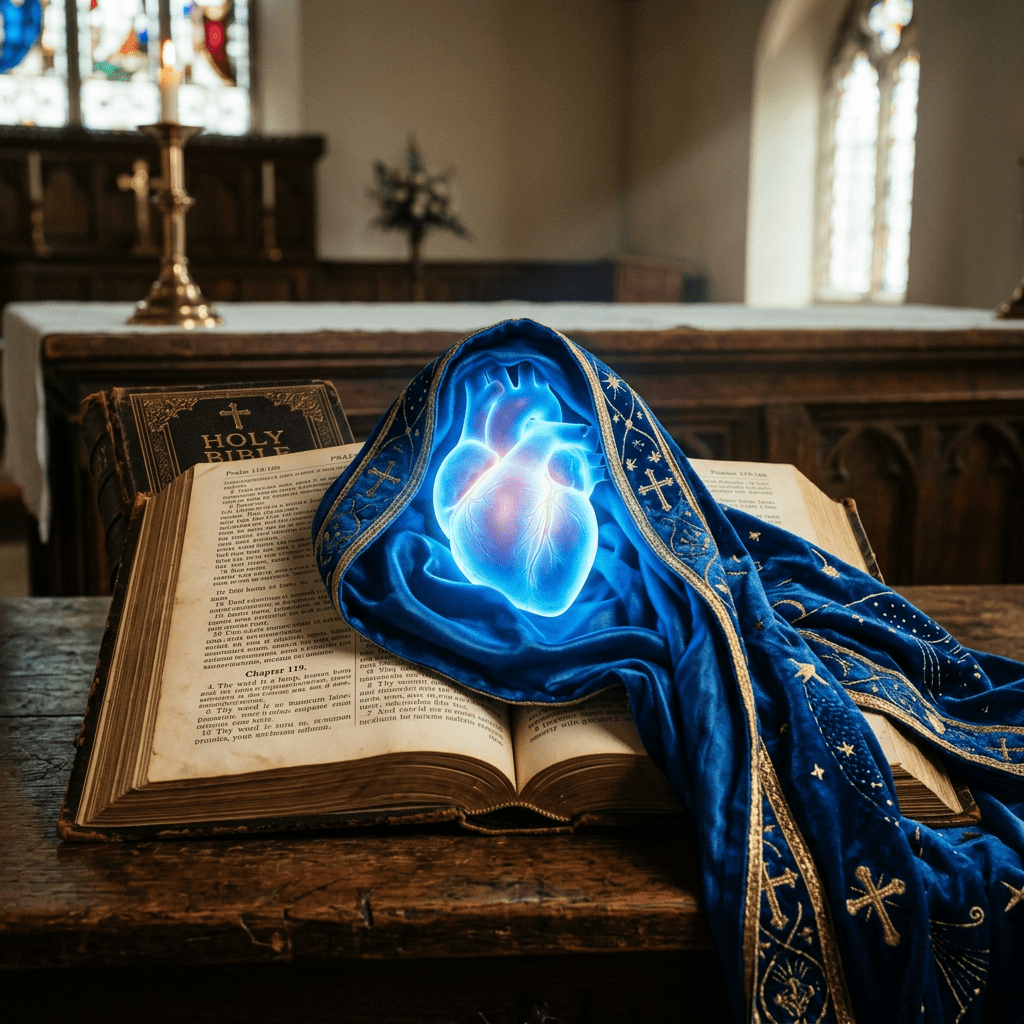
Our entire vocation begins with a single, non-negotiable truth: God loved us first. Pope Francis’s Apostolic Exhortation, Dilexit Nos (“He Loved Us”), on the Sacred Heart of Jesus, is the source of our motivation.

  • The Why: We are called to place our “mind and will… under the ‘political rule of the heart.” This means our decisions, thoughts, and intentions are governed by the gentleness, humility, and boundless love of Christ, who poured out everything on the Cross.
  • The Demand: For us, this is the call to radical interior conversion. The external life of service only has merit if it flows from a heart shaped by the self-giving love of Christ. If our heart is not ruled by His, our actions risk becoming mere philanthropy, not Christian charity.

II. The Second Principle: The Exterior Mandate (Dilexi Te)

The love we contemplate in Dilexit Nos must immediately translate into concrete action, a mandate beautifully articulated in Pope Leo XIV’s Apostolic Exhortation, Dilexi Te (“I Have Loved You”). This document—a spiritual successor to the call of the Sacred Heart—focuses entirely on the preferential option for the poor.

  • The What: Pope Leo XIV makes it clear: “Love for the Lord… is one with love for the poor.” The poor are not just objects of our pity; they are the “sacramental presence of the Lord.” For us, the wounded Heart of Christ is revealed in the wounds of the marginalized in our communities.
  • The Demand: Our vocation is not just about charity; it is about justice. Dilexi Te calls us to address the “structural causes of poverty and inequality.” As Secular Franciscans living in the world—in our careers, families, and neighborhood like Grosse Pointe Park—we are mandated to speak out against indifference and the “throwaway culture” and work for fairness.

III. The Third Principle: The Authentic Spirit (The Testament of St. Francis)

The Testament of Saint Francis is the authentic, un-glossed spirit required to successfully live out the mandates of the two Popes. It provides the necessary Franciscan attitude to connect divine love with difficult service.

  • The How: The Testament begins with Francis’s conversion: the moment he showed mercy to the lepers. This teaches us that true evangelical action requires physical encounter and the spiritual ability to transform the “bitter” into the “sweetness of soul.”
  • The Demand: Francis demands radical humility and minority. We must be “simple and subject to all,” avoiding pride and ambition. By commanding us not to “gloss” his words, Francis insists on a literal, uncluttered commitment to evangelical poverty, which is the only way to avoid judging the poor or being corrupted by worldly values.

IV. The Fourth Principle: The Practical Guide (The OFS Rule of Life)

The Rule of the Secular Franciscan Order (1978) is the blueprint that structures the first three principles into our daily, secular life.

  • The Where: The Rule ensures our commitment is lived in the world through a committed fraternity. It guides our actions:
    • The call to Conversion (Article 7) is powered by the love of Dilexit Nos.
    • The focus on Justice and Peace (Article 15) is directed by the demands of Dilexi Te.
    • The practice of Simplicity and Poverty (Article 11) is modeled after the spirit of the Testament.
  • The Response: The Rule makes our vocation communal. As a local fraternity, we must constantly hold these four anchors in dialogue during our formation and apostolate, ensuring our prayer feeds our action, and our action validates our prayer.

By embracing this Quadruple Anchor, we live a life rooted in the heart of the Church and the essential documents of the OFS, making us true witnesses of Christ’s love in the world today.