
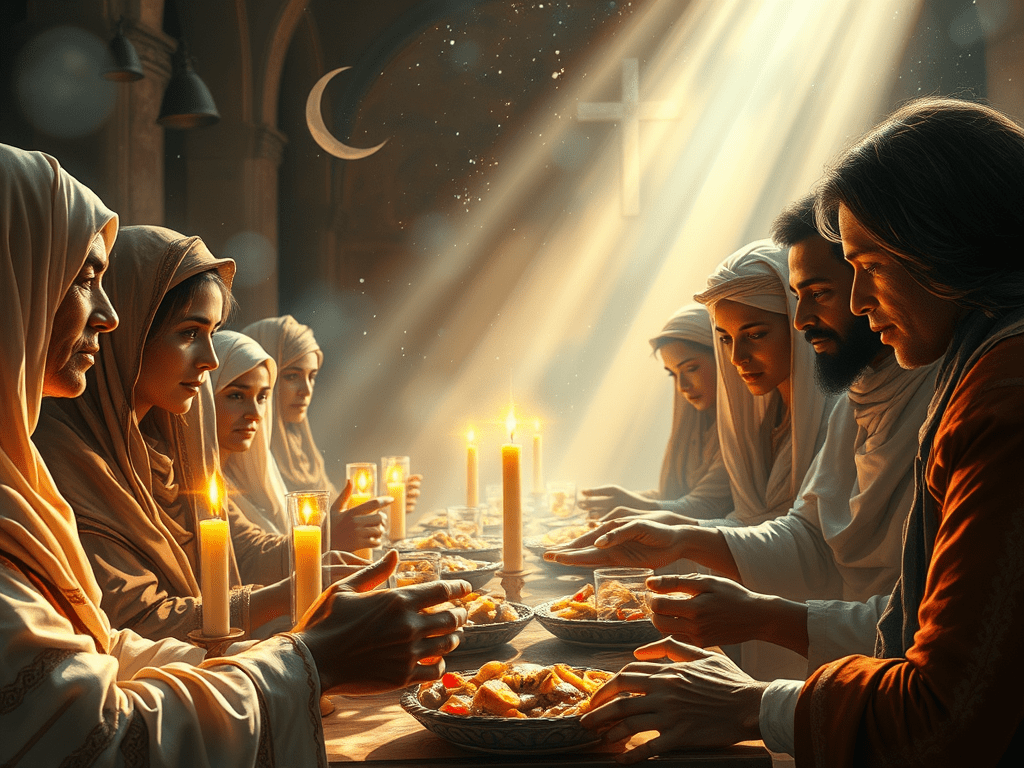
In the heart of every sacred tradition lies a hidden truth: the Divine is not distant, but intimately woven into the fabric of existence—and into the faces of those around us. Ramadan, Yom Kippur, and Lent, three pillars of Abrahamic faiths, are often seen as seasons of abstinence, repentance, or ritual. Yet through the lens of mysticism, they reveal a deeper invitation: to transcend the self and encounter God in the very act of loving, serving, and forgiving one another.
Ramadan: Fasting as a Mirror of the Heart
In Islam, Ramadan is a month of fasting, prayer, and Quranic reflection. Mystics like Rumi and Ibn Arabi remind us of the true fast. It is not merely abstaining from food and drink but freeing ourselves from the ego’s tyranny. When we empty our bodies, we create space for the Divine light to illuminate our souls. Hunger becomes a teacher, humbling us and awakening compassion for those who hunger every day.
The mystic’s Ramadan is not solitary. The nightly Taraweeh prayers recited in unison, dissolve individuality into a collective heartbeat. Breaking the fast (iftar) with others—strangers, neighbors, the marginalized—transforms a meal into a sacrament. “Whoever feeds a fasting person earns the same reward as them,” says the Prophet Muhammad (peace be upon him). In this act, we glimpse the Divine in the shared bread, the laughter, the hands that serve. To fast is to see God in the faces of the hungry.
Yom Kippur: Atonement as Cosmic Reunion
Yom Kippur, the Day of Atonement in Judaism, is a solemn fast of repentance. Yet Jewish mysticism (Kabbalah) teaches that this day is not about punishment, but reunion. The Hebrew word teshuvah means “return”—a return to God, our true selves, and harmony with all creation.
The liturgy of Yom Kippur emphasizes that sins against others cannot be forgiven by God until we first seek forgiveness from those we’ve harmed. The mystical truth blazes here: God dwells in the “other.” When we repair relationships, we restore the shattered vessels of the Divine presence (Shekhinah). The Kol Nidre prayer, chanted at twilight, is a collective vow to release the bonds of ego. As we stand together in vulnerability, we become mirrors reflecting the Infinite One back to each other.
Lent: Sacrifice as an Embrace of the Wounded
In Christianity, Lent is a 40-day fasting, prayer, and almsgiving journey that mirrors Christ’s wilderness sojourn. Mystics like St. John of the Cross and Julian of Norwich saw Lent not as deprivation but as a path to divine union. By stripping away comforts, we confront our illusions and meet God in the desert of our hearts.
Yet Christ’s ultimate teaching—”Whatever you did for the least of these, you did for me” (Matthew 25:40)—anchors Lent in community. When we give alms, we touch the hands of Christ in the poor. When we forgive, we meet God in the wounds of the broken. The Lenten fast is a doorway to solidarity, where the boundary between “I” and “you” dissolves. Meister Eckhart wrote, “The eye through which I see God is the same eye through which God sees me.”
The Thread That Binds: Love as the Ultimate Fast
Across these traditions, a common thread emerges: asceticism is not an end but a means to awaken love. Fasting from food, pride, or distractions clears the debris from our souls so we might finally see. When the ego diminishes, the Divine presence in others becomes unmistakable.
The Sufi poet Hafez writes, “I am a hole in a flute that the Christ’s breath moves through—listen to this music!” Ramadan, Yom Kippur, and Lent are each a flute, hollowed by sacrifice, through which the breath of the Divine flows. The music they create is the sound of humanity, remembering its sacred unity.
This year, as we observe these holy seasons, let us ask: How might my fast soften my heart to the stranger? How might my repentance heal a fractured relationship? How might my sacrifice become sustenance for another? For in the eyes of the one across from us—whether at the iftar table, the synagogue, or the soup kitchen—we meet the gaze of the Beloved.
La illaha illa Allah. Sh’ma Yisrael. Thy Kingdom come.
The names differ, but the call is one:
Encounter God here, now, in each other.
Michael Carsten OFS is a professed member of the Secular Franciscan Order and editor of Chasing the Wild Goose Blog. This article reflects his personal discernment and does not represent official OFS positions in Local, Regional, or National Fraternity. Contact Mike @ mikeofs@ofsmike.com
Discover more from Chasing The Wild Goose
Subscribe to get the latest posts sent to your email.

