As a secular Franciscan, I strive to view the world through the lens of the Gospel, inspired by St. Francis of Assisi’s radical love for the poor and the teachings of the Catholic Church. Recently, President Trump’s remark, “Only the Weak will Fail,” made in response to a faltering stock market, caught my attention. On the surface, it suggests a harsh, survival-of-the-fittest approach—those who can’t weather economic storms are simply left behind. But from a Franciscan standpoint, this perspective clashes with the call to humility, compassion, and solidarity that defines our faith. Who are “the weak” in this context? How does the stock market’s instability affect them? And why does this mindset stand in opposition to Catholic values? This article seeks to answer these questions, extending the discussion to global relationships and offering a vision rooted in justice.
Who Are “The Weak” in the United States?
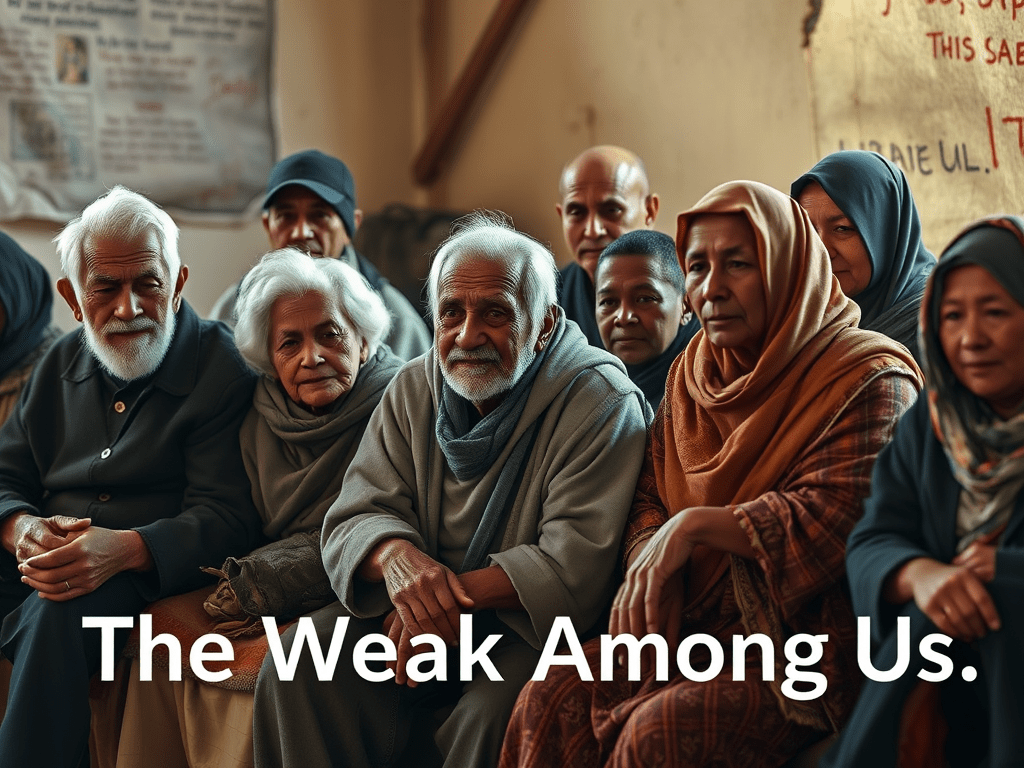
When economic tides turn, certain groups feel the sting more acutely—not because of personal weakness, but because of systemic realities that leave them exposed. Here’s a look at some of these vulnerable populations:
- Seniors and retirees: Living on fixed incomes or savings, they’re hit hard by rising costs or market dips. Many also face mental health struggles, compounded by isolation or declining health.
- Small business owners: Particularly in underserved areas, they teeter on the edge of closure during downturns, risking their own livelihoods and their employees’ stability.
- Farmers: Small-scale farmers lack the buffers of big agribusiness, facing ruin from market swings, weather shifts, or trade disruptions.
- Low-income individuals: Job cuts or reduced hours strip away access to basics like housing and healthcare, pushing them deeper into poverty.
- Older workers nearing retirement: A market crash can drain retirement funds, forcing them to delay plans or support struggling family members longer.
- Unemployed workers: Often low-wage or hourly, they’re the first laid off, losing income and stability in an unforgiving economy.
- Students and young professionals: Entering a shaky job market, they wrestle with rising costs and slim opportunities to build a future.
- Those struggling with mental health issues: Underfunded services and stigma already limit care; economic stress can deepen anxiety or depression.
- The unhoused: Exposed to health and safety risks, they suffer more as downturns cut shelter funding and swell their ranks through evictions.
- Those with illness and limited or no health insurance: Unable to afford treatment, they skip care, worsening both health and finances.
- Young people with student loan debt: Saddled with loans, they struggle to find jobs that cover payments, delaying milestones like saving or buying a home.
These aren’t “weak” people in character or will—they’re made vulnerable by an economy that often prioritizes profit over protection. Healthcare costs, housing instability, inadequate mental health support, and a debt-driven education system amplify their risks.
The Stock Market’s Impact on “The Weak”
President Trump’s remark ties “the weak” to the stock market, implying that only those unable to endure its volatility will falter. For some, the connection is direct; for others, it’s a ripple effect:
- Direct impacts: Seniors and older workers often rely on retirement funds linked to the market—a crash shrinks their security, forcing tough choices. Small business owners or farmers with investments face similar pressures.
- Indirect consequences: Groups like the unhoused, those with mental health challenges, or the uninsured sick may not own stocks, but they suffer when market falls cut public funding for shelters, mental health services, or healthcare access. Unemployed workers and low-income families feel the pinch as businesses tighten belts, slashing jobs or hours.
The stock market isn’t just a number on a screen—it’s a force that can deepen existing vulnerabilities. To frame survival as a test of economic resilience ignores how much these groups depend on a system they can’t control.
Expanding to Global Relationships
The effects of a U.S. stock market drop don’t stop at our borders—they ripple worldwide, hitting vulnerable populations and testing global ties:
- Developing nations: Reliant pop on U.S. trade and markets, these countries face instability when our economy stumbles, driving up unemployment and poverty.
- Global farmers and small business owners: Tied to international supply chains, they’re battered by price swings and disruptions, often without safety nets.
- Economic interdependence: A U.S. downturn can trigger global recessions, worsening conditions for the world’s poor.
- Strained alliances: If the U.S. retreats from economic leadership, other nations feel the uncertainty, weakening partnerships and amplifying global risks.
This interconnectedness reveals that caring for “the weak” is a global responsibility. The U.S. stock market’s sway makes our economic health a matter of international justice, not just domestic policy.
Opposition to Catholic Teaching
The “Only the Weak will Perish” mindset echoes a survival-of-the-fittest philosophy that Catholic teaching firmly rejects. Our faith offers a different vision, one that hears the cries of the poor and responds with compassion. The Psalmist captures this timeless plea:
“‘Because the poor are despoiled, because the needy groan, I will now rise up,’ says the Lord; ‘I will place them in the safety for which they long.’” (Psalm 12:5, NRSV)
This scripture bridges the struggles of the vulnerable with the spiritual call to action central to Catholic teaching. It underscores that the poor’s cry—whether from economic hardship, illness, or exclusion—is not ignored by God, urging us to mirror that divine compassion. Catholic principles further reinforce this:
- Preferential option for the poor: The Church insists we prioritize the vulnerable—those deemed “weak”—over the powerful. The Catechism declares, “The needs of the poor take priority over the desires of the rich” (CCC 2402-2406).
- Universal destination of goods: Economic systems should serve everyone, not just those who can ride out a market crash. Wealth is for the common good, not the elite.
- Solidarity: Pope Francis, in Evangelii Gaudium, condemns an “economy of exclusion” that “kills,” noting, “Such an economy kills… when the profits of a few grow exponentially while the majority are left behind” (EG 53). He calls us to reject indifference to the marginalized.
Catholic teaching, grounded in Christ’s love for the outcast, sees the “weak” as deserving of support, not abandonment. It challenges us to build an economy that reflects God’s care for all.
A Direct Attack on Our Sensibilities and Reason
We, as a people, are just barely recovered from COVID-19 and the loss of tens of thousands of our loved ones—parents, grandparents, friends—gone too soon, often without a proper goodbye. The economic fallout has been relentless: millions lost jobs, small businesses shuttered, and entire industries teetered on collapse. Families already stretched thin were pushed to the brink, and the uneven recovery has left many still struggling.
To hear, in this fragile moment, that “only the weak will perish” is more than an attack on our sensibilities—it’s a profound insult to our collective pain and resilience. It dismisses the suffering of the elderly couple who lost their savings, the farmer facing bankruptcy, or the single parent juggling mental health struggles and bills. These aren’t “weak” people; they’re caught in circumstances beyond their control, often worsened by systems that fail to protect them. The remark defies logic, reducing our post-COVID world—global supply chains, healthcare gaps, economic ties—to a simplistic, blame-the-victim trope. It’s not just cruel; it’s irrational, ignoring that a thriving economy depends on the health of our communities and the resilience of our most vulnerable.
This isn’t merely an understatement—it’s a betrayal of the compassion and solidarity that should define us after a crisis that tested us all. It challenges reason itself, brushing aside the need for collective action—policies that bolster healthcare, support small businesses, and protect the marginalized—in favor of a callous mindset that writes off the struggling as expendable.
Conclusion: A Call for Compassion and Justice
“The weak”—whether seniors, farmers, the unhoused, those with mental health struggles, the uninsured sick, or debt-burdened youth—aren’t disposable. Their vulnerabilities stem from systemic gaps, not personal failures. The stock market’s fall lays bare these cracks, while globally, economic ties demand collective responsibility. Catholic teaching, echoing the cries of the poor through scripture and tradition, urges us to reject a survival-of-the-fittest approach and embrace solidarity, ensuring no one “perishes” amid hardship. True strength isn’t in enduring alone—it’s in lifting each other up with compassion and justice.
True recovery—emotional, economic, and social—demands better. It demands an economy and a society that value every life, not just the ones deemed “strong” enough to survive. We’ve been through too much to settle for less.
Peace, Mike
Discover more from Chasing The Wild Goose
Subscribe to get the latest posts sent to your email.

