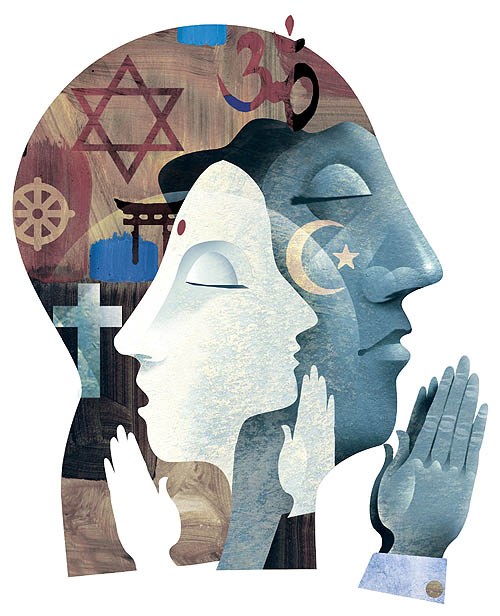


A Personal Ethic of Kinship: Rooted in the Gospel and the secular Franciscan Rule

By Michael Carsten OFS


A Pilgrimage of Faith and Justice

“I have done what is mine to do; may Christ teach you what is yours.” These words of St. Francis guide my journey as a Secular Franciscan. Bound by the Rule of the Secular Franciscan Order, I am called to “live the Gospel” (Article 4). I do this through humility, peace, and radical kinship with the marginalized. As an Ecumenical and Inter-religious Animator, I am tasked with building bridges across faiths. This mirrors Francis’s fearless meeting with Sultan Malik al-Kamil. Yet, in a world obsessed with political labels, I reject the false binaries of left and right. My ethic flows from a deeper well. Christ’s teachings and the Franciscan charism guide me. They demand a politics rooted not in ideology but in love, justice, and the sacredness of every life.

This is my creed—a way of being in the world that refuses to sever faith from action.


Foundations: Gospel and Franciscan Non-Negotiables

My convictions spring from two fonts: the Gospel and the Rule of the Secular Franciscan Order. They anchor four pillars of my ethic:

  1. Human Dignity as Divine Imprint
    “Whoever harms the poor insults their Maker” (Proverbs 14:31). The secular Franciscan Rule commands me to “respect all people” (Article 13). I see Christ in the migrant, the prisoner, and the religious “other.” I oppose policies that dehumanize—xenophobic borders, exploitative labor, or environmental degradation that treats creation as disposable. Justice begins with reverence.
  2. The Poor are the First Teachers
    Jesus’ declaration is my litmus test for policy. “Whatever you did for the least of these, you did for me” (Matthew 25:40). Francis stripped himself of wealth to stand with outcasts. I support universal healthcare, living wages, and affordable housing not as partisan agendas but as moral imperatives. Charity soothes symptoms; justice dismantles systems that trap generations in poverty.
  3. Subsidiarity is about Sacred Humility.
    The secular Franciscan Rule encourages us to live by going from the Gospel to life. It also inspires us to bring life to the Gospel. Solutions must arise locally—in families, parishes, and neighborhoods—where human dignity outweighs ideology. While the government must protect rights, centralized power (corporate or bureaucratic) often stifles the Spirit’s work. Communities, guided by conscience, must lead.
  4. Nonviolence as Prophetic Witness
    “Blessed are the peacemakers” (Matthew 5:9). Francis confronted the Crusades’ brutality with dialogue, not swords. I reject rhetoric that demonizes opponents, militarism that sacrifices the vulnerable, and economics that plunder creation. Peacemaking, for me, demands restorative justice, climate reparations, and relentless dialogue.

Engaging Political Systems: Respect and Caution

My creed engages political frameworks without captivity:

  • Social Democracy
    Respect: Its fight against poverty and healthcare gaps aligns with Christ’s healing call.
    Caution: Centralized programs risk sidelining local wisdom. Welfare should empower—not replace—parish food banks, worker co-ops, and interfaith clinics.
  • Capitalism
    Respect: Innovation lifts communities when tempered by ethics.
    Caution: Profit-driven systems commodify life. I demand fair wages, eco-stewardship, and businesses that honor workers as siblings, not labor costs.
  • Socialism
    Respect: Its critique of exploitation echoes Amos’ cry: “Let justice roll like a river” (Amos 5:24).
    Caution: Material equality alone risks reducing humans to economic units. True justice restores kinship—seeing the poor as brothers, not statistics.
  • Libertarianism
    Respect: Its skepticism of state overreach aligns with subsidiarity.
    Caution: Freedom without solidarity abandons the marginalized. “Personal responsibility” can’t absolve collective sin.

My Stance: No system is sinless. I borrow tools (policy, protest, partnership) to serve the Kingdom’s ends: dignity, kinship, and peace.


The Beatitudes: My Blueprint for Political Engagement

The Beatitudes (Matthew 5:3-12) reframe politics as sacred service:

  • “Blessed are the poor in spirit”: I reject consumerism’s lie that worth comes from wealth.
  • “Blessed are the meek”: I advocate policies that uplift the vulnerable, not entrench the powerful.
  • “Blessed are the peacemakers”: I labor for interfaith coalitions, knowing solidarity heals a fractured world.

For me, politics is not a battle for power but a pilgrimage of love.


The Tension of Witness

Living this ethic is a daily crucifixion:

  1. Misunderstood
    Progressives question my faith; conservatives scorn my critique of greed. Francis was called a fool for kissing lepers. I embrace the title.
  2. The Risk of Hypocrisy
    I fail often. I cling to the Rule’s call to “continual conversion” (Article 7).
  3. The Weight of Despair
    Wars rage, forests burn, children starve. Yet Francis rebuilt the Church stone by stone. I choose stubborn hope.

Conclusion: An Invitation to Kinship

This is not a manifesto. It is my flawed attempt to live the Gospel without dilution. To those who share this hunger, I offer no program—only a challenge:

  • See sacramentally: The Eucharist teaches that God dwells in the broken. So look for the divine in the “other”—the refugee, the rival, the ruined earth.
  • Act incarnationally: Start small. Partner with a mosque to house the homeless. Join a union fighting for fair wages. Plant a parish garden to feed the hungry.
  • Risk love: Francis kissed the leper. Who—or what—have we been taught to fear that God calls us to embrace?

St. Francis did not set out to change the world. He set out to live the Gospel, and the world changed around him. May we have the courage to do the same.

Pax et bonum.
Week of Prayer for Christian Unity: A Franciscan Reflection

The Week of Prayer for Christian Unity, held annually from January 18 to January 25, invites global Christians to pray for unity. With themes focusing on justice and love, the Franciscan tradition emphasizes humility and reconciliation. The Joint Committee on Franciscan Unity promotes dialogue and collaboration among Franciscans, aiming for healing and inclusivity.

By Mike Carsten OFS

As Franciscans, we are called to live out the Gospel in humility, simplicity, and love for all creation. This spirit is critical during the Week of Prayer for Christian Unity. This annual event invites Christians worldwide to join in prayer and reflection for the unity of all believers in Christ.

Dates and Themes

The Week of Prayer for Christian Unity is observed from January 18 to January 25 each year. These dates were chosen to coincide with the feasts of the Confession of Saint Peter (January 18) and the Conversion of Saint Paul (January 25), symbolizing the unity and mission of the Church.

  • 2024 Theme: “Do Good; Seek Justice” (Isaiah 1:17). This theme calls us to reflect on our actions and attitudes towards justice, mercy, and reconciliation, echoing the Franciscan commitment to peace and social justice.
  • 2025 Theme: “Abide in My Love… You Shall Bear Much Fruit” (John 15:5-9). This theme emphasizes the importance of remaining in Christ’s love to bear the fruits of unity and peace in our communities and the world.

Historical Background

The Week of Prayer for Christian Unity was first proposed in 1908 by Father Paul Wattson, an Anglican priest who later became a Catholic. Since then, it has grown into a global ecumenical movement supported by the World Council of Churches and the Pontifical Council for Promoting Christian Unity.

Franciscan Participation

As Franciscans, we participate this week with a deep sense of our charism. Our founder, Saint Francis of Assisi, was a man of peace and reconciliation. His encounter with the Sultan during the Fifth Crusade is a powerful example of dialogue and mutual respect. Inspired by his example, we pray, dialogue, and act to promote unity among Christians and peace.

A Call for Healing Within Catholicism

In addition to fostering unity among different Christian denominations, there is a pressing need within Catholicism to bridge divides and bring healing to our polarized family. Pope Francis reminds us, “To understand one another, and to grow in charity and truth, we need to pause, to accept and listen to one another. In this way we already begin to experience unity”[1]. The Franciscan spirit of humility, dialogue, and reconciliation can guide us in addressing internal conflicts and fostering a more inclusive and compassionate Church. By embracing our shared faith and focusing on the love of Christ, we can work towards healing wounds and building a stronger, more united Catholic community.

Recognizing and Promoting Unity Within the Franciscan Family

It is also essential to recognize and celebrate the contributions of non-Catholic members of the Franciscan family. The Third Order Society of St. Francis (TSSF), the Order of Ecumenical Franciscans (OEF), and the Order of Lutheran Franciscans (OLF) all embody the Franciscan charism uniquely. Their commitment to living out the values of Saint Francis enriches the broader Christian community and strengthens our collective witness to the Gospel. Pope Francis encourages us, “Unity happens when we walk together”[2]. Let us walk together with our non-Catholic Franciscan brothers and sisters, united in our shared mission of peace, justice, and reconciliation.

The Joint Committee on Franciscan Unity, established in 2004, plays a crucial role in fostering this unity. This committee includes representatives from the Order of Secular Franciscans (OFS), the Third Order Society of St. Francis (TSSF), and the Order of Ecumenical Franciscans (OEF). The committee’s mission is to bear witness to the essential unity of the Church by working towards Franciscan unity in all its expressions[3].

The Joint Committee has organized numerous conferences and initiatives to bring together Franciscans from different traditions. These events focus on shared Franciscan principles and promote dialogue, understanding, and collaboration. By highlighting common values and fostering mutual respect, the committee helps to strengthen the bonds within the Franciscan family and advance the cause of Christian unity.

Promoting Unity Among All Franciscans

Promoting unity among all Franciscans, regardless of their specific traditions or affiliations, involves several key actions and attitudes:

  1. Embrace Common Values: Focus on the core Franciscan values that unite all branches of the Franciscan family, such as humility, simplicity, peace, and care for creation. These shared values can serve as a foundation for unity.
  2. Encourage Dialogue and Collaboration: Create opportunities for dialogue and collaboration among different Franciscan groups. This can include joint prayer services, retreats, and social justice initiatives. Open and respectful communication helps build mutual understanding and trust.
  3. Celebrate Diversity: Recognize and celebrate the diversity within the Franciscan family. Each branch brings unique perspectives and gifts that enrich the whole. We can foster a more inclusive and harmonious community by appreciating these differences.
  4. Shared Formation Programs: Develop shared formation programs that unite members from different Franciscan traditions. These programs can focus on Franciscan spirituality, history, and mission, helping to build a sense of shared identity and purpose.
  5. Joint Social and Environmental Initiatives: Collaborate on social and environmental projects that reflect Franciscan values. Working together on common causes, such as poverty alleviation, peacebuilding, and environmental stewardship, can strengthen bonds and demonstrate unity in action.
  6. Regular Communication: Regularly communicate through newsletters, social media, and other platforms. Sharing news, stories, and reflections from different Franciscan communities can help keep everyone connected and informed.
  7. Prayer for Unity: Incorporate prayers for unity into personal and communal prayer practices. Asking for God’s guidance and blessing on efforts to promote unity can be a powerful way to keep this goal at the forefront of our minds and hearts.
  8. Support from Leadership: Encourage leaders within the Franciscan family to actively promote unity. Their support and example can inspire others to work towards greater collaboration and understanding.
  9. Educational Resources: Develop and share resources highlighting Franciscans’ common heritage and mission. This can include books, articles, and online courses that explore the life and teachings of Saint Francis and the Franciscan tradition.
  10. Annual Gatherings: Organize gatherings or conferences that bring Franciscans from different branches together. These events can provide opportunities for learning, fellowship, and mutual support.

Catholic Church’s Teaching on Christian Unity

The Catholic Church’s teaching on Christian unity can be found in several key documents:

  • Unitatis Redintegratio (1964): This decree from the Second Vatican Council emphasizes the importance of ecumenism and the Church’s commitment to Christian unity. It states, “The restoration of unity among all Christians is one of the principal concerns of the Second Vatican Council”[4].
  • Ut Unum Sint (1995): Pope St. John Paul II’s encyclical on ecumenism reiterates the Church’s dedication to the ecumenical movement. He writes, “The Catholic Church embraces with hope the commitment to ecumenism as a duty of the Christian conscience enlightened by faith and guided by love”[5].
  • The Bishop and Christian Unity: An Ecumenical Vademecum (2020): This document from the Pontifical Council for Promoting Christian Unity provides bishops guidelines for promoting Christian unity. It highlights the bishop’s role in fostering ecumenism and states, “The bishop’s ecumenical engagement is not an optional dimension of his ministry but a duty and obligation”[6].

Conclusion

The Week of Prayer for Christian Unity is a time for us to unite as one body in Christ, seeking to overcome divisions and build a world of justice and peace. As Franciscans, let us embrace this opportunity with the same fervor and humility that characterized Saint Francis, working tirelessly for the unity and well-being of all God’s children. Pope Francis encourages us, “Unity happens when we walk together”[2]. Let us take this journey together, inspired by the love of Christ and the example of Saint Francis.


May this week be a blessed time of reflection, prayer, and action for all who seek the unity of Christ’s followers.

[1]: Pope Francis on Unity [2]: Pope Francis on Journeying Together [3]: Joint Committee on Franciscan Unity Report [4]: Unitatis Redintegratio [5]: Ut Unum Sint [6]: [The Bishop and Christian Unity: An Ecumenical Vademecum](http://www.christianunity.va/content/dam/unitacristiani/Documentazione%20generale/2020Vademecum/V


References

[1] UNITATIS REDINTEGRATIO – Vatican

[2] Unitatis redintegratio – Wikipedia

[3] Unitatis Redintegratio: A New Interpretation After 40 Years

[4] THE BISHOP AND CHRISTIAN UNITY: AN ECUMENICAL VADEMECUM

[5] The Bishop and Christian Unity: An Ecumenical Vademecum

[6] 2020 12 04 Vademecum online – christianunity.va

Showing up in Southeast Michigan. –Interfaith Council of Metro Detroit

At this moment in history, when many have felt a shift in their place in the country, and in the world, we are each called to examine our highest and best values, and answer their call. “Some people of faith feel that they need to show up because their faith calls them to it,” says […]

via How do we “Show Up”? — The InterFaith Leadership Council of Metropolitan Detroit

Assalamu Alaikum

Assalamu Alaikum is the traditional Muslim greeting which is not something most of our sisters and brothers hear every day. Nor do we often hear positive comments when the name Allah is used in reference to God. There are in today’s world, certain buzz words that catch our attention and give us pause that makes our anxiety rise. What is the conditioned response to our angst? Fear.  Keep people out. We must “build a wall”.

My wife Kathy and I work and serve the poor on the streets of Detroit, a stone’s throw from the city of Dearborn.  Dearborn is home to the largest population of Muslims in the United States. If I have learned anything serving the poor on the streets of Detroit (which is so close to Dearborn), it is that poverty, misery, hunger, and fear know neither jurisdictional boundaries, nor recognition of or honor religious affiliations.

This past month, a young man volunteered with us as we served the poor. He is 19, a Muslim, and his family has sent him here from Turkey to escape the current political turmoil and violence in his homeland. He is a senior in high school learning our language and experiencing our culture. For this young adult’s parents, the United States is viewed and used as “sanctuary”. Coming to downtown Detroit and serving the homeless and poor was not anything that was on this young person’s radar when his parents sent him here for an education. Yet here he was. How did he come to us? He was brought by another 19 year old high school senior who is here in Michigan from Poland. They both are looking to serve, and at the same time, experience a place of peace and community. Imagine!  A 19-year-old Catholic high school senior works side by side, hand in hand with a 19-year-old Muslim high school senior, serving those in need regardless of race, ethnicity, or religious affiliation, serving with volunteers who are Secular Franciscans, Southern Baptists, Romanian Orthodox, Lutheran, and agnostic.

Our Rule, Constitutions, and National Statutes call for us in our Ecumenical and Interfaith efforts to move beyond talk. We are called to follow the example of the young adults I have mentioned above and fearlessly move out into our communities

From our Rule, we read-

Secular Franciscans

  • therefore, should seek to encounter the living and active person of Christ in their brothers and sisters. – Article 5

  • are stewards of the goods received for the benefit of God’s children. – Article 9

  • should set themselves free to love God and their brothers and sisters. – Article 12

  • with a gentle and courteous spirit accept all people as a gift of the Lord and an image of Christ. – Article 13

  • place themselves on an equal basis with all people, especially with the lowly – Article 13

  • seek out ways of unity and fraternal harmony through dialogue – Article 14

  • trusting in the presence of the divine seed in everyone- Article 14

  • strive to bring joy and hope to others – Article 14

We are called to set ourselves free to love God and our brothers and sisters – all of them.

It is my honor as the Ecumenical and Interfaith Chair to assist each of you to fulfill the plea of the National Fraternity.

O Breath of God, unite us in action!

2016-2017 Theme of the National Secular Franciscan Fraternity – USA

The Ecumenical and Interfaith Committee is here to help you in your journey, to encourage you to action, and then to help you tell your stories.

To empower you to “live the gospel of our Lord” and “make present the charism of our common Seraphic Father”.

To that end we have created a new Ecumenical and Interfaith website,                                         http://www.ofsusaecumenicalinterfaith.org

The web site is active; the list below is our beginning.

  • A page for each Committee component
    •  Ecumenical and Interfaith
    • Joint Community on Franciscan Unity
  • Calendar of events
  • Photo gallery for your Ecumenical and Interfaith photos
  • Interfaith prayer services for your use, and
  • Links with related information.

Yes – O Breath of God, unite us in action!

Assalamu alaikum / Peace be upon you

Mike Carsten OFS

Ecumenical and Interfaith Committee Chair

Our e-mail address – NAFRA@ofsusaecumenicalinterfaith.org

Share with us your Ecumenical and Interfaith experiences, photos and stories.

Please let us know how we can help you.

Picking and Choosing


“The English word ‘heresy’ comes from the Greek verb hairein, which means ‘to choose’.  A hairesis originally meant, quite simply, the taking of a choice.” However in the context of religious authority and tradition, a “heretic” is someone who denies this authority  and instead “picks and chooses” from the content of that tradition, and again, according to Berger “from these pickings and choosings” constructs his or her own deviant opinion.

Today, however, deviance is the rule-there is no common standard from which one would deviate.

The point is that, in the modern context, far from being an anomaly, heresy becomes the norm- a necessity, even, as “modernity creates a new situation in which picking and choosing becomes an imperative.” [Ecumenical Trends Magazine – January 2015]

What I quoted from the Ecumenical Trends Magazine  was not written about the OFS (Ordo Franciscanus Saecularis). In fact it has nothing to do directly with the OFS.  It did get me thinking.  In many ways it describes my own personal journey and experience serving on the local, regional, and national levels of fraternity within the OFS. First thoughts? We are a people that like to “pick and choose.” In fact,  for some of us, the very process of becoming a Franciscan is an act of discernment, of “picking and choosing”.

Within Catholicism, there are two main theologies that have been passed onto us from the middle ages:

The primary Theology adopted by the Church (i.e. The Work of the Dominican School) and the Alternate Theology in the Church, (i.e. The Franciscan School)

I am not speaking here of Spiritualities, of which there are many fine paths that can lead us to experience God. I am speaking only of the  foundations in theology that give rise to the many varied and equally excellent approaches to God (spiritualities).  [OFS For Up to Now Manual (FUN); Understanding Franciscan Theology Tradition and Spirituality pg 3]

For decades now, I have  personally experienced  brokenness within the order both locally, regionally, and internationally. We are in need of healing.  One of the areas of brokenness that we need to heal is our lack of a cohesive and consistent understanding of who we are as a people and what our Franciscan charism is.  There seems still to be a rejection of our theology or at least a major lack of understanding across a wide spectrum of  individuals that make up the OFS. Not only are we not yet able to share a “common standard” of understanding about what it means to be a secular Franciscan in the world today, we seem to struggle to recognize a “common standard” of understanding of what it means to be Catholic. The tension this creates within fraternal life keeps us from truly being brother and sister, one to another.  All of this is exacerbated by our individual participation in the political culture wars that permeate our religious experience and the seeming tribal effect of our participation in digital/social media.

Recently I had the honor and privilege serving NAFRA (OFS-National Fraternity-USA) on a couple of committees. It was a great joy for me, yet there was often present a dynamic of tension. How can we as a people possibly support and become active participants in the OFS, let alone any of the Committees  (i.e. ‘Ecumenical and Interfaith’ and the ‘Joint Committee for Franciscan Unity’) if even a little part of what I have experienced is true? I can see why many would not even believe these committees are necessary given the lack of a “common standard” of understanding of our faith and our Franciscan charism?

Yes, I just might be a “heretic”. Yes, in the “picking and choosing” involved in the process of discerning my vocation, I have realized and intentionally chosen the Franciscan path. However, rather than “constructing my own deviant opinion” as a Professed Franciscan, I accept and live my life following an “Alternate Theology” within Catholicism.  Because of my choices and especially as I navigate my own brokenness as well as the brokenness of my sisters and brothers,  I  experience a certain tension and lack of acceptance sometimes outright rejection within my  OFS family.

The only solution before me is love.  I  do recognize my own brokenness as part of the problem and as I reflect, I take upon myself the thoughts and words of Benedetto Lino, OFS, who authored a study on Secular Franciscan Formation titled “What is Christian Formation and in particular Formation For Us Secular Franciscans.” (Benedetto served for years as the CIOFS [Council International of the Ordo Franciscanus Saecularis]  International Formation Minister)

I must “Start Afresh From Christ”

I must “open my soul to Christ”

I must “encounter the living person of Jesus Christ”

I must enter into “a true conversion-transformation towards a Christ-shaped existence”

I must seek out and enter into “a true personal relationship with Jesus Christ”

I must be “transformed into a new creature”

I must “Experience the ‘vibrant excitement’ and the ’emotion’ to stand before the mystery of such a wonderful condescendence’, to the point of giving myself up and to adhere totally to the Lord.”…..

“The first element in the vocational process of Saint Francis ……is the PERSONAL EXPERIENCE OF HIS RELATIONSHIP WITH JESUS CHRIST, a relationship which is characterized by radicality, totality and permanence. …..”

“The flame and this warmth can be received only by those who want them and render themselves open to the action of the Spirit and to the living transmission of authentic and credible witnesses….”

“Francis, like a new Christ, inflamed his companions, his fellow-citizens, the people of his time and he continues to set the world on fire, just like Jesus’ first disciples.”

“We, too, must “set the world on fire”, dear brothers and sisters, and to do so we need ‘true faith, certain hope, perfect love, deep humility, sense and knowledge, that we may carry out the Lord’s holy and true command’,  exactly as Francis asked the Crucifix, after He had revealed to him his mission.”

“We must multiply and, by living contact, we must transmit, form, and inflame.”


United by their vocation as “brothers and sisters of penance,” and motivated by the dynamic power of the gospel, let them conform their thoughts and deeds to those of Christ by means of that radical interior change which the gospel itself calls  “conversion.” Human frailty makes it necessary that this conversion be carried out daily……  [Rule of the Secular Franciscan Order; article VII]


Let me begin again for up to now I have done nothing.

And you?

Pax et bonum

Mike


30th Anniversary Celebration Convocation and Chapter – Order of Ecumenical Franciscans

OFS General Constitutions

Remaining faithful to their own identity, the fraternities will take care to make the most of each occasion for prayer, formation, and active collaboration with other ecclesial groups.  They should welcome with pleasure those who, without belonging to the SFO, wish to share its experiences and activities. (Art. 103.1)  The fraternities will promote wherever possible, fraternal relations with non-Roman Catholic associations inspired by Francis. (Art. 103.2)

The 30th Anniversary Celebration Convocation & Chapter Order of Ecumenical Franciscans convened on July 18, 2013, and we would be together at the Capuchin Retreat Center in Washington, Michigan until the 21st.  It was a time of excitement for me! After arriving, when all our brothers and sisters were present and before the start of any business, the community gathered in the chapel and entered into silent prayer and meditation.

On the following day, introductions were made, and I was honored to extend fraternal greetings (in the absence of Tom Bello OFS, National Minister, Anne Mulqueen, OFS, Interfaith/Ecumenical chairperson for NAFRA, and James Howard, OFS, Divine Mercy Region Regional Minister) to the brothers and sisters of the Order of Ecumenical Franciscans (OEF).

The gathering was a delight to attend. It was a celebration of 30 years of shared history, business, the election and installation of two servant leadership positions, and prayer (of course a fair share of Franciscan foolishness).  Ed Shirley, OFS was remembered throughout our time together in fun and prayerful ways—he is surely missed!

The final day was highlighted by a wonderful presentation by Patrick Carolan of the Franciscan Action Network (F.A.N.). The evening Communion Service included a “Service of Profession and Renewal of Vows”, followed by celebration, conversation, laughter and Franciscan partying that lasted into the wee hours of the morning.

The following day, as all were getting ready to depart, I offered to our brother Craig Robert Miller, OEF Minister General, our support and our love. I requested that the OEF consider to allow the brothers and sisters of the OFS of Divine Mercy Region’s neighboring fraternities to serve them at next year’s gathering (e.g. possibly handling transportation).

Our similarities (OEF and OFS) are many. As you know, the OFS’ guiding document is the Rule; the OEF follow the Principles.  I offer to you the following excerpts from each others’ essential writings.  After you consider these writings, read Pope John Paul II writing “Ut Unum Sint” also given to you here.


               Principles of the Order of Ecumenical Franciscans

Principle 1. We covenant together, as the Order of Ecumenical Franciscans, to observe the Gospel of our Lord Jesus Christ by following the example of Saint Francis of Assisi, who made Christ the inspiration and the center of his life with God and people.  Franciscans should devote themselves especially to careful reading of the Gospel, going from Gospel to life and life to the Gospel.


 Rule of the Secular Franciscan Order

Article 4.  The rule and life of the Secular Franciscan is this: to observe the Gospel of our Lord Jesus Christ by following the example of Saint Francis of Assisi, who made Christ the inspiration and the center of his life with God and people.

Christ, the gift of the Father’s love, is the way to him, the truth into which the Holy Spirit leads us, and the life which he has come to give abundantly.  Secular Franciscans should devote themselves especially to careful reading of the Gospel, going from Gospel to life and life to the Gospel.


Ut Unum Sint

Encyclical of Pope John Paul II

…Thus it is absolutely clear that ecumenism, the movement promoting Christian unity, is not just some sort of “appendix” which is added to the Church’s traditional activity.  Rather, ecumenism is an organic part of her life and work.  And consequently must pervade all that she is and does; 20.1


…What unites us is much greater than what divides us. Pope John XXIII; 20.2


It is very difficult to describe this joyful encounter. We all were welcomed completely—brothers and sisters giving of themselves!  OEF brothers and sisters were pilgrims, traveling by bus, train and some by airplane—mostly absorbing the cost of their travel and spending up to 20 hours coming to the meeting and 20 hours going back home.

They inspire me through their love and dedication.

Peace

Mike