
A Franciscan Reflection
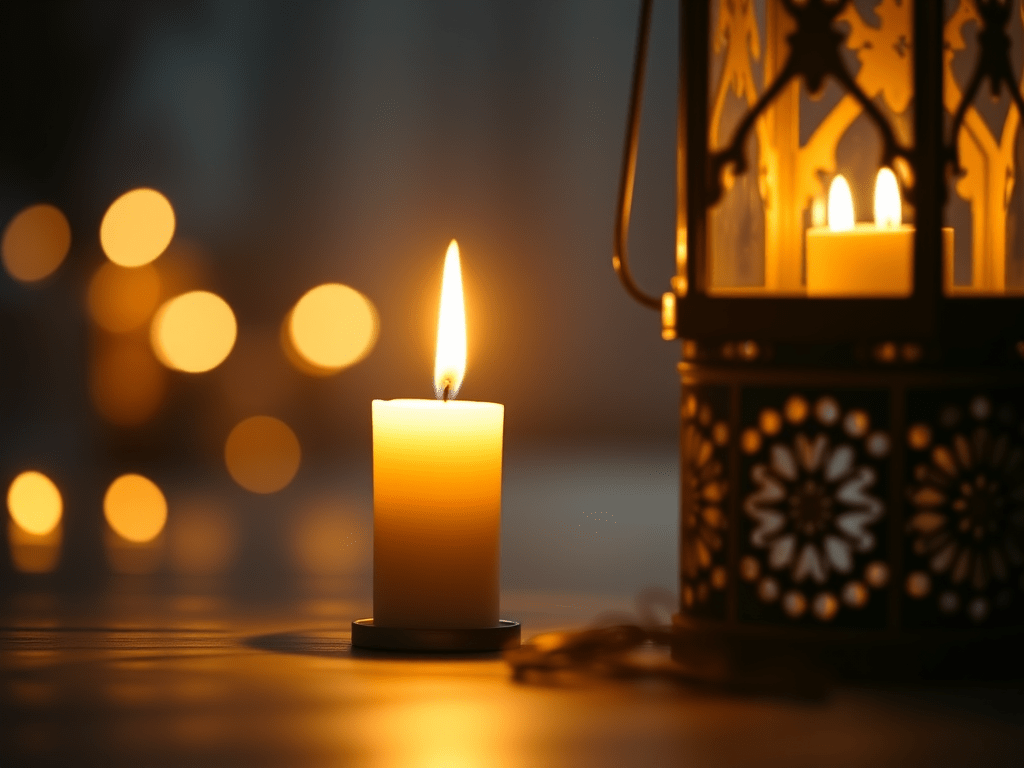
In the quiet glow of a candle or the warm radiance of a lantern, we encounter a universal truth: light transcends boundaries. It is a symbol cherished across faiths, cultures, and histories—a reminder of divine presence, guidance, and hope. As a Franciscan, I am called to be a bearer of peace and unity. I find profound kinship in the shared symbolism of light between Candlemas and Ramadan. These are two sacred observances that invite us to kindle flames and bridges of understanding.
Candlemas: The Light That Waits
Celebrated on February 2nd, Candlemas marks the Presentation of the Lord in the Temple, where the aged Simeon recognized the infant Jesus as the “light for revelation to the Gentiles” (Luke 2:32). This moment, awaited for generations, fulfills the longing for a Messiah who would illuminate a world shrouded in spiritual shadows. On this day, candles are blessed. Their flickering flames symbolize Christ as the Light of the World. They serve as a beacon of hope, piercing the darkness of despair.
For Franciscans, Candlemas echoes our charism of humble waiting and joyful discovery. Like Simeon, we are called to recognize the sacred in the ordinary, to hold space for divine encounters in the rhythms of daily life. The candle’s light is both a promise and a challenge: to carry Christ’s radiance into a fractured world.
Ramadan: The Light That Refines
In Islam, the month of Ramadan is a journey of spiritual refinement. Through fasting, prayer, and acts of compassion, Muslims seek to draw nearer to Allah, purifying their hearts and renewing their purpose. The pre-dawn meal (suhoor) and the nightly breaking of the fast (iftar) are framed by lantern light, symbolizing the divine guidance that “is like a niche in which there is a lamp” (Quran 24:35). The pinnacle, Laylat al-Qadr (Night of Power), commemorates the revelation of the Quran—a light descending to dispel ignorance.
Ramadan’s discipline mirrors the Franciscan call to simplicity and solidarity. Just as fasting cultivates empathy for the hungry, our Rule urges us to “serve the Lord in poverty and humility,” recognizing the sacred dignity of every person. The lanterns of Ramadan, like Candlemas candles, remind us that spiritual growth requires both inward reflection and outward generosity.
Shared Light, Common Ground
Though distinct in theology, these traditions converge in their reverence for light as a metaphor for divine encounter. Both Candlemas and Ramadan emphasize:
- Illumination: Christ and the Quran are celebrated as revelations that guide humanity.
- Purification: Fasting (Ramadan) and the Presentation’s rituals (Candlemas) cleanse the soul to receive grace.
- Community: Light is shared—whether in candlelit processions or communal iftars—to strengthen bonds of kinship.
Here, the Franciscan vocation to build bridges finds fertile ground. St. Francis’s daring dialogue with Sultan Al-Kamil in 1219 exemplifies this spirit. Amid the Crusades’ violence, Francis chose encounter over enmity, discovering in the Sultan not an adversary but a brother seeking truth. Their meeting whispers across centuries: when we approach others with humility, light can soften even the deepest divides.
A Call to Kindling
As Candlemas and Ramadan occasionally overlap in winter’s twilight, let us seize this cosmic invitation. Imagine Christians and Muslims gathering to share stories of light—how the Christ child’s presentation or the Quran’s revelation has shaped their journeys. Imagine joint initiatives feeding the hungry, sheltering the marginalized, or advocating for peace, embodying the shared ethic of mercy both faiths cherish.
St. Clare of Assisi once wrote, “We become what we love, and who we love shapes what we become.” If we love the Light—in all its names and forms—we become artisans of hope, mending the world’s fractures one flame at a time.
This is the interfaith promise of Candlemas and Ramadan. It is not to blur differences, but to let our distinct luminosities blend into a greater glow. For as the Quran teaches, “Had God willed, He would have made you one community” (5:48). Diversity, then, is no accident but an invitation to collaboration—a chance to “preach the Gospel always, and when necessary, use words” (attributed to St. Francis).
In lighting candles and lanterns, may we illuminate paths to peace. In building bridges, may we become living testimonies to the Light that unites us all.
