Demanding the Release of Mahmoud Khalil: A Call for Justice and Human Dignity
In the spirit of St. Francis of Assisi, who tirelessly advocated for peace, justice, and the dignity of every human being, we raise our voices to demand the immediate release of Mahmoud Khalil. As Franciscans, we are called to stand with the oppressed and to be a voice for those who are silenced. The unjust detention of Mahmoud Khalil is not merely an individual tragedy—it is a violation of human rights and a wound to the collective conscience of all who seek peace and justice.
The Cry for Justice
Mahmoud Khalil, like so many others who suffer from oppression, is more than just a name in a headline—he is a human being created in the image of God, endowed with dignity and deserving of justice. His detention represents the ongoing struggles faced by countless individuals who find themselves imprisoned for political, religious, or ideological reasons. As followers of Christ and inspired by the teachings of the Franciscan tradition, we cannot remain silent in the face of such injustice.
A Franciscan Response
St. Francis of Assisi teaches us to walk humbly with the poor and the persecuted. Our Rule as Secular Franciscans calls us to work toward justice and peace, not only through prayer but also through action. We must advocate for Mahmoud Khalil’s release, not just as an act of mercy but as an imperative of justice.
Pope Francis reminds us that “the dignity of each human person and the pursuit of the common good are concerns which ought to shape all economic and political decisions” (Laudato Si’, 156). To detain an individual unjustly is to trample on their dignity and deny their fundamental rights.
A Call to Action
We urge all people of goodwill—religious leaders, human rights advocates, and policymakers—to join in demanding the immediate release of Mahmoud Khalil. Silence in the face of injustice is complicity. We must raise our voices in prayer, in protest, and in advocacy until justice is served.
Let us write to those in power, sign petitions, and spread awareness so that Mahmoud Khalil is not forgotten. Above all, let us keep him and all unjustly detained persons in our prayers, trusting that God, who is the source of all justice, will bring forth righteousness and peace.
May our actions be guided by the words of the Prophet Isaiah:
“Learn to do good; seek justice, correct oppression; bring justice to the fatherless, plead the widow’s cause.” (Isaiah 1:17)
A Franciscan Vision Rooted in Life, Love, and the OFS Rule
Scriptural Foundation: Sirach 38:24–34 (NABRE)
“They maintain the fabric of the world, and their prayer is in the practice of their trade. … Not so the one who devotes himself to the study of the law of the Most High; he sets his heart on rising early to seek the Lord who made him.”
The Rule’s Imperative: Prayer as the Soul of Secular Franciscan Life
The Rule of the Secular Franciscan Order (Article 8) declares: “Let them [Secular Franciscans] participate in the sacramental life of the Church, above all the Eucharist. Let them join in liturgical prayer in one of the forms proposed by the Church… Let prayer and contemplation be the soul of all they are and do.”
This command is not a call to monastic rigor but an invitation to infuse every moment of life with the spirit of prayer. For laypeople immersed in the rhythms of family, community, and daily responsibilities, this means recognizing that prayer is not an activity to add to their day but the soul that animates their very being.
I. Sirach’s Wisdom and the Rule’s Vision
Sirach’s contrast between laborers and scholars is not a division but a harmony. The laborer’s life is prayer (38:34), while the scholar’s study seeks God (38:31). For Secular Franciscans, the Rule’s call to make prayer the “soul” of all they do means:
Life as Contemplation: The parent, the caregiver, or the volunteer prays through their actions when they serve with love.
Contemplation as Life: The intellectual or retiree engages through their mind when they study and intercede.
The Rule does not demand equal time for both but insists that all actions—physical, mental, or relational—be rooted in a contemplative heart.
II. Vatican II: Sanctifying the “Soul” of Daily Life
The Council’s teachings affirm the OFS Rule’s vision:
Lumen Gentium 34: “The laity… make the Church present and operative in those places and circumstances where only through them it can become the salt of the earth.”
Gaudium et Spes 43: “Let there be no false opposition between professional and social activities on the one part, and religious life on the other.”
For Secular Franciscans, this means:
The “soul” of their life is the love and intentionality with which they live it.
The “soul” of their prayer is the awareness that God is present even in exhaustion, joy, or routine.
III. Reclaiming the Rule’s Flexibility
The Rule’s wording is deliberate: “Let prayer and contemplation be the soul of all they are and do” (Article 8). Key implications:
“Soul” Over Schedule: Prayer is not a checklist but the animating principle of existence. A caregiver’s patience, a neighbor’s kindness, or a moment of rest becomes a “contemplative act” when offered to God.
“All They Are and Do”: The Rule does not distinguish between “sacred” and “secular” moments. Cooking meals, commuting, or comforting a friend become prayer when done for love of God and neighbor.
Liturgical Prayer as a Means, Not an End: The call to “join in liturgical prayer” (Article 8) is not a rigid law but a tool to deepen communion with God. When formal prayer is impossible, the liturgy of life itself becomes worship.
IV. A Franciscan Model: Life as Embodied Contemplation
St. Francis lived the Rule’s ideal long before it was written. His Earlier Rule (1221) states: “Let all brothers, however, preach by their deeds.”
For Francis, life and prayer were inseparable. Secular Franciscans inherit this legacy:
Prayer is not confined to words but expressed in how we live: patiently, justly, and generously.
Contemplation is not withdrawal but seeing God in the ordinary: a shared meal, a walk in nature, a quiet moment of rest.
V. Practical Living of the Rule
For those overwhelmed by formal prayer obligations:
Morning Offering: “Lord, let my life today be my prayer. Be the soul of all I am and do.”
Micro-Moments of Awareness:
Pause before a task: “For You, Jesus.”
Offer frustration: “I unite this to Your Cross.”
Family as Fraternity: Simple rituals like bedtime gratitude or a hug offered as a prayer sanctify daily life.
Fraternity Support: Meetings should prioritize sharing how God is found in daily life over rigid recitations.
Conclusion: The Soul of Our Vocation
The OFS Rule’s call to make prayer the “soul” of all we are and do is not a burden but a liberation. It frees us to see our entire life as a liturgy of love:
When a parent listens patiently, they are contemplative. When a friend forgives quickly, they are praying. When a stranger is welcomed, they are chanting Vespers.
This is the “soul” St. Francis envisioned: a spirituality where prayer is not something we do but who we are.
Peace and all good!
Citations
The Rule of the Secular Franciscan Order (1978), Article 8.
The Book of Sirach (Ecclesiasticus), New American Bible Revised Edition (NABRE).
Lumen Gentium (Dogmatic Constitution on the Church), Second Vatican Council (1964).
Gaudium et Spes (Pastoral Constitution on the Church in the Modern World), Second Vatican Council (1965).
The Catholic Bishops’ Selective Advocacy: A Franciscan Call for Consistent Moral Witness.
As a Franciscan, As a Catholic, As a US Citizen, I am compelled to speak truth to power with clarity and courage, even when it unsettles me. The U.S. Catholic bishops’ alignment with the Republican Party—prioritizing partisan agendas over the fullness of Catholic social teaching—demands scrutiny. Their selective advocacy risks reducing the Church’s prophetic voice to a political tool, abandoning the marginalized in favor of power.
The Fortnight for Freedom and Racialized Hypocrisy
From 2012 to 2018, the U.S. Conference of Catholic Bishops (USCCB) organized the Fortnight for Freedom, a campaign decrying threats to religious liberty under President Obama, particularly the Affordable Care Act’s contraception mandate. Yet, when the Trump administration slashed refugee admissions, separated families at the border, and gutted environmental protections, the bishops’ urgency vanished. The campaign dissolved in 2018, replaced by a muted “Religious Freedom Week.” This timing raises grave questions: Was the bishops’ fervor less about principle and more about opposing a Black Democratic president?
Black Catholic leaders have long challenged this hypocrisy. Fr. Bryan Massingale, a theologian and priest, critiques the Church’s “selective indignation,” noting its silence on systemic racism, poverty, and state violence disproportionately harming Black communities. While bishops rallied against contraception mandates, they offered no sustained outcry as Republican policies denied clean water to Flint’s Black residents, dismantled healthcare for the poor, or accelerated executions under Trump’s Attorney General William Barr—a man the bishops honored despite his defiance of Church teaching on the death penalty.
The Barr-Barron Nexus: Power Over Principle
In 2020, the National Catholic Prayer Breakfast (NCPB)—a gathering criticized for its ties to Republican elites—awarded William Barr the Christifideles Laici Award, even as he reinstated federal executions after a 17-year hiatus. Bishop Robert Barron, a prominent media figure, headlined the event. Barr, who oversaw the executions of 13 federal prisoners, received praise for his “public service,” while bishops ignored his violation of the Church’s clear teaching: “The death penalty is inadmissible” (Pope Francis, Fratelli Tutti, 2020).
This decision sparked outrage. The Catholic Mobilizing Network and Association of U.S. Catholic Priests condemned the award, calling it a “grave scandal” that undermined the Church’s pro-life stance. Yet Bishop Barron and the NCPB doubled down, reflecting a pattern: the bishops’ alignment with Republican power brokers often trumps moral consistency.
Cardinal Dolan and Republican Politics: A Case Study in Selective Engagement
Cardinal Timothy Dolan, Archbishop of New York and a prominent figure in the U.S. Catholic hierarchy, exemplifies the bishops’ fraught dance with partisan politics. While he has occasionally criticized Republican policies, his public persona and alliances often align more closely with conservative agendas, raising questions about the consistency of his moral witness.
Public Embraces and Political Theater
Dolan’s visibility in Republican circles is striking. In 2012, he delivered the closing benediction at the Republican National Convention (RNC), sharing a stage with Mitt Romney and Paul Ryan—the latter a Catholic whose budget proposals slashed anti-poverty programs, drawing sharp rebukes from the USCCB for failing “to meet moral criteria” (America Magazine, 2012). Dolan later prayed at both the 2012 RNC and the Democratic National Convention, framing it as “apolitical,” yet his warmth toward Republican leaders has been notable. In 2016, he hosted a controversial “heroes’ welcome” for Donald Trump at St. Patrick’s Cathedral after the Access Hollywood tape scandal, a move critics called a “moral failure” that normalized misogyny and abuse (National Catholic Reporter, 2016).
Policy Alignments and Silences
Affordable Care Act (ACA) Contraception Mandate: Dolan spearheaded the bishops’ opposition to the ACA’s contraception coverage requirement, framing it as a religious liberty issue. While the mandate raised legitimate concerns, Dolan’s rhetoric echoed Republican talking points, and he declined to celebrate the ACA’s expansion of healthcare to millions of low-income families. This mirrored the GOP’s prioritization of culture-war issues over systemic care for the vulnerable (USCCB, 2012).
Immigration and Border Policies: Dolan has spoken compassionately about immigrants, calling for “humane reform.” Yet his criticism of Trump’s family separation policy was muted compared to his vocal campaigns against abortion and LGBTQ+ rights. When New York expanded protections for undocumented immigrants in 2023, Dolan warned against “lawlessness,” echoing conservative rhetoric that conflates immigration with crime (Crux, 2023).
Economic Justice: While Pope Francis condemns “economies that kill,” Dolan’s tenure has seen minimal emphasis on workers’ rights or wealth inequality. In 2020, he opposed New York’s proposed tax hikes on the ultra-wealthy to fund homeless services, citing fears of “driving out the affluent”—a stance at odds with Catholic teaching on distributive justice (National Catholic Reporter, 2020).
A Pattern of Partisan Silence
The bishops’ selective advocacy extends beyond individual figures:
Environmental Justice: While Pope Francis’ Laudato Si’ calls for “drastic action” to protect creation, the USCCB stayed silent as Trump withdrew from the Paris Accord and gutted the Clean Water Act, directly harming poor communities. In Flint, Michigan—where lead-poisoned water disproportionately affected Black Catholics—the bishops offered prayers but no national campaign for justice.
Healthcare and Poverty: Catholic teaching declares healthcare a human right. Yet when Republicans slashed Medicaid, defended for-profit systems, and rejected living wage laws, the bishops’ response was tepid. Contrast this with their vigorous opposition to the ACA’s contraception mandate—a focus that Fr. Massingale argues “elevates pelvic issues over poverty.”
School Choice: Trading Justice for Vouchers The bishops’ advocacy for school choice—framed as “empowering parents”—often aligns with Republican efforts to divert public funds to private (including Catholic) schools via vouchers. While Catholic teaching supports parental rights (Gravissimum Educationis), the bishops ignore the collateral damage:
Defunding Public Schools: Voucher programs drain taxpayer dollars from public systems that serve 90% of students, including marginalized communities. In Arizona and Florida, school choice expansions have worsened teacher shortages and underfunded rural districts (Chalkbeat, 2023).
Exclusionary Practices: Many voucher-funded private schools reject students with disabilities, LGBTQ+ youth, or non-Catholics, perpetuating inequality. In Indiana, 70% of 2023 voucher recipients never attended public schools, subsidizing affluent families already in private education (Chalkbeat, 2023).
Moral Contradiction: To secure vouchers, the bishops tolerate Republican agendas that slash anti-poverty programs, healthcare, and workers’ rights. This transactional approach—sacrificing systemic justice for institutional gain—betrays the poor they claim to uplift.
Death Penalty and Criminal Justice: Despite Pope Francis’ abolitionist stance, the USCCB has never mobilized a Fortnight campaign against capital punishment. Barr’s executions proceeded without meaningful episcopal resistance, even as Catholic prosecutors like Philadelphia’s Larry Krasner faced impeachment for defending life sentences over death.
The Franciscan Imperative: Reclaiming the Church’s Prophetic Voice
St. Francis rejected wealth and power to stand with the marginalized. Today, the bishops risk becoming the very “power” he confronted. Their alignment with a party that enacts policies harming the poor, immigrants, and the Earth betrays the Gospel’s radical call.
To reclaim moral credibility, the Church must:
Condemn All Threats to Life—from abortion to executions, poverty to pollution.
Reject Partisan Alliances that prioritize power over the common good.
Defend Public Goods, including fully funded public schools, rather than privatizing education for sectarian gain.
Amplify Marginalized Voices, including Black Catholics like Fr. Massingale, who challenge the Church’s complicity in systemic injustice.
Pope Francis’ Vision for the Church—A Radical Call to Conversion
Pope Francis envisions a Church that is “bruised, hurting, and dirty because it has been out on the streets” (Evangelii Gaudium, 2013), not one entangled in partisan alliances or institutional self-interest. His papacy has been a clarion call to reject clericalism, embrace the marginalized, and embody a consistent ethic of life that challenges all systems of exploitation and exclusion.
1. A Church of the Poor, for the Poor
Francis insists that the Church must prioritize the “peripheries,” condemning an economy that “kills” and discards the vulnerable (Evangelii Gaudium). He decries the “globalization of indifference” to refugees, the hungry, and the homeless—a rebuke to bishops who remain silent as Republican policies gut social safety nets or criminalize migrants. His vision directly contradicts the U.S. bishops’ transactional support for school vouchers that defund public education, asking instead: “How can we proclaim the Gospel if we are complicit in systems that abandon the poor?”
2. Integral Ecology: Rejecting Exploitation
In Laudato Si’ (2015), Francis demands “drastic action” to protect creation, linking environmental degradation to the “throwaway culture” of greed and consumerism. He condemns the poisoning of Flint’s water, the plunder of Indigenous lands, and policies that prioritize corporate profits over clean air and water. The U.S. bishops’ silence as Republican leaders dismantle environmental protections betrays this vision, trading the cry of the Earth and the poor for political convenience.
3. A Consistent Ethic of Life
Francis expands the Church’s pro-life witness beyond abortion to include opposition to the death penalty, nuclear weapons, poverty, and racism (Fratelli Tutti, 2020). He calls the death penalty “inadmissible” and urges Catholics to “see the faces” of those society discards. This directly challenges bishops who honor figures like William Barr, who reinstated federal executions, or who prioritize anti-abortion campaigns while ignoring Medicaid cuts that sentence the poor to preventable deaths.
4. Synodality: A Church That Listens
Francis’ synodal process demands a Church that “listens to the people of God,” including women, LGBTQ+ Catholics, and communities of color. This contrasts sharply with bishops who dismiss Black Catholics like Fr. Bryan Massingale when they critique systemic racism, or who host “LGBT Masses” while opposing civil rights for LGBTQ+ persons. Francis warns: “A Church that does not listen is a Church that cannot lead.”
5. Rejecting Clericalism and Partisan Idolatry
Francis condemns clericalism as a “perversion” of the Gospel, urging bishops to shed the trappings of power and privilege. He warns against alliances with political leaders who “instrumentalize the Church” for their agendas (Address to the U.S. Bishops, 2015). Cardinal Dolan’s embrace of Trump and Bishop Barron’s defense of Barr exemplify the very clericalism Francis decries—a willingness to court power rather than confront it.
Conclusion: The Choice Before the Bishops
Pope Francis’ vision is not a vague ideal—it is a mandate. He calls the Church to be a “field hospital” that heals wounds, not a fortress that protects its own interests. The U.S. bishops stand at a crossroads: Will they continue to align with a party that enacts policies antithetical to Catholic teaching, or will they embody Francis’ radical Gospel witness?
To follow Francis is to reject the GOP’s “Disaster Capitalism,” defend public goods like healthcare and education, and stand unambiguously with immigrants, workers, and the planet. It is to recognize that there can be no communion with Christ without communion with the least.
As Franciscans, we close with the words of St. Francis himself: “Preach the Gospel at all times. Use words if necessary.” The bishops’ actions—not their alliances—will determine whether the Church remains a beacon of hope or a monument to compromise.
Sources
America Magazine. (2012). “Cardinal Dolan and the GOP: A Complicated Relationship.”
National Catholic Reporter. (2016). “Cardinal Dolan’s Legacy: A Mixed Record on Abuse, Outreach, and Politics.”
Crux. (2023). “Dolan’s Balancing Act: Political Engagement and Catholic Teaching.”
USCCB. (2012). Fortnight for Freedom Archives.
Chalkbeat. (2023). “Indiana’s $240M Voucher Program Mostly Benefits Students Who Never Attended Public Schools.”
Pope Francis. (2013). Evangelii Gaudium.
Pope Francis. (2015). Laudato Si’.
Pope Francis. (2020). Fratelli Tutti.
Pope Francis. (2015). Address to U.S. Bishops.
Fr. Bryan Massingale. (2010). Racial Justice and the Catholic Church.
In the footsteps of St. Francis and Pope Francis, let us choose the Gospel without exception.
Michael is a professed member of the Secular Franciscan Order and editor of Chasing the Wild Goose Blog. This article reflects his personal discernment and does not represent official OFS positions.
Opening Reflection “Where there is charity and wisdom, there is neither fear nor ignorance.” —St. Francis of Assisi Brothers and sisters, we live in a time when the bonds of solidarity—woven into the fabric of our society through programs like Social Security, Medicaid, and labor protections—are being unraveled. Project 2025, a conservative blueprint to dismantle federal agencies and privatize public goods, threatens the legacy of the New Deal and the common good. As Franciscans, we are called to confront this spiritual crisis: a failure to love our neighbor and steward God’s gifts justly. Let us shine light on this darkness.
Explaining the Issue
Who:
Key Actors: The Heritage Foundation, Republican lawmakers, corporate donors (e.g., Koch network), and lobbying groups like ALEC.
Impacted: The poor, elderly, disabled, working families, and future generations reliant on public programs.
What: Project 2025 seeks to privatize Social Security, gut environmental protections, eliminate the Department of Education, and replace nonpartisan civil servants with political loyalists. This follows decades of “starve the beast” tax cuts (e.g., Reagan’s 1981 cuts, Trump’s 2017 law) that created deficits to justify slashing aid to the vulnerable.
When/Where:
Roots: Reaganomics in the 1980s, Newt Gingrich’s 1994 “Contract with America,” and the 2017 Trump tax cuts.
Today: Project 2025 is a 920-page plan to reshape government in 2025, targeting agencies that uphold healthcare, labor rights, and climate action.
Why: At its core, this is a crisis of greed (prioritizing wealth over human dignity), fear (scarcity narratives that pit neighbor against neighbor), and a neglect of subsidiarity (abandoning the federal role in protecting the marginalized).
Franciscan Values & Catholic Social Teaching
Preferential Option for the Poor: Privatizing Social Security and Medicare would force the elderly and sick to gamble their safety on volatile markets—a direct betrayal of Christ’s command to “care for the least of these” (Matthew 25:40). St. Francis, who kissed the leper and gave his cloak to the poor, would weep at such indifference.
Stewardship of Creation: Project 2025’s plan to gut the EPA ignores Pope Francis’ warning in Laudato Si’: “The earth, our home, is beginning to look more and more like an immense pile of filth” (LS 21). Deregulating polluters harms both creation and the poor, who suffer most from toxic air and water.
Ethical Economics in a Disenchanted World (David B. Couturier, OFM Cap):
Relational Economics: Couturier critiques modern economics for reducing human dignity to transactions and profit. He argues that economics must be re-enchanted—rooted in relationality rather than greed. The “starve the beast” strategy, which prioritizes wealth hoarding over communal well-being, exemplifies this disenchanted worldview. As Franciscans, we are called to reject systems that commodify human life and instead build economies where “the logic of gift and grace” replaces exploitation (Couturier, Economics in a Disenchanted World).
Commodification of the Common Good: Tax cuts that privatize Social Security or deregulate environmental protections treat public goods as market commodities. Couturier warns that this “commodification fractures solidarity,” turning neighbors into competitors for scarce resources.
Solidarity & Subsidiarity: Catholic teaching calls for solutions at the appropriate level. The New Deal intervened federally during the Great Depression because states and towns could not. Project 2025, by contrast, centralizes power for corporations while fragmenting community safety nets.
The Dignity of Work and Economic Justice:
Economics as a Moral Project: Couturier reminds us that economics is not neutral—it is a moral endeavor. The Second Vatican Council’s call for an economy that “serves people” (Gaudium et Spes 63) aligns with Couturier’s vision of economics grounded in ethical responsibility. Tax policies favoring corporations over workers violate this principle, reducing labor to a “disposable input” rather than honoring its sacred role in human flourishing.
Hope & Solutions
Stories of Resistance:
Sr. Norma Pimentel, MJ (Missionaries of Jesus): A modern-day Franciscan-hearted leader, Sr. Norma directs Catholic Charities in the Rio Grande Valley, providing humanitarian aid to migrants at the U.S.-Mexico border. Her work embodies the Franciscan call to “welcome the stranger” (Matthew 25:35) and confronts policies that dehumanize refugees. Pope Francis has praised her as a “woman of mercy” for her tireless advocacy.
St. Óscar Romero: Though not a Franciscan, the martyred Salvadoran archbishop’s fearless defense of the poor against oppressive regimes resonates with Franciscan values. His famous words—“A church that doesn’t provoke any crises, a gospel that doesn’t unsettle, is not the Gospel”—challenge us to resist systems that prioritize power over people.
Franciscan Action Network (FAN): Rooted in the spirit of St. Francis, FAN mobilizes Catholics and Franciscans nationwide to advocate for policies that protect the marginalized and care for creation. From lobbying for climate justice to defending immigrants’ rights, FAN embodies the Franciscan call to “rebuild the Church” through prophetic action. Their “Faithful Democracy” campaign challenges voter suppression and promotes policies that prioritize the common good over partisan power.
Modern Heroes: Parish food banks, worker-owned cooperatives, and groups like Network Lobby advocate tirelessly for policies that uplift the common good.
Practical Actions:
Pray:“Lord, stir in our leaders a hunger for justice, not power. Soften hearts hardened by greed.”
Advocate: Call legislators to oppose cuts to Social Security; support unions fighting for living wages.
Build Community: Partner with local Catholic Charities chapters to house refugees or fund climate resilience projects.
Embrace Franciscan Simplicity: Couturier advocates for an economics of enoughness—a countercultural embrace of simplicity that rejects consumerism. By living simply and advocating for progressive taxation, we challenge the myth of scarcity perpetuated by “starve the beast” policies. As Couturier writes, “Poverty is not a lack of resources but a failure of imagination.”
A Call to Conversion
This is not a distant political issue—it is a spiritual one. Do we cling to comforts while others starve? Do we ignore policies that harm the vulnerable because they don’t affect us yet? St. Francis abandoned wealth to embrace lepers; we too must examine our complicity in systems of exploitation.
Let us choose radical love over complacency. As Francis said, “For it is in giving that we receive.” When we fight for the common good, we rebuild the Church—not with bricks, but with justice.
Closing Prayer: God of the marginalized, stir in us the fire of St. Francis. Guide us to defend the poor, challenge the powerful, and steward creation with reverence. May we never confuse greed with liberty, or cruelty with strength. Amen.
Pax et bonum! 🌿
Citations:
Rule of the Secular Franciscan Order (OFS Rule, Art. 13b).
Compendium of the Social Doctrine of the Church (Compendium, 182, 395).
Laudato Si’ (LS 21).
Catechism of the Catholic Church (CCC 1883).
Gaudium et Spes (GS 4, 63).
David B. Couturier, OFM Cap, Economics in a Disenchanted World: Franciscan Pathways for Renewal (Franciscan Institute Publications, 2020).
Michael is a professed member of the Secular Franciscan Order and editor of Chasing the Wild Goose Blog. This article reflects his personal discernment and does not represent official OFS positions. Reach Mike at mikeofs@ofsmike.com
“I have done what is mine to do; may Christ teach you what is yours.” These words of St. Francis guide my journey as a Secular Franciscan. Bound by the Rule of the Secular Franciscan Order, I am called to “live the Gospel” (Article 4). I do this through humility, peace, and radical kinship with the marginalized. As an Ecumenical and Inter-religious Animator, I am tasked with building bridges across faiths. This mirrors Francis’s fearless meeting with Sultan Malik al-Kamil. Yet, in a world obsessed with political labels, I reject the false binaries of left and right. My ethic flows from a deeper well. Christ’s teachings and the Franciscan charism guide me. They demand a politics rooted not in ideology but in love, justice, and the sacredness of every life.
This is my creed—a way of being in the world that refuses to sever faith from action.
Foundations: Gospel and Franciscan Non-Negotiables
My convictions spring from two fonts: the Gospel and the Rule of the Secular Franciscan Order. They anchor four pillars of my ethic:
Human Dignity as Divine Imprint “Whoever harms the poor insults their Maker” (Proverbs 14:31). The secular Franciscan Rule commands me to “respect all people” (Article 13). I see Christ in the migrant, the prisoner, and the religious “other.” I oppose policies that dehumanize—xenophobic borders, exploitative labor, or environmental degradation that treats creation as disposable. Justice begins with reverence.
The Poor are the First Teachers Jesus’ declaration is my litmus test for policy. “Whatever you did for the least of these, you did for me” (Matthew 25:40). Francis stripped himself of wealth to stand with outcasts. I support universal healthcare, living wages, and affordable housing not as partisan agendas but as moral imperatives. Charity soothes symptoms; justice dismantles systems that trap generations in poverty.
Subsidiarity is about Sacred Humility. The secular Franciscan Rule encourages us to live by going from the Gospel to life. It also inspires us to bring life to the Gospel. Solutions must arise locally—in families, parishes, and neighborhoods—where human dignity outweighs ideology. While the government must protect rights, centralized power (corporate or bureaucratic) often stifles the Spirit’s work. Communities, guided by conscience, must lead.
Nonviolence as Prophetic Witness “Blessed are the peacemakers” (Matthew 5:9). Francis confronted the Crusades’ brutality with dialogue, not swords. I reject rhetoric that demonizes opponents, militarism that sacrifices the vulnerable, and economics that plunder creation. Peacemaking, for me, demands restorative justice, climate reparations, and relentless dialogue.
Engaging Political Systems: Respect and Caution
My creed engages political frameworks without captivity:
Social Democracy Respect: Its fight against poverty and healthcare gaps aligns with Christ’s healing call. Caution: Centralized programs risk sidelining local wisdom. Welfare should empower—not replace—parish food banks, worker co-ops, and interfaith clinics.
Capitalism Respect: Innovation lifts communities when tempered by ethics. Caution: Profit-driven systems commodify life. I demand fair wages, eco-stewardship, and businesses that honor workers as siblings, not labor costs.
Socialism Respect: Its critique of exploitation echoes Amos’ cry: “Let justice roll like a river” (Amos 5:24). Caution: Material equality alone risks reducing humans to economic units. True justice restores kinship—seeing the poor as brothers, not statistics.
Libertarianism Respect: Its skepticism of state overreach aligns with subsidiarity. Caution: Freedom without solidarity abandons the marginalized. “Personal responsibility” can’t absolve collective sin.
My Stance: No system is sinless. I borrow tools (policy, protest, partnership) to serve the Kingdom’s ends: dignity, kinship, and peace.
The Beatitudes: My Blueprint for Political Engagement
The Beatitudes (Matthew 5:3-12) reframe politics as sacred service:
“Blessed are the poor in spirit”: I reject consumerism’s lie that worth comes from wealth.
“Blessed are the meek”: I advocate policies that uplift the vulnerable, not entrench the powerful.
“Blessed are the peacemakers”: I labor for interfaith coalitions, knowing solidarity heals a fractured world.
For me, politics is not a battle for power but a pilgrimage of love.
The Tension of Witness
Living this ethic is a daily crucifixion:
Misunderstood Progressives question my faith; conservatives scorn my critique of greed. Francis was called a fool for kissing lepers. I embrace the title.
The Risk of Hypocrisy I fail often. I cling to the Rule’s call to “continual conversion” (Article 7).
The Weight of Despair Wars rage, forests burn, children starve. Yet Francis rebuilt the Church stone by stone. I choose stubborn hope.
Conclusion: An Invitation to Kinship
This is not a manifesto. It is my flawed attempt to live the Gospel without dilution. To those who share this hunger, I offer no program—only a challenge:
See sacramentally: The Eucharist teaches that God dwells in the broken. So look for the divine in the “other”—the refugee, the rival, the ruined earth.
Act incarnationally: Start small. Partner with a mosque to house the homeless. Join a union fighting for fair wages. Plant a parish garden to feed the hungry.
Risk love: Francis kissed the leper. Who—or what—have we been taught to fear that God calls us to embrace?
St. Francis did not set out to change the world. He set out to live the Gospel, and the world changed around him. May we have the courage to do the same.
As a lay adherent of the Franciscan tradition, I am profoundly unsettled. The ethical and societal ramifications of President Trump’s explicit commitment to embolden Christian Nationalism demand scrutiny. Who orchestrates this movement? What are the veiled intricacies of the purported “three steps” he vows to enact? And why do so many, despite its glaring perils, welcome this agenda with open arms? These queries penetrate the very marrow of our national identity. The National Prayer Breakfast—once a solemn space for reflection and unity—has been repurposed into a pulpit for a divisive, exclusionary vision of America, one that subverts the foundational principles of religious liberty and democratic pluralism.
As the Washington Prayer Breakfast convenes once more, I am compelled to voice my dissent. What should be a sanctuary of humility and interfaith dialogue has metamorphosed into a clarion call for those who seek to enshrine an insular, rigid interpretation of Christianity as the guiding force of national policy. The reverberations of Trump’s 2025 address—his advocacy for a “faith office,” a commission on religious liberty, and an investigative force to root out so-called “anti-Christian bias”—persist, serving as a stark reminder of the dangers inherent in conflating faith with political hegemony.
Christian Nationalism, as propagated by Trump and his cohorts, is not a summons to authentic faith. Instead, it is a consolidation of power under the guise of religious zeal. It aims to impose a single spiritual identity. This is attempted on a nation deliberately founded upon the principles of religious diversity and freedom. As a Franciscan, my spiritual vocation demands that I resist this gross misrepresentation of the Gospel. It distorts Christ’s radical love and inclusivity into an apparatus of control. This article is grounded in the social doctrine of the Catholic Church. It embodies the ethos of Franciscan spirituality. It exhorts us to safeguard the vulnerable. It urges opposition to theocratic encroachments and a restoration of the genuine essence of faith.
The gravity of the moment cannot be overstated. From the corrosion of the constitutional separation of church and state to the marginalization of minority faith communities, this trajectory imperils the very architecture of democracy. However, despair is not our calling. As Franciscans, we are summoned to action. The Washington Prayer Breakfast serves not merely as a testament to our present tribulations, but as a rallying point—a summons to defend justice, pluralism, and the sacred dignity of all human beings.
1. The National Prayer Breakfast: A Corrupted Tradition
Since its inauguration in 1953, the National Prayer Breakfast has symbolized bipartisan dialogue and spiritual contemplation. Yet, under Trump, it has devolved into a platform for Christian Nationalist dogma—an ideology that seeks to overwrite America’s diverse religious landscape with a rigid theological hierarchy. This is not the Gospel; it is a manipulation of faith for dominion.
Catholic teaching repudiates the instrumentalization of faith for worldly power. In Evangelii Gaudium, Pope Francis denounces “spiritual worldliness,” cautioning against reducing religion to a “pursuit of power, prestige, pleasure, or economic security” (Paragraph 93). A gathering that once embodied unity now teeters on the precipice of becoming an altar for this corruption.
2. Trump’s 2025 Address: A Rallying Cry for Christian Supremacy
During the 2025 National Prayer Breakfast, Trump unveiled an ominous blueprint for America’s future—one shackled by Christian Nationalist edicts. He proposed:
A presidential commission on religious liberty purportedly safeguarding “Christian values” while systematically sidelining other faith traditions.
A White House ‘faith office,’ integrating Christian ideology into the scaffolding of federal governance.
A task force spearheaded by Attorney General Pam Bondi, charged with eradicating “anti-Christian bias” within governmental institutions.
While Trump framed these measures as fortifications of religious liberty, their underlying intent is unmistakable—a calculated stride toward theocratic dominion. As a Franciscan, I discern in this not a call to spiritual renewal, but a declaration of war against justice, inclusivity, and the Gospel’s call to serve the disenfranchised.
The Catechism of the Catholic Church (CCC 2108) affirms that “the right to religious liberty is neither a moral license to adhere to error, nor a supposed right to error.” True religious freedom does not bestow privilege upon one faith; it enshrines the dignity of all.
3. Christian Nationalism: A Perilous Counterfeit of Christianity
Christian Nationalism is not Christianity—it is a perversion that interlaces national identity with a rigid, exclusionary religious dogma. It obliterates the rich mosaic of beliefs that constitute this nation, supplanting them with a hegemonic, state-sanctioned faith. It seeks legislative and cultural supremacy, forsaking the Gospel’s commandment to love and uplift all.
Pope Francis, in Fratelli Tutti, exhorts that “authentic faith does not engender intolerance” (Paragraph 249). Christian Nationalism, conversely, festers division and exclusion, warping the Church’s sacred mission to embody a “sacrament of unity” (CCC 775).
4. The Betrayal of Justice: Trump’s Theocratic Agenda
Trump’s Christian Nationalism manifests through legislative oppression:
Judicial Manipulation – Appointing judges who subordinate constitutional law to theological dogma.
Religious Exemptions – Granting broad allowances that enable businesses, hospitals, and organizations to deny services to certain individuals under the pretense of “religious conscience.”
Educational Indoctrination – Promoting school policies that funnel taxpayer funds into Christian institutions while censoring curricula that acknowledge America’s diverse religious and cultural history.
Such policies are not merely political; they are moral transgressions. They exploit religious sentiment to entrench authoritarianism, forsaking the most vulnerable in the process. Catholic doctrine underscores that “the dignity of the human person is the foundation of a moral vision for society” (USCCB, Forming Consciences for Faithful Citizenship). Policies that degrade the marginalized violate this principle.
5. The Legal and Constitutional Abyss
The First Amendment enshrines freedom of religion—not the establishment of a state religion. Trump’s initiatives erode this boundary, resulting in:
Legal Precarity – Policies favoring Christianity stand on precarious constitutional footing.
Social Fractures – Elevating one faith above others imperils communal harmony, sowing discord in a society predicated on pluralism.
Catholic teaching maintains that “the political community and the Church are autonomous and independent of each other” (Gaudium et Spes, Paragraph 76). Trump’s agenda flouts this tenet, coalescing state and ecclesiastical power in pursuit of dominion.
6. A Franciscan Call to Action
Trump’s Christian Nationalism is not merely a political maneuver—it is a theological crisis. As Franciscans, we are summoned to:
Organize – Forge interfaith alliances that repudiate Christian Nationalism.
Educate – Dispel the myths that underpin theocratic ambitions.
Advocate – Champion policies that protect religious liberty for all traditions.
Serve – Stand in radical solidarity with the marginalized, embodying Christ’s boundless love.
Resist – Reject policies that enshrine religious supremacy.
For Franciscans, the imperative is clear: We must denounce the heresy of Christian Nationalism and reclaim a faith that “does not seek to dominate, but to serve” (Evangelii Gaudium, Paragraph 197). The fate of both our democracy and the integrity of our faith hinges upon our response.
In the late 90s, my journey intertwined with Lester Bach—a mentor, visionary, and steadfast guardian of the Franciscan spirit, as a Regional Minister, National Councilor, and later a student and teacher of his transformative Spiritual Assistant formation program. I witnessed firsthand his profound devotion to the Secular Franciscan Order. Lester was more than a colleague; he was a compass for our community, steering us through turbulent waters with a rare blend of wisdom, humility, and unshakable integrity. His love for the Franciscan way of life was contagious, and his legacy lingers in the quiet spaces where I still find myself wishing for his counsel or the calm certainty he brought to every challenge.
Now, as our fraternity opens a new chapter of Inquiry—a time of discovery for those drawn to the Franciscan path—Lester’s teachings echo louder than ever. His belief in formation as a journey of the heart, not just the mind, inspires me daily as I join our formation team, eager inquirers, and the broader community in this sacred work. Together, we honor his memory not through words but by nurturing the seeds of curiosity, service, and fraternity he spent decades cultivating.
I step forward with gratitude for the past and hope for the future. Chapter One begins now—and every voice, question, and story has its place here.
Chapter 1: Orientation in the Secular Franciscan Order (OFS)
Introduction to the Franciscan Way of Life
Chapter 1 of Lester Bach’s The Franciscan Journey serves as both a doorway and a blueprint for those drawn to the Secular Franciscan Order (OFS). Bach frames the OFS not merely as an institution but as a living, breathing call to embody Franciscan spirituality in the grit and grace of everyday life. With clarity and warmth, he emphasizes that Secular Franciscans are not bound by traditional vows of poverty, chastity, and obedience. Instead, they align their lives with the radical spirit of the Beatitudes—Jesus’ teachings in the Gospels that call followers to humility, mercy, peacemaking, and solidarity with the marginalized.
The chapter also sets clear expectations: commitment to the OFS is not a passive affiliation but a call to ongoing conversion. Members are invited to deepen their prayer life, nurture fraternal bonds within their local community, and actively engage in works of mercy and ecological care—all while embodying the joyful, countercultural hope of the Gospel.
The chapter also acts as a gentle yet honest bridge for newcomers, demystifying the commitments of the Franciscan path. Bach underscores that embracing this vision demands more than admiration—it requires a willingness to let go of ego, prioritize community over individualism, and engage in ongoing conversion of heart. Formation, he suggests, is not a checklist but a lifelong dance between contemplation and action, where the Rule of the OFS becomes a compass rather than a rigid map.
By grounding lofty ideals in practical steps—prayer, simplicity, service—Bach assures readers that the Franciscan journey is neither solitary nor static. It is an invitation to walk alongside others, fueled by the same fire that animated St. Francis: a love that transforms the ordinary into the extraordinary.
Integration of Franciscan Values
Bach emphasizes that embracing the Secular Franciscan Order (OFS) is not about acquiring knowledge for its own sake. It is about weaving Franciscan spirituality into the very fabric of daily life. For newcomers, this means moving beyond intellectual understanding to a lived experience. The principles of the OFS shape not only actions but also attitudes. They influence relationships and worldviews as well.
This integration is deeply practical, touching every aspect of existence. It calls for a shift in how one engages with others, approaches challenges, and finds meaning in the ordinary. Franciscan values like simplicity, humility, and service are not abstract ideals to admire from afar. They invite us to live differently. We are called to see the divine in the marginalized. We find joy in letting go of excess. We serve others with a heart free of self-interest.
Such a transformation aligns with the radical vision of St. Francis of Assisi, who didn’t just preach the Gospel but embodied it in every breath. Bach reminds us that the Franciscan journey is not a passive observance but an active commitment—a call to “become the Gospel” in a world hungry for authenticity and compassion.
Formation Process
Bach frames Franciscan formation not as a program to complete. Instead, it is a pilgrimage of the heart. This journey is a dynamic, lifelong immersion into the charism that defined St. Francis. The process is designed to awaken more than knowledge; it seeks to transform seekers into living witnesses of Franciscan spirituality.
Central to this journey are three intertwined practices. Readings root individuals in the rich soil of Franciscan history and theology. Reflections bridge ancient wisdom to modern struggles. Active participation in a community allows faith to be lived out loud. Formation here is not passive—it demands hands, heart, and mind. Through shared prayer, service, and dialogue, members learn to “see with the eyes of the Gospel” and respond to the world’s fractures with healing presence.
Crucially, Bach reminds readers that formation never truly ends. A rhythm of study, prayer, and action deepens, calling individuals to continual conversion. Like St. Francis, who spent a lifetime relearning how to love, we are invited to embrace growth. It should be seen not as a burden but as a sacred unfolding—one step, one choice, one act of radical love at a time.
Church Documents and Franciscan Sources
The Word of The Church
The Secular Franciscan Order’s Rule bridges 13th-century Franciscan roots and modern magisterial teachings. St. Francis’s Letter to All the Faithful (1221) laid an early foundation. Nicholas IV’s Supra montem (1289) formalized lay Franciscan life. Vatican II emphasized lay holiness. Paul VI approved the modern Rule (1978). Through these events, the OFS remains a dynamic vocation. It calls members to embody Gospel simplicity, serve the marginalized, and transform society, guided by centuries of Church wisdom and Franciscan charism.
The OFS Rule, rooted in these magisterial texts, unites the Franciscan charism (Seraphicus Patriarcha) with Vatican II’s vision of lay holiness (Lumen Gentium) and evangelization (Evangelii Nuntiandi). From Leo XIII’s social emphasis to John Paul II’s call for communion, these documents guide Secular Franciscans to live as “leaven” in the world, balancing prayer, conversion, and service.
2. Francis of Assisi: Early Documents (13th-Century Texts)
The Early Documents—including Thomas of Celano’s First and Second Life of St. Francis, St. Bonaventure’s Major Legend, and the poignant Legend of the Three Companions—offer an unfiltered window into the radicality of St. Francis’ life and mission. These texts, written by those who knew him intimately, reveal a man who embodied the Gospel with unsettling intensity. They recount his rejection of wealth to embrace “Lady Poverty,” his daring peacemaking during the Crusades, and his revolutionary ethic of kinship that extended even to “Brother Wolf” and “Sister Moon.” The documents highlight Francis’ belief that peace is not passive but requires active justice: he rebuilt ruined churches, confronted greed in the marketplace, and dialogued with Sultan Al-Kamil amid interfaith hostility. He loved creation, famously exemplified in his preaching to birds. This was not sentimentalism but a theological conviction. All beings reflect the divine. For modern Franciscans, these texts go beyond being historical records. They are provocations to live with the same “holy boldness.” They encourage turning ideals of mercy, humility, and ecological care into tangible action.
3. The Rule of the Secular Franciscan Order (OFS Rule, Church-Approved)
The Rule of the Secular Franciscan Order, formally approved by Pope Paul VI in 1978, distills the essence of Franciscan spirituality into a roadmap for laypeople living in the world. Grounded in the Gospels and the charism of St. Francis, the Rule is not a list of obligations but an invitation to “go from Gospel to life, and life to Gospel” (Article 4). It outlines three pillars: Prayer: Daily communion with God through liturgy, meditation, and the Psalms, fostering a heart attuned to divine grace. Fraternity: Active participation in local OFS communities, where members support one another in joy and struggle, embodying Francis’ ideal of “being brothers and sisters to all.” Apostolic Mission: Engagement in works of justice, peace, and care for creation, driven by the conviction that “they must strive to bring joy and hope to others” (Article 14). The Rule also emphasizes ongoing conversion, urging members to regularly examine their lives through the lens of Franciscan values. For example, its call to “simplicity of heart” challenges consumerism, while its mandate to “respect all creatures” demands ecological accountability. Together, these texts form a living tapestry of Franciscan identity. The Early Documents preserve the fire of his original vision, and the OFS Rule provides the structure to incarnate that vision today. Collectively, they affirm that Franciscanism is not a relic of the past but a dynamic call to rebuild the Church—stone by stone, heart by heart—in every generation.
This article explores the Franciscan perspective of Christmas as a call for humility and solidarity with the marginalized, rooted in St. Francis of Assisi’s teachings. The Nativity emphasizes shared values across faiths, advocating for compassion and justice, particularly for the poor. It urges all to embody these principles in action during the Christmas season.
By Mike Carsten OFS
Introduction
Through a Franciscan lens, Christmas is more than a celebration of Christ’s birth—it is a profound call to embody divine humility and solidarity with the marginalized. St. Francis of Assisi’s timeless spirituality resonates within Christianity and offers a bridge for ecumenical and inter-religious dialogue. The story of Greccio and the Nativity invites people of all traditions to reflect on the shared values of simplicity, humility, and care for the vulnerable. This article explores the Franciscan approach to Christmas, enriched by its connection to a preferential option for the poor, drawing insights from interfaith values and the transformative power of compassion.
The Greccio Nativity: A Universal Message of Humility
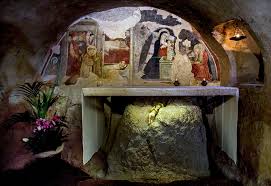
St. Francis of Assisi’s creation of the first Nativity scene in Greccio, Italy, in 1223 transcends its Christian origins. In staging the birth of Christ amidst a humble manger with livestock, Francis sought to awaken a profound sense of shared humanity. This act emphasized that God chose to enter the world not through power or wealth but in utter simplicity and poverty. For Francis, the manger was not just a Christian symbol—it was a universal emblem of humility and the dignity inherent in all life (Thomas of Celano, First Life of St. Francis).
The Greccio reenactment invites reflection across faith traditions. In Judaism, humility is extolled as a central virtue (Proverbs 22:4), while Islam emphasizes care for the vulnerable and an egalitarian view of humanity (Qur’an 49:13). Likewise, Buddhist teachings on simplicity and detachment from materialism align with Francis’s message of Christ’s humble birth (Buddha’s Dhammapada). Focusing on shared values, the Nativity scene becomes a space where ecumenical and inter-religious communities can gather in solidarity and dialogue.
A Preferential Option for the Poor
At its heart, the Christmas story aligns with a “preferential option for the poor”—a principle that prioritizes the needs of society’s most vulnerable. The birth of Christ in a manger speaks powerfully to God’s identification with the marginalized. Francis’s life and teachings echoed this commitment, as he chose to live among the poor, serving them with humility and love (Bonaventure, Major Life of St. Francis).
In today’s world, this message remains urgent. Whether advocating for economic justice, addressing systemic inequality, or extending care to those displaced by conflict, the Nativity invites us to engage in transformative action. The Greccio Nativity was not merely a reenactment—it was a call to see the face of God in the poor and to respond with compassion and justice (Pope Francis, Fratelli Tutti).
The Altar: A Place of Rebirth and Solidarity
The Franciscan tradition connects the manger to the altar, highlighting the Eucharist as the community’s perpetual rebirth of Christ. The altar, adorned with the Nativity scene during Christmas, symbolizes the unity of divine love and human dignity. This connection challenges believers to embody Christ’s humility and extend it through acts of justice and mercy (Springer Link: Theological Reflections on Franciscan Traditions).
In this light, the Eucharist becomes not just a sacred ritual but a reminder to address the pressing needs of our world. For Francis, celebrating Mass over the manger was a bold declaration that Christ is present wherever people strive to uplift the poor and heal the broken. This message transcends denominational boundaries, inviting all who seek justice to find common ground.
Interfaith Reflections on Poverty and Justice
The Nativity story resonates with the ethical teachings of many faith traditions. In Judaism, the concept of tikkun olam (repairing the world) calls for addressing poverty and inequality (Mishnah Avot 2:21). Islam’s zakat (charitable giving) underscores the obligation to care for the poor (Qur’an 2:177), while Hinduism’s principle of dāna emphasizes selfless giving (Bhagavad Gita 17:20). These shared commitments to justice and compassion echo Francis’s vision of Christmas as a time for humility and service.
Modern interfaith efforts have embraced these shared values. Pope Francis’s encyclical Fratelli Tutti calls for global solidarity and dialogue, urging people of all faiths to unite in caring for the vulnerable (Pope Francis, Fratelli Tutti). This vision aligns seamlessly with St. Francis’s teachings, making the Nativity a powerful symbol of unity in diversity.
The Call to Action
Christmas is not merely a historical event but an ongoing invitation to embody divine love and solidarity with the poor. The Nativity challenges us to examine our lives and communities, asking how to make a “preferential option for the poor a reality.” Whether through advocacy, service, or interfaith collaboration, we are called to reflect the humility of the manger in our actions.
Conclusion
From this Franciscans perspective, Christmas celebrates humility, justice, and solidarity. The Nativity at Greccio offers a universal message that transcends religious boundaries, calling us to embrace a “preferential option for the poor” and to build a more compassionate world. As we gather around the altar or reflect on the manger, may we be inspired to act with humility and love, drawing strength from the shared values that unite humanity.
May the peace and justice of Christ’s birth guide us all this Christmas season.
“Glory to God in the highest, and on earth peace to all people of goodwill.”
Vatican II, Secular Franciscanism, and Contemporary Dilemmas
Emerging from the shadows of Vatican II, my relationship with the Catholic faith has been a profound confluence of revelation and introspection. The Council, which boldly championed harmonizing tradition with the contemporary pulse, laid the foundation of my early spiritual encounters. It was a chapter steeped in renewal, with the Church seemingly embracing a more expansive and empathetic vision.
As I matured, my devotion pulled me towards the Secular Franciscan Order. The Franciscan path, with its heart anchored in humility, simplicity, and a reverence for creation, struck a resonant chord in me. It provided a spiritual sanctuary aligned with the ethos of Christ’s teachings. Yet, this path has not been devoid of turbulence, especially in an era where Catholic fundamentalism and Christian nationalism cast long shadows across the landscape of the US Catholic Church.
Vatican II: A Turning Point of Renewal
The Second Vatican Council remains a pivotal watershed in Catholic history, an era when the Church sought to engage with the evolving world rather than retreat. The reforms it initiated were profound, forever altering the Church’s posture:
The introduction of vernacular languages into the Mass.
Greater involvement of laypeople within the sacred liturgy.
A renewed pursuit of social justice and interfaith harmony.
For those of us nurtured in this post-Vatican II environment, the Church felt alive—an entity that was evolving and adaptive to the needs of its congregants and the wider world. It was a time when faith and reason engaged in a harmonious dialogue, fueling a spirit of optimism and inclusivity.
Walking the Franciscan Path
My steps naturally led me to embrace the Secular Franciscan life, a call to embody the Gospel in the tapestry of everyday existence. St. Francis of Assisi’s teachings, with his deep love for all creatures and unwavering commitment to justice and peace, offered a compelling blueprint for holiness.
In this path, I discovered a community of like-minded souls bonded by a shared pursuit of simplicity and compassion. Together, we worked to manifest our faith through charity, stewardship of the environment, and advocacy for the disenfranchised. This collective pursuit of purpose fortified my spiritual journey, anchoring me in knowing that our faith could be lived out tangibly in the world.
The Rise of Rigidity: Fundamentalism and Nationalism
Yet, in recent times, the face of the US Catholic Church has morphed into something dissonant. The rise of Catholic fundamentalism and Christian nationalism has introduced discord into my spiritual path. These movements, steeped in rigid dogmatism and often entwined with political fervor, stand in stark opposition to the inclusive, compassionate spirit of Vatican II and the Franciscan way.
Catholic fundamentalism clings to a stringent interpretation of tradition, often stifling dialogue and critical reflection. This rigidity creates an environment where dissent is unwelcome, and those who question or seek broader interpretations of faith are marginalized.
Christian nationalism, on the other hand, entwines faith with national identity, promoting an exclusionary vision of America that distorts the universal message of love and unity that the Church ought to represent. This fusion of religion and politics turns the Church into an instrument of partisan ideologies, undermining its role as a beacon of justice and compassion.
A Beacon of Hope Amidst Trials
Despite the turbulence these movements have introduced into the modern Church, I remain unwavering in my devotion. The values of Vatican II and the Franciscan tradition continue to illuminate my path, reminding me that at the heart of Christianity lies a profound commitment to love, mercy, and service.
In these challenging times, holding fast to these core principles is essential. By nurturing dialogue, embracing the richness of diversity, and championing justice, we can help the Church reflect the transformative message of the Gospel.
While my journey as a child of Vatican II and a Secular Franciscan has been marked by joy and sorrow, I face the future with hope and resilience. Against the rising tide of fundamentalism and nationalism, I find solace in the enduring legacy of Vatican II and the timeless wisdom of St. Francis. These pillars remind me that, ultimately, love will triumph.