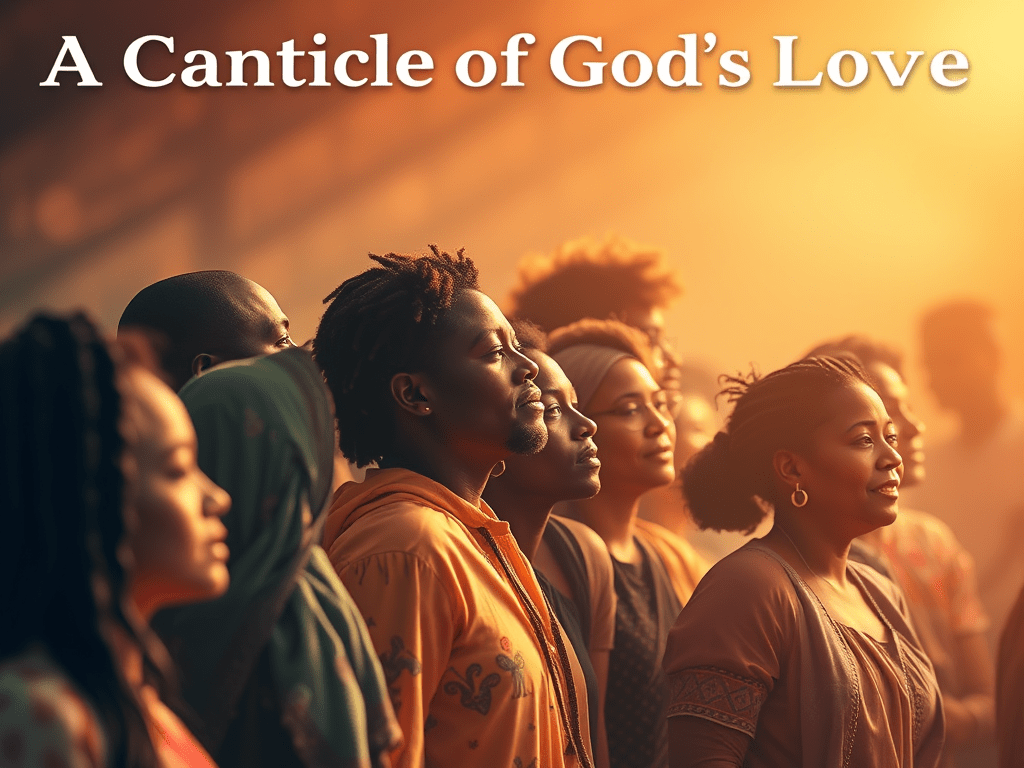
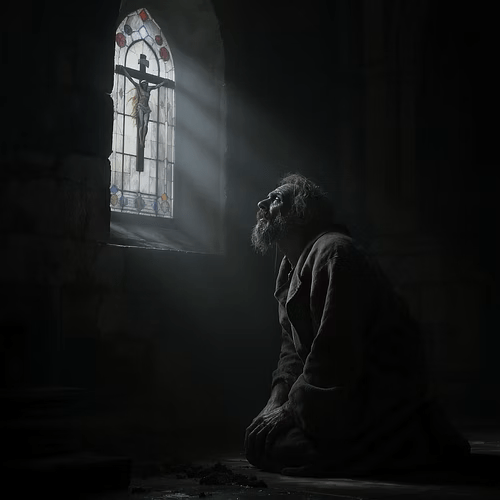
Psalm 1:
“Blessed is the man who does not walk in the counsel of the wicked, nor stand in the way of sinners, nor sit in company with scoffers.
Rather, the law of the Lord is his joy; and on his law he meditates day and night.
He is like a tree planted near streams of water, that yields its fruit in season; its leaves never wither; whatever he does prospers.
But not so are the wicked, not so! They are like chaff driven by the wind.
Therefore the wicked will not arise at the judgment, nor will sinners in the assembly of the just.
Because the Lord knows the way of the just, but the way of the wicked leads to ruin.”
A Franciscan and Ruttenberg-Inspired Reflection on Psalm 1: Finding Roots in a Time of Fear
Verse 1: Blessed is the man who does not walk in the counsel of the wicked, nor stand in the way of sinners, nor sit in company with scoffers.
As a Franciscan, I hear Brother Francis whispering through these words: step away from the noise of power and pride.^1 Today, in the U.S., fear grips us—fear of the other, fear of losing what we know, fear stoked by voices shouting division on screens and streets. The “wicked” aren’t just cartoonish evildoers; they’re the systems of greed, the policies that widen gaps, the cynicism that mocks hope.^2 Rabbi Ruttenberg might call this the unrepentant path—refusing to repair harm, whether to immigrants at our borders or the earth groaning under neglect.^3 Blessedness, for us, is choosing a different way: walking with the lepers of our time, the disenfranchised, the afraid, refusing to sit with those who scoff at compassion.
Verse 2: Rather, the law of the Lord is his joy; and on his law he meditates day and night.
Francis found joy in Sister Poverty and Brother Sun, seeing God’s law etched in creation and the Gospel’s call to love.^4 For Rabbi Ruttenberg, Torah isn’t static—it’s a sacred text we wrestle with, a guide to nurture the wow of life even when fear looms.^5 In this trembling moment—elections tearing us apart, climate disasters looming, rights under threat—meditating on God’s law means more than quiet prayer.^6 It’s active, like Francis rebuilding the Church stone by stone, or Ruttenberg urging us to repair what’s broken. We turn to love, justice, and mercy, day and night, to steady our shaking hands and hearts against the chaos.
Verse 3: He is like a tree planted near streams of water, that yields its fruit in season; its leaves never wither; whatever he does prospers.
Oh, how Francis would dance to this! A tree by the water—rooted in God’s grace, mirroring the Canticle’s praise for creation’s harmony.^7 Ruttenberg might see this as the fruit of ethical living, yielding repair in a fractured world.^8 But today, we feel uprooted—floods and fires threaten our homes, economic instability withers dreams, and fear whispers that nothing will prosper.^9 Yet, as Franciscans, we plant ourselves by the streams of solidarity: with the poor, the earth, each other. As Ruttenberg teaches, we nurture resilience, bearing fruit not for ourselves but for a hungry nation. Our leaves—our hope—won’t wither if we stay connected to the Source.
Verses 4-5: But not so are the wicked, not so! They are like chaff driven by the wind. Therefore the wicked will not arise at the judgment, nor will sinners in the assembly of the just.
Francis wept for sin’s emptiness, not to condemn but to call back.^10 The “wicked” here are like chaff—rootless, blown by fear’s gusts: the profiteers of division, the deniers of truth, the ones who’d rather burn bridges than build them.^11 Ruttenberg’s lens sharpens this: those who refuse repair drift away, unmoored from community.^12 In our fear—gun violence spiking, democracy wobbling, hate rising—we see this wind tearing at us. But judgment isn’t ours to wield; it’s God’s, and we pray, as Francis did, for conversion over collapse, trusting the just will stand together when the storm passes.
Verse 6: Because the Lord knows the way of the just, but the way of the wicked leads to ruin.
God knows us—intimately, as Francis knew the sparrows and the wolf.^13 Rabbi Ruttenberg might say God’s knowing is an invitation to align with Torah’s justice, to repair our way out of ruin.^14 Fear tells us ruin is near—cultural decay, ecological tipping points, a nation unraveling.^15 But the Franciscan heart clings to trust: God walks with the just, the peacemakers, the ones planting seeds in scorched soil. The wicked’s ruin isn’t our glee—it’s a warning to turn back, to choose life, to mend what fear has torn.
Tying It Together: A Prayer for Today
In this America of 2025, Psalm 1 is our lifeline.^16 As Franciscans, we stand with Francis, barefoot on the earth, refusing fear’s counsel—greed, hate, despair—and rooting ourselves in God’s law of love.^17 With Rabbi Ruttenberg’s wisdom, we see Torah and Gospel as tools to repair, to nurture, to flourish like trees even now.^18 Our fear—of loss, of violence, of an uncertain tomorrow—becomes a call: to meditate on what heals, to bear fruit for the weary, to trust God knows our trembling way. Together, we rebuild, not with walls but with bridges, singing peace to a frightened land.
Footnotes
- Regis J. Armstrong, et al., Francis of Assisi: Early Documents (New York: New City Press, 1999) – Historical accounts of St. Francis’ life, informing the Franciscan lens on simplicity and solidarity.
- Psalm 1:1, New American Bible Revised Edition (NABRE) (Washington, DC: USCCB, 2011) – The scriptural text quoted, from the official Catholic translation.
- Danya Ruttenberg, On Repentance and Repair: Making Amends in an Unapologetic World (Boston: Beacon Press, 2022) – Ruttenberg’s work on ethical repair, applied to the wicked as unrepentant.
- Francis of Assisi, The Canticle of the Creatures, ca. 1225 – St. Francis’ praise of creation, resonating with God’s law in nature.
- Danya Ruttenberg, Nurture the Wow: Finding Spirituality in the Frustration, Boredom, Tears, Poop, Desperation, Wonder, and Radical Amazement of Parenting (New York: Flatiron Books, 2016) – Her reflections on Torah as a nurturing guide.
- Psalm 1:2, New American Bible Revised Edition (NABRE) (Washington, DC: USCCB, 2011) – Specific verse cited for meditation on God’s law.
- Francis of Assisi, The Canticle of the Creatures, ca. 1225 – Cited for its harmony with the tree imagery.
- Danya Ruttenberg, On Repentance and Repair (Boston: Beacon Press, 2022) – Ethical living yielding repair, tied to the tree’s fruit.
- Psalm 1:3, New American Bible Revised Edition (NABRE) (Washington, DC: USCCB, 2011) – Specific verse for the tree imagery.
- Bonaventure, The Life of St. Francis (1263) – Biography highlighting Francis’ compassion and approach to sin.
- Psalm 1:4-5, New American Bible Revised Edition (NABRE) (Washington, DC: USCCB, 2011) – Verses cited for the chaff and judgment imagery.
- Danya Ruttenberg, On Repentance and Repair (Boston: Beacon Press, 2022) – Those who refuse repair drift away, sharpening the chaff metaphor.
- Francis of Assisi, The Little Flowers of St. Francis, ca. 14th century – Stories of Francis’ intimacy with creation (e.g., sparrows, wolf).
- Danya Ruttenberg, Life is a Sacred Text, Substack, ongoing – Her writings on aligning with Torah’s justice and repair.
- Psalm 1:6, New American Bible Revised Edition (NABRE) (Washington, DC: USCCB, 2011) – Verse cited for God’s knowing and the wicked’s ruin.
- Psalm 1, New American Bible Revised Edition (NABRE) (Washington, DC: USCCB, 2011) – Full psalm as the reflection’s lifeline.
- Regis J. Armstrong, et al., Francis of Assisi: Early Documents (New York: New City Press, 1999) – Francis’ barefoot simplicity and love as a model.
- Danya Ruttenberg, On Repentance and Repair (Boston: Beacon Press, 2022) – Torah and Gospel as tools for repair and flourishing.