Red Dress Day

: A Call to Justice for Missing and Murdered Indigenous Women

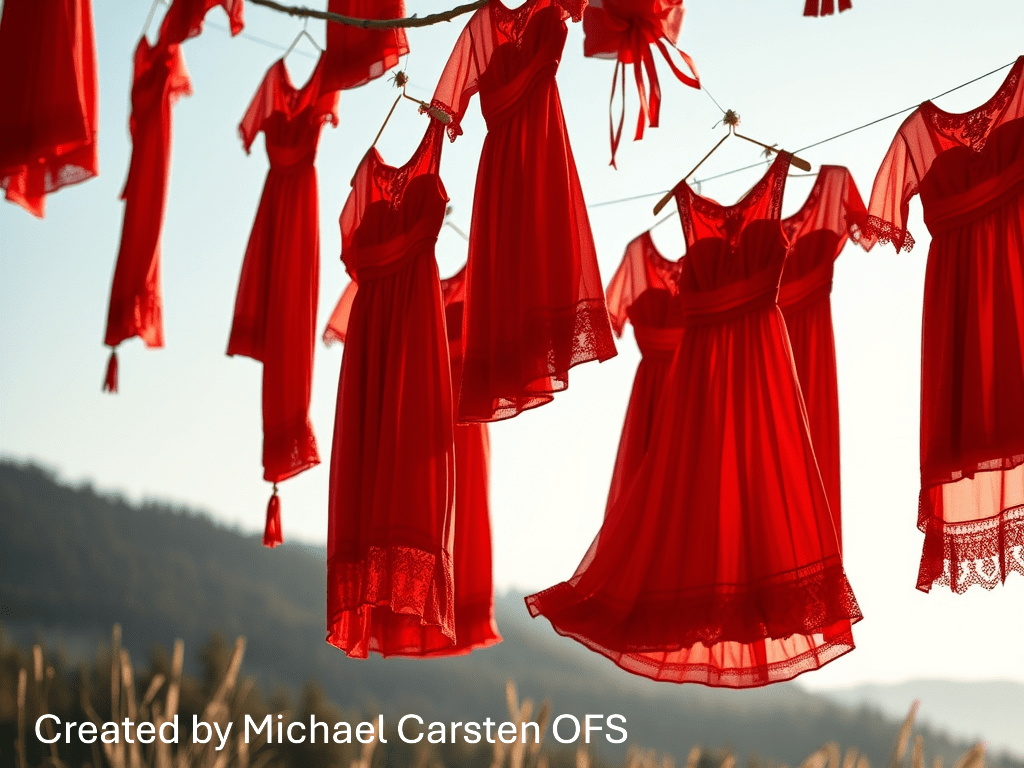
On May 5th, red dresses hang across the United States—empty, yet vibrant with the call of spirits, as envisioned by Métis artist Jaime Black’s REDress Project. Red Dress Day, aligned with the U.S. National Day of Awareness for Missing and Murdered Indigenous Women (MMIW), confronts a crisis of violence against Indigenous women and girls, rooted in colonial legacies, including the Catholic Church’s role in Indian boarding schools. As Secular Franciscans, inspired by Pope Francis’s call to care for the marginalized and seek reconciliation, we are summoned to lament this injustice, pursue healing, and demand a continued U.S. response to protect Indigenous women. In 2025, Red Dress Day is our call to live the Gospel by standing with Indigenous communities.

A Crisis Rooted in Historical Wounds

The statistics are staggering: Indigenous women in the U.S. face murder rates up to 10 times the national average, with 5,712 missing cases reported in 2016, though only 116 were logged in the Department of Justice’s database. Over 84% of American Indian and Alaska Native women experience violence in their lifetime, including 56% facing sexual violence. On some reservations, murder rates for Indigenous women are over 10 times the national average. This crisis, described as a “silent epidemic,” stems from systemic issues—colonization, racism, and intergenerational trauma.

The Catholic Church’s historical role amplifies this crisis. From the late 19th century to the mid-20th century, Catholic-run Indian boarding schools, like St. Boniface in California, forcibly assimilated Indigenous children, inflicting abuse and trauma. A 2022 Department of the Interior report estimated thousands of deaths at these schools, with Catholic institutions heavily implicated. This trauma fractured families, eroded traditional gender roles, and left generations vulnerable to poverty and violence—key risk factors for MMIW. Pope Francis, in his 2022 apology for the Church’s role in Canada’s residential schools, called for “concrete actions” to address such harms, a reminder that applies to the U.S. context. He urged Catholics to confront ongoing injustices, like MMIW, with humility and action.

As Secular Franciscans, we heed Pope Francis’s call that “the poor and the excluded are the living image of Christ” (Fratelli Tutti, 2020). The MMIW crisis demands we acknowledge the Church’s historical wrongs, seek forgiveness, and support justice for Indigenous women and girls.

The U.S. Response to MMIW

Red Dress Day, observed as the National Day of Awareness for MMIW on May 5th, honors victims like Hanna Harris, a Northern Cheyenne woman murdered in 2013, whose case sparked a 2017 Senate resolution. The red dress, symbolizing absence and resilience, calls us to support the U.S. response, which includes legislative, grassroots, and community efforts, though gaps remain.

  • Legislative Action: The U.S. has taken steps to address MMIW. The 2020 Savanna’s Act, named for Savanna LaFontaine-Greywind, murdered in 2017, improves data collection and law enforcement protocols for MMIW cases. The Not Invisible Act, also passed in 2020, created a commission of tribal leaders, survivors, and federal partners to recommend solutions, complementing Savanna’s Act. The 2013 Violence Against Women Act (VAWA) reauthorization restored tribal jurisdiction over certain domestic violence crimes, expanded in 2022 to cover sexual violence and trafficking. In 2021, Interior Secretary Deb Haaland established the Missing and Murdered Unit within the Bureau of Indian Affairs to investigate cases, a first-of-its-kind effort. Yet, implementation lags due to underfunding and jurisdictional complexities, with only 40% of Savanna’s Act’s protocols fully enacted by 2023.
  • Grassroots Movements: Indigenous-led advocacy drives progress. The National Indigenous Women’s Resource Center (NIWRC) organizes the National Week of Action for MMIW (May 5-9), amplifying family voices and pushing for policy reform. Groups like MMIW-TX, led by Jody Voice, provide resources and safety workshops in urban Native communities. The red hand over the mouth, a symbol of silenced voices, and the hashtag #NoMoreStolenSisters galvanize public awareness. In states like Washington, a 2023 MMIWP Cold Case Unit, the nation’s first, investigates unresolved cases with tribal consent.
  • Ongoing Challenges: Despite progress, systemic issues persist. Jurisdictional gaps between tribal, state, and federal authorities hinder investigations, with 71% of Native Americans living in urban areas facing limited culturally specific resources. Underreporting and racial misclassification skew data, minimizing the crisis’s scale. Police often dismiss cases as “runaways,” as Sheri Hill of Browning, Montana, notes, delaying critical action. Pope Francis’s call to “build a culture of encounter” (Fratelli Tutti) urges us to challenge these failures and advocate for systemic reform.

A Call to Action

Pope Francis reminds us, “We are called to be instruments of God for the liberation and promotion of the poor” (Evangelii Gaudium, 2013). As Secular Franciscans, Red Dress Day is our mandate to support the U.S. response to MMIW:

  • Learn with Humility: Read the 2022 Department of the Interior’s boarding school report or NIWRC’s MMIW resources. Reflect on the Church’s role in trauma, praying for forgiveness, as Pope Francis modeled in 2022.
  • Listen to Indigenous Voices: Follow groups like NIWRC or MMIW USA on social media. Share their stories in your fraternity or parish to amplify their calls for justice.
  • Advocate for Justice: Urge Congress to fully fund Savanna’s Act and the Not Invisible Act. Support VAWA’s tribal provisions. Write to officials or join rallies, as Pope Francis encourages, to “walk together” with the marginalized.
  • Serve the Marginalized: Donate to organizations like MMIW-TX or NIWRC. Attend vigils or events during the National Week of Action (May 5-9, 2025), listed on NIWRC’s website.
  • Build Peace: Challenge stereotypes rooted in colonial history, including missionary teachings, in your community. Share Red Dress Day’s significance, fostering dialogue, as Pope Francis calls for in Fratelli Tutti.

Rebuilding with Love

Red Dress Day is a cry for justice, echoing Pope Francis’s plea that “every human being has the right to live with dignity” (Laudato Si’, 2015). Rosalie Fish, an MMIW activist and athlete, runs to honor victims, saying, “I run for those who can’t.” Each red dress is a call to rebuild—with prayer, action, and solidarity. In 2025, let us wear red, hang dresses, and pray at vigils, but also commit to supporting the U.S. response—legislative, grassroots, and spiritual—to end the violence and restore safety for Indigenous women and girls.


For support, contact the National Indigenous Women’s Resource Center at 1-855-649-7299.

Sources:

  • U.S. Department of the Interior, Federal Indian Boarding School Initiative Investigative Report (2022)
  • Urban Indian Health Institute, Missing and Murdered Indigenous Women & Girls (2018)
  • National Indigenous Women’s Resource Center, MMIWR Resources
  • Bureau of Indian Affairs, Missing and Murdered Indigenous People Crisis
  • Native Hope, Missing and Murdered Indigenous Women (2024)
  • Pope Francis, Fratelli Tutti (2020), Evangelii Gaudium (2013), Laudato Si’ (2015), Apostolic Journey to Canada (2022)
The Weak Among Us: A Franciscan Reflection on Vulnerability, Justice, and Global Solidarity

As a secular Franciscan, I strive to view the world through the lens of the Gospel, inspired by St. Francis of Assisi’s radical love for the poor and the teachings of the Catholic Church. Recently, President Trump’s remark, “Only the Weak will Fail,” made in response to a faltering stock market, caught my attention. On the surface, it suggests a harsh, survival-of-the-fittest approach—those who can’t weather economic storms are simply left behind. But from a Franciscan standpoint, this perspective clashes with the call to humility, compassion, and solidarity that defines our faith. Who are “the weak” in this context? How does the stock market’s instability affect them? And why does this mindset stand in opposition to Catholic values? This article seeks to answer these questions, extending the discussion to global relationships and offering a vision rooted in justice.


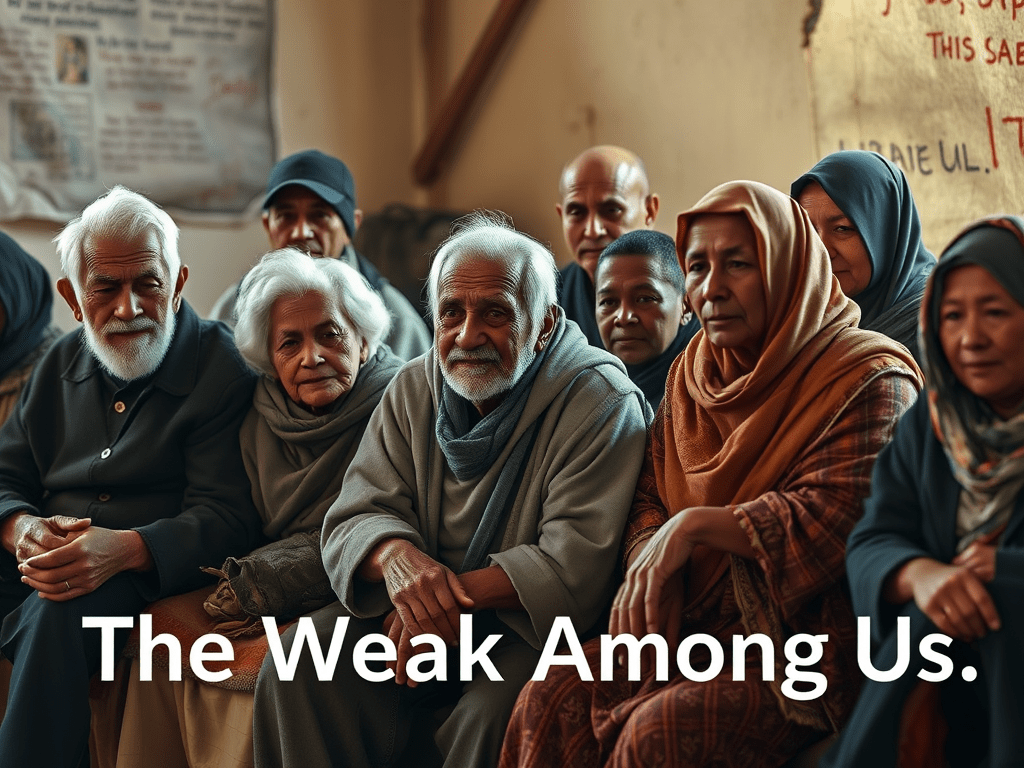
Who Are “The Weak” in the United States?

When economic tides turn, certain groups feel the sting more acutely—not because of personal weakness, but because of systemic realities that leave them exposed. Here’s a look at some of these vulnerable populations:

  • Seniors and retirees: Living on fixed incomes or savings, they’re hit hard by rising costs or market dips. Many also face mental health struggles, compounded by isolation or declining health.
  • Small business owners: Particularly in underserved areas, they teeter on the edge of closure during downturns, risking their own livelihoods and their employees’ stability.
  • Farmers: Small-scale farmers lack the buffers of big agribusiness, facing ruin from market swings, weather shifts, or trade disruptions.
  • Low-income individuals: Job cuts or reduced hours strip away access to basics like housing and healthcare, pushing them deeper into poverty.
  • Older workers nearing retirement: A market crash can drain retirement funds, forcing them to delay plans or support struggling family members longer.
  • Unemployed workers: Often low-wage or hourly, they’re the first laid off, losing income and stability in an unforgiving economy.
  • Students and young professionals: Entering a shaky job market, they wrestle with rising costs and slim opportunities to build a future.
  • Those struggling with mental health issues: Underfunded services and stigma already limit care; economic stress can deepen anxiety or depression.
  • The unhoused: Exposed to health and safety risks, they suffer more as downturns cut shelter funding and swell their ranks through evictions.
  • Those with illness and limited or no health insurance: Unable to afford treatment, they skip care, worsening both health and finances.
  • Young people with student loan debt: Saddled with loans, they struggle to find jobs that cover payments, delaying milestones like saving or buying a home.

These aren’t “weak” people in character or will—they’re made vulnerable by an economy that often prioritizes profit over protection. Healthcare costs, housing instability, inadequate mental health support, and a debt-driven education system amplify their risks.


The Stock Market’s Impact on “The Weak”

President Trump’s remark ties “the weak” to the stock market, implying that only those unable to endure its volatility will falter. For some, the connection is direct; for others, it’s a ripple effect:

  • Direct impacts: Seniors and older workers often rely on retirement funds linked to the market—a crash shrinks their security, forcing tough choices. Small business owners or farmers with investments face similar pressures.
  • Indirect consequences: Groups like the unhoused, those with mental health challenges, or the uninsured sick may not own stocks, but they suffer when market falls cut public funding for shelters, mental health services, or healthcare access. Unemployed workers and low-income families feel the pinch as businesses tighten belts, slashing jobs or hours.

The stock market isn’t just a number on a screen—it’s a force that can deepen existing vulnerabilities. To frame survival as a test of economic resilience ignores how much these groups depend on a system they can’t control.


Expanding to Global Relationships

The effects of a U.S. stock market drop don’t stop at our borders—they ripple worldwide, hitting vulnerable populations and testing global ties:

  • Developing nations: Reliant pop on U.S. trade and markets, these countries face instability when our economy stumbles, driving up unemployment and poverty.
  • Global farmers and small business owners: Tied to international supply chains, they’re battered by price swings and disruptions, often without safety nets.
  • Economic interdependence: A U.S. downturn can trigger global recessions, worsening conditions for the world’s poor.
  • Strained alliances: If the U.S. retreats from economic leadership, other nations feel the uncertainty, weakening partnerships and amplifying global risks.

This interconnectedness reveals that caring for “the weak” is a global responsibility. The U.S. stock market’s sway makes our economic health a matter of international justice, not just domestic policy.


Opposition to Catholic Teaching

The “Only the Weak will Perish” mindset echoes a survival-of-the-fittest philosophy that Catholic teaching firmly rejects. Our faith offers a different vision, one that hears the cries of the poor and responds with compassion. The Psalmist captures this timeless plea:

“‘Because the poor are despoiled, because the needy groan, I will now rise up,’ says the Lord; ‘I will place them in the safety for which they long.’” (Psalm 12:5, NRSV)

This scripture bridges the struggles of the vulnerable with the spiritual call to action central to Catholic teaching. It underscores that the poor’s cry—whether from economic hardship, illness, or exclusion—is not ignored by God, urging us to mirror that divine compassion. Catholic principles further reinforce this:

  • Preferential option for the poor: The Church insists we prioritize the vulnerable—those deemed “weak”—over the powerful. The Catechism declares, “The needs of the poor take priority over the desires of the rich” (CCC 2402-2406).
  • Universal destination of goods: Economic systems should serve everyone, not just those who can ride out a market crash. Wealth is for the common good, not the elite.
  • Solidarity: Pope Francis, in Evangelii Gaudium, condemns an “economy of exclusion” that “kills,” noting, “Such an economy kills… when the profits of a few grow exponentially while the majority are left behind” (EG 53). He calls us to reject indifference to the marginalized.

Catholic teaching, grounded in Christ’s love for the outcast, sees the “weak” as deserving of support, not abandonment. It challenges us to build an economy that reflects God’s care for all.


A Direct Attack on Our Sensibilities and Reason

We, as a people, are just barely recovered from COVID-19 and the loss of tens of thousands of our loved ones—parents, grandparents, friends—gone too soon, often without a proper goodbye. The economic fallout has been relentless: millions lost jobs, small businesses shuttered, and entire industries teetered on collapse. Families already stretched thin were pushed to the brink, and the uneven recovery has left many still struggling.

To hear, in this fragile moment, that “only the weak will perish” is more than an attack on our sensibilities—it’s a profound insult to our collective pain and resilience. It dismisses the suffering of the elderly couple who lost their savings, the farmer facing bankruptcy, or the single parent juggling mental health struggles and bills. These aren’t “weak” people; they’re caught in circumstances beyond their control, often worsened by systems that fail to protect them. The remark defies logic, reducing our post-COVID world—global supply chains, healthcare gaps, economic ties—to a simplistic, blame-the-victim trope. It’s not just cruel; it’s irrational, ignoring that a thriving economy depends on the health of our communities and the resilience of our most vulnerable.

This isn’t merely an understatement—it’s a betrayal of the compassion and solidarity that should define us after a crisis that tested us all. It challenges reason itself, brushing aside the need for collective action—policies that bolster healthcare, support small businesses, and protect the marginalized—in favor of a callous mindset that writes off the struggling as expendable.


Conclusion: A Call for Compassion and Justice

“The weak”—whether seniors, farmers, the unhoused, those with mental health struggles, the uninsured sick, or debt-burdened youth—aren’t disposable. Their vulnerabilities stem from systemic gaps, not personal failures. The stock market’s fall lays bare these cracks, while globally, economic ties demand collective responsibility. Catholic teaching, echoing the cries of the poor through scripture and tradition, urges us to reject a survival-of-the-fittest approach and embrace solidarity, ensuring no one “perishes” amid hardship. True strength isn’t in enduring alone—it’s in lifting each other up with compassion and justice.

True recovery—emotional, economic, and social—demands better. It demands an economy and a society that value every life, not just the ones deemed “strong” enough to survive. We’ve been through too much to settle for less.

Peace, Mike

Defending Pluralism Against Christian Nationalism


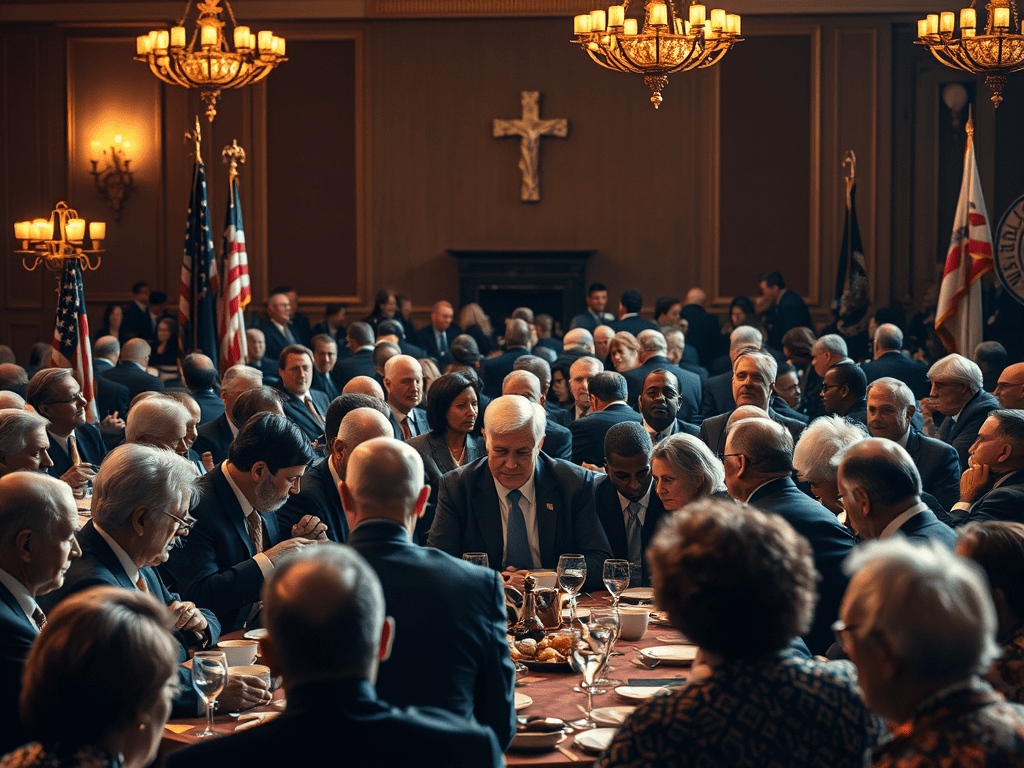
As a lay adherent of the Franciscan tradition, I am profoundly unsettled. The ethical and societal ramifications of President Trump’s explicit commitment to embolden Christian Nationalism demand scrutiny. Who orchestrates this movement? What are the veiled intricacies of the purported “three steps” he vows to enact? And why do so many, despite its glaring perils, welcome this agenda with open arms? These queries penetrate the very marrow of our national identity. The National Prayer Breakfast—once a solemn space for reflection and unity—has been repurposed into a pulpit for a divisive, exclusionary vision of America, one that subverts the foundational principles of religious liberty and democratic pluralism.

As the Washington Prayer Breakfast convenes once more, I am compelled to voice my dissent. What should be a sanctuary of humility and interfaith dialogue has metamorphosed into a clarion call for those who seek to enshrine an insular, rigid interpretation of Christianity as the guiding force of national policy. The reverberations of Trump’s 2025 address—his advocacy for a “faith office,” a commission on religious liberty, and an investigative force to root out so-called “anti-Christian bias”—persist, serving as a stark reminder of the dangers inherent in conflating faith with political hegemony.

Christian Nationalism, as propagated by Trump and his cohorts, is not a summons to authentic faith. Instead, it is a consolidation of power under the guise of religious zeal. It aims to impose a single spiritual identity. This is attempted on a nation deliberately founded upon the principles of religious diversity and freedom. As a Franciscan, my spiritual vocation demands that I resist this gross misrepresentation of the Gospel. It distorts Christ’s radical love and inclusivity into an apparatus of control. This article is grounded in the social doctrine of the Catholic Church. It embodies the ethos of Franciscan spirituality. It exhorts us to safeguard the vulnerable. It urges opposition to theocratic encroachments and a restoration of the genuine essence of faith.

The gravity of the moment cannot be overstated. From the corrosion of the constitutional separation of church and state to the marginalization of minority faith communities, this trajectory imperils the very architecture of democracy. However, despair is not our calling. As Franciscans, we are summoned to action. The Washington Prayer Breakfast serves not merely as a testament to our present tribulations, but as a rallying point—a summons to defend justice, pluralism, and the sacred dignity of all human beings.


1. The National Prayer Breakfast: A Corrupted Tradition

Since its inauguration in 1953, the National Prayer Breakfast has symbolized bipartisan dialogue and spiritual contemplation. Yet, under Trump, it has devolved into a platform for Christian Nationalist dogma—an ideology that seeks to overwrite America’s diverse religious landscape with a rigid theological hierarchy. This is not the Gospel; it is a manipulation of faith for dominion.

Catholic teaching repudiates the instrumentalization of faith for worldly power. In Evangelii Gaudium, Pope Francis denounces “spiritual worldliness,” cautioning against reducing religion to a “pursuit of power, prestige, pleasure, or economic security” (Paragraph 93). A gathering that once embodied unity now teeters on the precipice of becoming an altar for this corruption.


2. Trump’s 2025 Address: A Rallying Cry for Christian Supremacy

During the 2025 National Prayer Breakfast, Trump unveiled an ominous blueprint for America’s future—one shackled by Christian Nationalist edicts. He proposed:

  • A presidential commission on religious liberty purportedly safeguarding “Christian values” while systematically sidelining other faith traditions.
  • A White House ‘faith office,’ integrating Christian ideology into the scaffolding of federal governance.
  • A task force spearheaded by Attorney General Pam Bondi, charged with eradicating “anti-Christian bias” within governmental institutions.

While Trump framed these measures as fortifications of religious liberty, their underlying intent is unmistakable—a calculated stride toward theocratic dominion. As a Franciscan, I discern in this not a call to spiritual renewal, but a declaration of war against justice, inclusivity, and the Gospel’s call to serve the disenfranchised.

The Catechism of the Catholic Church (CCC 2108) affirms that “the right to religious liberty is neither a moral license to adhere to error, nor a supposed right to error.” True religious freedom does not bestow privilege upon one faith; it enshrines the dignity of all.


3. Christian Nationalism: A Perilous Counterfeit of Christianity

Christian Nationalism is not Christianity—it is a perversion that interlaces national identity with a rigid, exclusionary religious dogma. It obliterates the rich mosaic of beliefs that constitute this nation, supplanting them with a hegemonic, state-sanctioned faith. It seeks legislative and cultural supremacy, forsaking the Gospel’s commandment to love and uplift all.

Pope Francis, in Fratelli Tutti, exhorts that “authentic faith does not engender intolerance” (Paragraph 249). Christian Nationalism, conversely, festers division and exclusion, warping the Church’s sacred mission to embody a “sacrament of unity” (CCC 775).


4. The Betrayal of Justice: Trump’s Theocratic Agenda

Trump’s Christian Nationalism manifests through legislative oppression:

  • Judicial Manipulation – Appointing judges who subordinate constitutional law to theological dogma.
  • Religious Exemptions – Granting broad allowances that enable businesses, hospitals, and organizations to deny services to certain individuals under the pretense of “religious conscience.”
  • Educational Indoctrination – Promoting school policies that funnel taxpayer funds into Christian institutions while censoring curricula that acknowledge America’s diverse religious and cultural history.

Such policies are not merely political; they are moral transgressions. They exploit religious sentiment to entrench authoritarianism, forsaking the most vulnerable in the process. Catholic doctrine underscores that “the dignity of the human person is the foundation of a moral vision for society” (USCCB, Forming Consciences for Faithful Citizenship). Policies that degrade the marginalized violate this principle.


5. The Legal and Constitutional Abyss

The First Amendment enshrines freedom of religion—not the establishment of a state religion. Trump’s initiatives erode this boundary, resulting in:

  • Legal Precarity – Policies favoring Christianity stand on precarious constitutional footing.
  • Social Fractures – Elevating one faith above others imperils communal harmony, sowing discord in a society predicated on pluralism.

Catholic teaching maintains that “the political community and the Church are autonomous and independent of each other” (Gaudium et Spes, Paragraph 76). Trump’s agenda flouts this tenet, coalescing state and ecclesiastical power in pursuit of dominion.


6. A Franciscan Call to Action

Trump’s Christian Nationalism is not merely a political maneuver—it is a theological crisis. As Franciscans, we are summoned to:

  • Organize – Forge interfaith alliances that repudiate Christian Nationalism.
  • Educate – Dispel the myths that underpin theocratic ambitions.
  • Advocate – Champion policies that protect religious liberty for all traditions.
  • Serve – Stand in radical solidarity with the marginalized, embodying Christ’s boundless love.
  • Resist – Reject policies that enshrine religious supremacy.

For Franciscans, the imperative is clear: We must denounce the heresy of Christian Nationalism and reclaim a faith that “does not seek to dominate, but to serve” (Evangelii Gaudium, Paragraph 197). The fate of both our democracy and the integrity of our faith hinges upon our response.