
A Hunter’s Heart, A Franciscan’s Call: Why We Must Support Michigan’s New Gun Safety Agenda


I have lived in Michigan my entire life. Like many of you, I grew up with the rhythm of the seasons—the crisp air of October, the quiet of the woods, and the anticipation of deer season. I am a lifelong gun owner and a hunter. I respect firearms for what they are: tools that require responsibility, training, and deep respect.

But I am also a Secular Franciscan.

A few years ago, Br. George OFM Cap asked me a question that has stuck with me ever since. He asked about the possibility of the Secular Franciscan Order (OFS) being more aggressive in the area of gun control legislation and regulation. At the time, I gave a thoughtful answer, but looking at where we are today—in late 2025—I feel compelled to give a more public, urgent response.

The answer is yes. It is time for us to be aggressive. And as a gun owner, I am telling you that the agenda currently moving through Lansing is not the enemy of the Second Amendment; it is the ally of the Gospel.

The Myth of the “Anti-Gun” Agenda

There is a narrative often pushed by groups like Great Lakes Gun Rights that any regulation is a slippery slope to confiscation. As a hunter, I find this disingenuous. The legislation we are seeing in 2025 targets specific, modern threats that have nothing to do with my ability to fill a freezer with venison.

Take Senate Bills 331 and 332, for example. These bills seek to ban “ghost guns”—firearms built from kits or 3D-printed at home without serial numbers. These weapons bypass background checks entirely. They are designed for one purpose: to evade the law. No ethical hunter needs a ghost gun. Yet, these bills are currently stalled in the State House, with leadership threatening they are “dead on arrival”. Why? Why should we tolerate untraceable weapons flooding our streets in the name of “freedom”?  

Similarly, we recently saw the passage of Public Act 157, which prohibits firearms in polling places. Critics screamed about disarmament, but the law actually includes an exemption for CPL holders to carry concealed. It strikes a balance: it prevents the intimidation of open carry at the ballot box while respecting the rights of licensed carriers. This is sensible policy, not tyranny.  

The Task Force Report: A Public Health Roadmap

What strikes me most, however, is the courage shown by the Governor’s Gun Violence Prevention Task Force, led by Dr. Natasha Bagdasarian. On November 24, they released a report that treats gun violence not as a political football, but as a public health crisis—similar to how we tackled car accidents in the 20th century.  

Their recommendations go beyond the “safe” political choices. They are calling for:

  • A ban on assault weapons: Weapons of war have no place in our communities.  
  • Raising the minimum purchase age to 21: The data shows that young brains are still developing impulse control. Raising the age saves lives, particularly regarding suicide.  
  • Closing the CPL loophole: Ensuring that every firearm purchase includes a background check, even for license holders, so that those who have become prohibited persons since getting their license can’t slip through the cracks.  
  • Universal Waiting Periods: A “cooling-off” period to prevent impulsive acts of violence and self-harm.  

As a hunter, none of these proposals threaten my way of life. But as a Franciscan, they align perfectly with our Rule.

A Pro-Life Stance

We Franciscans are called to “create conditions of life worthy of people redeemed by Christ” (OFS Rule, Art. 13). We cannot claim to build a culture of life if we ignore the instruments of death that kill over 40,000 Americans a year.

The U.S. Bishops have consistently called for a ban on assault weapons and stricter controls on handguns. The Franciscan Action Network has declared gun violence a “pro-life issue and a moral issue”. When Br. George asked me about the OFS being more aggressive, he was tapping into a deep truth: our silence is complicity.

We often hear the argument that “guns don’t kill people, people kill people.” But as Franciscans, we know that we are influenced by the world around us. A society awash in military-grade weaponry is a society that has normalized violence. By regulating the tools of violence, we can help shape the heart of the culture.

My Response to Br. George

So, here is my response to Br. George, and my plea to my fellow Michigan gun owners:

We can support these laws. We must support these laws. Supporting a ban on ghost guns or assault weapons does not make you a “bad” gun owner; it makes you a responsible citizen. It makes you a neighbor who cares more about the safety of children in classrooms than the convenience of hobbyists.

The legislative path is hard. The bills banning ghost guns and bump stocks are stuck in the House, blocked by partisan gridlock. But we have a voice. I urge you to contact your representatives. Tell them you are a gun owner, a person of faith, and that you support the Task Force recommendations.  

Let us be aggressive in our pursuit of peace.

Pax et Bonum.

When the Gospel Is Gagged:


A Personal Reflection from a Secular Franciscan in the Face of State Violence and Ecclesial Silence

“They dress the wound of my people as though it were not serious. ‘Peace, peace,’ they say, when there is no peace.”
—Jeremiah 6:14

April 20, 2025
Today marks a sobering anniversary: the birthday of Adolf Hitler. A day that should remain buried in shame now pulses with renewed relevance. In a world increasingly seduced by authoritarianism, cruelty, and control, the shadows of fascism stretch once more across our public life. That I must even name this date as spiritually significant speaks to the depth of our descent.

I am no longer in a moment of political disagreement. I am living in a season of moral collapse. And far too much of the Church is whispering when it should be weeping, shouting, and standing in the streets.

As a Secular Franciscan, I am called to live the Gospel—a Gospel that embraces the poor, confronts the powerful, and walks with the crucified. And today, in 2025, that Gospel is being mocked, co-opted, and buried under the rubble of authoritarianism.

I write this reflection with grief, clarity, and holy defiance.


I. I Lament What Is Happening

I lament the loss of my faith in justice and the Supreme Court’s moral integrity.
Once a symbol of balance and accountability, the Supreme Court now appears as a political instrument, elevating ideology over impartiality and power over principle. I no longer trust that the highest court in the land serves the common good. Instead, I see decisions that deepen inequality, roll back civil rights, and dismantle long-held protections for the vulnerable. My faith in justice is wounded.

I lament the disintegration of democracy and the renewed assault on voting rights.
Through legislation like the SAVE Act (H.R. 22), restrictive ID laws, purges of voter rolls, and gerrymandered districts, this coordinated effort targets people of color, women, the poor, and the young. What is done in the name of “election integrity” is, in truth, an attempt to silence the very voices that most need to be heard. It is not only a civic crisis, but a spiritual one.

I lament the dismantling of Diversity, Equity, and Inclusion (DEI) initiatives across our institutions and military.
This is not about neutrality or fairness. It is a strategic retreat into exclusion and a calculated rejection of justice. The dismantling of DEI is the legitimization of racism, cloaked in the language of “colorblindness” and “merit.” It denies the lived realities of Black, Indigenous, and People of Color and silences those who have long been pushed to the margins.

I lament the growing machinery of mass deportation.
Masked, unnamed agents remove neighbors in pre-dawn raids. ICE interrogates children in schools. Detention centers expand. Venezuelan asylum seekers are deported to third-party countries with no legal standing. These are not isolated acts but a system of fear and erasure.

I lament the destruction of the Public School System.
A sacred trust is being dismantled through budget cuts, censorship, gun violence, and ideological surveillance. I lament the book bans, the attacks on teachers, and the rise of ICE presence in schools. I mourn the inequity between districts and the criminal neglect of poor, disabled, immigrant, and LGBTQ+ students.

And I lament that in this moment of crisis, the loudest educational priority from many bishops is school voucher expansion—a policy that accelerates the abandonment of public education while ignoring its collapse.

I lament the silence of our bishops.
They speak boldly about abortion, but remain mute on the sufferings of the immigrant, the worker, the prisoner, the mother in poverty—the very people Christ placed at the center of His Gospel.

I lament the desecration of creation.
Our national forests are being stripped by deregulation. Environmental protections are gutted. The cry of the Earth is ignored as the vulnerable suffer first and most.

I lament the collapse of the public health system.
Public health infrastructure is being dismantled just as crises mount. The mentally ill, the poor, and the chronically ill are left behind.

I lament the betrayal of workers.
Workplace safety protections, including NIOSH funding, are being rolled back, sacrificing lives for profit.

I lament the criminalization of dissent.
Protestors, journalists, and whistleblowers are surveilled, silenced, and smeared as threats to the state.


II. I Proclaim What I Believe

I believe that the Gospel of Jesus Christ is incompatible with authoritarianism, cruelty, and the exploitation of religion for power.

I believe in the dignity of all life, not only the unborn, but the poor, the sick, the undocumented, the incarcerated, and the forgotten.

I believe that Catholic Social Teaching demands not silence, but action—justice, solidarity, and mercy in public life.

I believe that Saint Francis would not bless these systems. He would be among the undocumented, the deforested, the evicted, and the dying. So must I.


III. I Commit to a Franciscan Path of Resistance

I will not be a chaplain to empire.
I will not remain neutral in the face of terror.
I will not trade truth for access.
I will not confuse the Cross with a flag.

Instead, I commit:

  • To protect immigrant families through accompaniment and sanctuary.
  • To name injustice—especially when done in Christ’s name.
  • To organize my fraternity as a space of resistance and healing.
  • To pray without ceasing and act without delay.
  • To weep when others shrug. To rise when others retreat.

I may not be able to stop what is unfolding. But I will not be complicit. I will not let the Gospel be gagged.

This is not just about politics.
This is about faithfulness.
This is about the soul of the Church.
This is about who I will be when history remembers me.

I am a Secular Franciscan.
I walk with the wounded Christ.
And I will not look away.

Pax et Bonum.
Mike

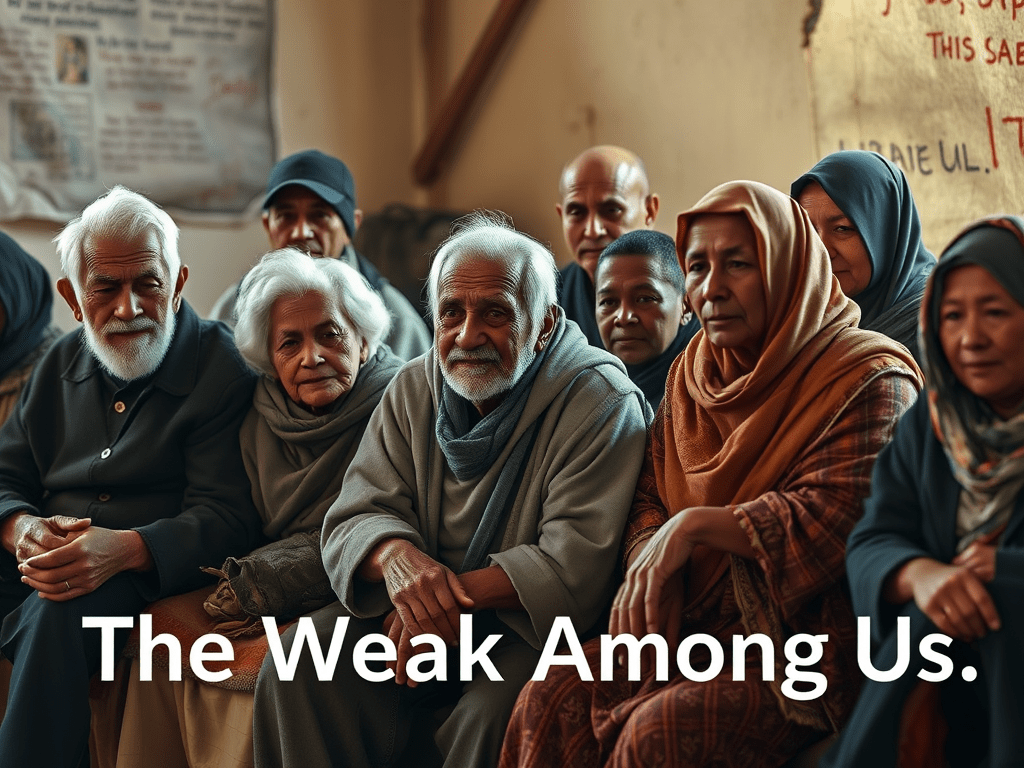
The Weak Among Us: A Franciscan Reflection on Vulnerability, Justice, and Global Solidarity

As a secular Franciscan, I strive to view the world through the lens of the Gospel, inspired by St. Francis of Assisi’s radical love for the poor and the teachings of the Catholic Church. Recently, President Trump’s remark, “Only the Weak will Fail,” made in response to a faltering stock market, caught my attention. On the surface, it suggests a harsh, survival-of-the-fittest approach—those who can’t weather economic storms are simply left behind. But from a Franciscan standpoint, this perspective clashes with the call to humility, compassion, and solidarity that defines our faith. Who are “the weak” in this context? How does the stock market’s instability affect them? And why does this mindset stand in opposition to Catholic values? This article seeks to answer these questions, extending the discussion to global relationships and offering a vision rooted in justice.


Who Are “The Weak” in the United States?

When economic tides turn, certain groups feel the sting more acutely—not because of personal weakness, but because of systemic realities that leave them exposed. Here’s a look at some of these vulnerable populations:

  • Seniors and retirees: Living on fixed incomes or savings, they’re hit hard by rising costs or market dips. Many also face mental health struggles, compounded by isolation or declining health.
  • Small business owners: Particularly in underserved areas, they teeter on the edge of closure during downturns, risking their own livelihoods and their employees’ stability.
  • Farmers: Small-scale farmers lack the buffers of big agribusiness, facing ruin from market swings, weather shifts, or trade disruptions.
  • Low-income individuals: Job cuts or reduced hours strip away access to basics like housing and healthcare, pushing them deeper into poverty.
  • Older workers nearing retirement: A market crash can drain retirement funds, forcing them to delay plans or support struggling family members longer.
  • Unemployed workers: Often low-wage or hourly, they’re the first laid off, losing income and stability in an unforgiving economy.
  • Students and young professionals: Entering a shaky job market, they wrestle with rising costs and slim opportunities to build a future.
  • Those struggling with mental health issues: Underfunded services and stigma already limit care; economic stress can deepen anxiety or depression.
  • The unhoused: Exposed to health and safety risks, they suffer more as downturns cut shelter funding and swell their ranks through evictions.
  • Those with illness and limited or no health insurance: Unable to afford treatment, they skip care, worsening both health and finances.
  • Young people with student loan debt: Saddled with loans, they struggle to find jobs that cover payments, delaying milestones like saving or buying a home.

These aren’t “weak” people in character or will—they’re made vulnerable by an economy that often prioritizes profit over protection. Healthcare costs, housing instability, inadequate mental health support, and a debt-driven education system amplify their risks.


The Stock Market’s Impact on “The Weak”

President Trump’s remark ties “the weak” to the stock market, implying that only those unable to endure its volatility will falter. For some, the connection is direct; for others, it’s a ripple effect:

  • Direct impacts: Seniors and older workers often rely on retirement funds linked to the market—a crash shrinks their security, forcing tough choices. Small business owners or farmers with investments face similar pressures.
  • Indirect consequences: Groups like the unhoused, those with mental health challenges, or the uninsured sick may not own stocks, but they suffer when market falls cut public funding for shelters, mental health services, or healthcare access. Unemployed workers and low-income families feel the pinch as businesses tighten belts, slashing jobs or hours.

The stock market isn’t just a number on a screen—it’s a force that can deepen existing vulnerabilities. To frame survival as a test of economic resilience ignores how much these groups depend on a system they can’t control.


Expanding to Global Relationships

The effects of a U.S. stock market drop don’t stop at our borders—they ripple worldwide, hitting vulnerable populations and testing global ties:

  • Developing nations: Reliant pop on U.S. trade and markets, these countries face instability when our economy stumbles, driving up unemployment and poverty.
  • Global farmers and small business owners: Tied to international supply chains, they’re battered by price swings and disruptions, often without safety nets.
  • Economic interdependence: A U.S. downturn can trigger global recessions, worsening conditions for the world’s poor.
  • Strained alliances: If the U.S. retreats from economic leadership, other nations feel the uncertainty, weakening partnerships and amplifying global risks.

This interconnectedness reveals that caring for “the weak” is a global responsibility. The U.S. stock market’s sway makes our economic health a matter of international justice, not just domestic policy.


Opposition to Catholic Teaching

The “Only the Weak will Perish” mindset echoes a survival-of-the-fittest philosophy that Catholic teaching firmly rejects. Our faith offers a different vision, one that hears the cries of the poor and responds with compassion. The Psalmist captures this timeless plea:

“‘Because the poor are despoiled, because the needy groan, I will now rise up,’ says the Lord; ‘I will place them in the safety for which they long.’” (Psalm 12:5, NRSV)

This scripture bridges the struggles of the vulnerable with the spiritual call to action central to Catholic teaching. It underscores that the poor’s cry—whether from economic hardship, illness, or exclusion—is not ignored by God, urging us to mirror that divine compassion. Catholic principles further reinforce this:

  • Preferential option for the poor: The Church insists we prioritize the vulnerable—those deemed “weak”—over the powerful. The Catechism declares, “The needs of the poor take priority over the desires of the rich” (CCC 2402-2406).
  • Universal destination of goods: Economic systems should serve everyone, not just those who can ride out a market crash. Wealth is for the common good, not the elite.
  • Solidarity: Pope Francis, in Evangelii Gaudium, condemns an “economy of exclusion” that “kills,” noting, “Such an economy kills… when the profits of a few grow exponentially while the majority are left behind” (EG 53). He calls us to reject indifference to the marginalized.

Catholic teaching, grounded in Christ’s love for the outcast, sees the “weak” as deserving of support, not abandonment. It challenges us to build an economy that reflects God’s care for all.


A Direct Attack on Our Sensibilities and Reason

We, as a people, are just barely recovered from COVID-19 and the loss of tens of thousands of our loved ones—parents, grandparents, friends—gone too soon, often without a proper goodbye. The economic fallout has been relentless: millions lost jobs, small businesses shuttered, and entire industries teetered on collapse. Families already stretched thin were pushed to the brink, and the uneven recovery has left many still struggling.

To hear, in this fragile moment, that “only the weak will perish” is more than an attack on our sensibilities—it’s a profound insult to our collective pain and resilience. It dismisses the suffering of the elderly couple who lost their savings, the farmer facing bankruptcy, or the single parent juggling mental health struggles and bills. These aren’t “weak” people; they’re caught in circumstances beyond their control, often worsened by systems that fail to protect them. The remark defies logic, reducing our post-COVID world—global supply chains, healthcare gaps, economic ties—to a simplistic, blame-the-victim trope. It’s not just cruel; it’s irrational, ignoring that a thriving economy depends on the health of our communities and the resilience of our most vulnerable.

This isn’t merely an understatement—it’s a betrayal of the compassion and solidarity that should define us after a crisis that tested us all. It challenges reason itself, brushing aside the need for collective action—policies that bolster healthcare, support small businesses, and protect the marginalized—in favor of a callous mindset that writes off the struggling as expendable.


Conclusion: A Call for Compassion and Justice

“The weak”—whether seniors, farmers, the unhoused, those with mental health struggles, the uninsured sick, or debt-burdened youth—aren’t disposable. Their vulnerabilities stem from systemic gaps, not personal failures. The stock market’s fall lays bare these cracks, while globally, economic ties demand collective responsibility. Catholic teaching, echoing the cries of the poor through scripture and tradition, urges us to reject a survival-of-the-fittest approach and embrace solidarity, ensuring no one “perishes” amid hardship. True strength isn’t in enduring alone—it’s in lifting each other up with compassion and justice.

True recovery—emotional, economic, and social—demands better. It demands an economy and a society that value every life, not just the ones deemed “strong” enough to survive. We’ve been through too much to settle for less.

Peace, Mike

The Spiritual Bond: Embracing Canada Over Conflict

As a lifelong Michigander and a Canadian in spirit, I’ve been blessed to live a life woven into the cultures of both regions. Canadians aren’t distant neighbors to me—they’re family. Their warmth, resilience, and quiet kindness have shaped who I am. I love their towering forests, rugged mountains, tranquil lakes, and rolling plains. I love the Great Lakes that bind us, the rivers flowing like lifeblood through the land. Above all, I cherish the spiritual connection I feel here—a bond that transcends borders and whispers of something eternal.

Lately, though, that bond has been eclipsed by pain and grief. The U.S. government’s portrayal of Canada as a villain – an adversary to be threatened with violent takeover – cuts me to the core. It’s not just rhetoric; it’s a betrayal of a sacred relationship. Canada isn’t a faceless entity; it’s home, refuge, inspiration. To see it demonized is a personal wound, unraveling the unity I’ve built in my heart over a lifetime.

This isn’t just my sorrow—it’s a broader injustice. The United States, a democracy fraying with division and distrust, turns outward instead of inward. We target Canada, a peaceful neighbor lacking the strength to resist. It’s cowardice, not strength, to exploit our power against the vulnerable—a failing nation cloaking its greed in bravado. Worse, we repeat this aggression with Panama’s jungles. We threaten Mexico’s deserts and Greenland’s icy expanses. Each threat is a fresh stain on our conscience. And then there’s Ukraine. We’ve abandoned it to face overwhelming odds alone, flexing our muscles elsewhere while a desperate ally falters. I’m ashamed of who we’ve become: a nation that bullies the weak and forsakes the suffering as our own house crumbles.

What makes this greed galling is its clash with our self-proclaimed Christian identity. We claim to follow Jesus—his teachings of humility, compassion, love for our neighbors. Yet where’s the humility in menacing Canada with domination? Where’s the compassion in leaving Ukraine to its fate while we chase selfish ambitions? The Christ I know spoke of turning the other cheek, caring for the least among us, seeking peace over power. Our actions reek instead of a lust for control—a betrayal of every sermon we’ve preached about moral superiority. This isn’t Christianity; it’s hypocrisy draped in false piety.

Canada, Panama, Mexico, and Greenland aren’t geopolitical pawns; they’re nations of people deserving dignity, not domination. I’ve walked Canada’s land, marveled at its waters, been welcomed by its communities—none of it ours to claim. I recall a crisp morning on Lake Superior’s shore. The mist rose like a prayer. It reminded me that true strength lies in coexistence, not coercion. Yet our threats sow fear where trust should flourish, division where solidarity should reign. This narrative, driven by conflict over cooperation, betrays the human and spiritual values that have long sustained us.

The fragility of this moment deepens my grief. Bonds forged through shared history and humanity are precious but not unbreakable. Watching us abandon Ukraine shows how easily we can lose what matters most. We are also menacing neighbors who wish us no harm. Still, I refuse despair. I hold fast to the love that ties me to Canada. The people there have embraced me. The landscapes restore me. The waters reflect our shared existence. That love gives me the strength to stand with them. We must unite against the hatred and fear tearing us apart.

We have a moral duty to reject this aggression. A nation struggling to uphold its own ideals has no right to force its will on others—least of all neighbors like Canada, Panama, and Mexico, or distant Greenland, whose peace should inspire us. We have no right to turn from Ukraine while claiming superiority. Instead, let’s reclaim the peace and understanding that define our better selves—values that echo the faith we profess. Let’s demand a shift: policies that prioritize partnership, voices that amplify the vulnerable, a discourse that heals rather than divides. Our shared humanity dwarfs any boundary or power play.

Reflecting on Canada’s beauty—and the dignity of all we’ve threatened—I’m filled with quiet determination. I cling to hope that compassion and reason will prevail, that we’ll stop painting Canada as a villain, stop menacing the defenseless, stop abandoning the suffering. I envision a day when we walk alongside others—not as tyrants in pious disguise, but as kin on a journey toward something better. In adversity, I find solace in the people, the land, the waters, and the spiritual thread uniting us. Together, we can rise above this pain, grief, and shame, building a future worthy of our highest calling.

“Woe Be to the Shepherds That Destroy and Scatter the Sheep” Jeremiah 23:1-2.


As a Lay Franciscan, a retired carpenter, a husband, father, and grandfather, I carry a heavy heart filled with sorrow and indignation as I witness the violence—both literal and figurative—being inflicted on the people of the United States. This pain is not the act of some distant enemy; it is our own family, our friends, and our neighbors who play roles in this destruction. Our politicians, pastors, and even our Bishops contribute to the suffering. They are tearing at the fabric of our nation, attacking the very idea of self-government and independence that defines us as a people.

I struggle to understand how those who have sworn an oath to defend the Constitution—including our Supreme Court Justices and military officers—can remain passive as these acts of violence are carried out. Instead of protecting the ideals entrusted to them, they allow the dismantling of government programs, the mass layoffs of workers, and the dismantling of structures meant to serve the common good.

The assault is profound: on our government, on our community, and on the hope, we hold for our future as a nation united. It leaves a deep wound in the soul of our country, affecting not just policies but lives—our lives and the lives of generations yet to come. It is a profoundly personal act of violence, eroding trust and solidarity, and forcing families like mine to confront the disheartening reality of what we are becoming. This pain is devastating, and as a man of faith and principle, I cannot remain silent while watching the principles of self-determination and the dignity of governance undermined in such an aggressive and calculated way.


Reflection on the Violence Inflicted on the American People by the Government of the United States.

As of 03:44 PM PDT on Friday, March 14, 2025, the Trump administration’s aggressive agenda to dismantle parts of the federal government has sparked significant concern and sorrow among observers and affected individuals. This reflection, written from the perspective of a concerned citizen, expresses deep sadness at the violence—both emotional and social—being inflicted upon the American people, particularly through the closure of government programs and mass layoffs. The analysis is informed by recent news articles, policy documents, and personal accounts, highlighting the deliberate nature of these actions to overwhelm and cause pain.


Background and Context

The Trump administration, in its second term starting January 2025, has pursued an agenda to reduce the size and scope of the federal government, often referred to as dismantling the administrative state. This effort, driven by executive orders, budget cuts, and policy proposals like Project 2025, overseen by figures like Elon Musk through the Department of Government Efficiency (DOGE), targets both domestic and international operations. By March 14, 2025, confirmed actions include rescinding 78 Biden-era executive orders, eliminating DEI programs, halting UNRWA funding, and firing 5,400 civilian employees in the Department of Defense, among others An agency-by-agency look at Trump’s plan to overhaul government. Planned actions, such as closing the Department of Education and integrating USAID into the Department of State, are pending, with potential further reductions in military spending and overseas operations.


Confirmed Actions and Their Impact

By March 14, 2025, the administration has implemented closures and stoppages, directly affecting American citizens:


Personal Stories and Emotional Toll

The human cost of these actions is profound, with personal stories highlighting the emotional and social violence inflicted. For instance, a federal worker, fearing retaliation, described feeling “completely blindsided” by a layoff notice after over 10 years of service, stating, “It’s devastating”. ‘You lose all hope’: Federal workers gripped by mental health distress amid Trump cuts.

Another, a mother of two, expressed worry about making ends meet, saying, “I don’t know what I’m going to do. I have to find another job quickly, but in this economy, that’s not easy”. Sweeping cuts hit recent federal hires as Trump administration slashes workforce.

These accounts reflect the financial and mental health crises, with reports of overwhelming stress, rapid weight loss, and panic attacks among federal workers.

Past government shutdowns, like in 2019, provide a precedent, with an estimated 800,000 federal workers missing paychecks, leading to missed rent, spoiled credit ratings, and food emergencies, particularly affecting African Americans in federal employment. America shuts down: how the federal government closure is impacting millions.

The Capital Area Food Bank held free grocery pop-ups for furloughed workers, underscoring the severity. America shuts down: how the federal government closure is impacting millions.


Planned and Hypothetical Actions

Planned actions, such as eliminating the Department of Education, would stop functions like Pell Grants and student loans, directly impacting students and families. US Education Department to cut half its staff as Trump eyes its elimination.

Hypothetical actions, like 8% annual budget cuts to the Department of Defense, could lead to further layoffs, affecting mainland and overseas operations. Trump’s dramatic plan to cut the federal workforce.

These potential changes add to the uncertainty and fear among Americans.


Design and Intent

It is my belief that these actions are “by design. Designed to overwhelm and cause pain” is supported by critics and legal experts. Democratic Senator Ron Wyden confirmed that doctors in all 50 states were unable to secure Medicaid payments during the funding freeze, highlighting the disruption. Trump aid freeze stirs chaos before it is blocked in court.

The Leadership Conference on Civil and Human Rights described the first week as “Chaos, Confusion, & Abuse of Power,” with executive orders targeting civil rights and attempting to dismantle diversity efforts. Chaos, Confusion, & Abuse of Power: Trump’s First Week Back in Office.

Legal scholars, like Steven Smith from Arizona State University, argued that the OMB memo’s breadth has no precedent, suggesting a deliberate strategy to bypass congressional authority. Fact check: What might Trump’s federal funding freeze stop?.


Voices of Concern “A Global Health Massacre”

Others express similar feelings of sadness and urgency. Elisha Dunn-Georgiou, President and CEO of the Global Health Council, described the USAID cuts as “horrible,” reflecting the gravity. Nearly all USAID programs have been cut by the Trump administration.

A humanitarian official called it “a global health massacre,” emphasizing the life-threatening impact. Nearly all USAID programs have been cut by the Trump administration.

Congressman Steve Cohen criticized past shutdowns as unnecessary and harmful, resonating with the user’s concerns. Criticizing Trump’s Government Shutdown.

Caritas Czech Republic highlighted that USAID’s shutdown endangers millions, indirectly affecting American security. 5 impacts of Trump’s decision to shut down USAID.


Table: Summary of Confirmed Actions and Impacts on Americans

Agency/DepartmentAction Taken by March 14, 2025Impact on American People
EOPRescinded 78 Biden-era executive orders, eliminated DEI programsDeepened social divides, affected marginalized communities
DODFired 5,400 civilian employees, ended DEI programsFinancial distress, mental health crises for federal workers
DOS/USAIDHalted UNRWA funding, paused foreign aidIndirect impact on American security through global instability
DOJAttempted to end birthright citizenship, blockedAffected immigrant communities, increased uncertainty
HHSRolled back ACA protectionsAnxiety among those reliant on health insurance, disrupted care
OMBHalted federal financial assistance, partially rescindedConfusion, disrupted state services, affected education centers
USDA, DOE, DOT, DOI, DHSVarious freezes and rollbacksDisrupted rural services, energy access, border security

Conclusion

The violence inflicted upon the American people through these government closures is real and tangible, manifesting as financial hardship, mental health crises, and disrupted services. It is designed to overwhelm and cause pain, as evidenced by the deliberate nature of the actions and the reactions from affected individuals and critics. This reflection expresses my own deep sorrow for the suffering endured, but also a resolve to resist and work towards a future where government serves all with compassion and equity.

Mike

Key Citations:

Mahmoud Khalil


Demanding the Release of Mahmoud Khalil: A Call for Justice and Human Dignity


In the spirit of St. Francis of Assisi, who tirelessly advocated for peace, justice, and the dignity of every human being, we raise our voices to demand the immediate release of Mahmoud Khalil. As Franciscans, we are called to stand with the oppressed and to be a voice for those who are silenced. The unjust detention of Mahmoud Khalil is not merely an individual tragedy—it is a violation of human rights and a wound to the collective conscience of all who seek peace and justice.


The Cry for Justice

Mahmoud Khalil, like so many others who suffer from oppression, is more than just a name in a headline—he is a human being created in the image of God, endowed with dignity and deserving of justice. His detention represents the ongoing struggles faced by countless individuals who find themselves imprisoned for political, religious, or ideological reasons. As followers of Christ and inspired by the teachings of the Franciscan tradition, we cannot remain silent in the face of such injustice.


A Franciscan Response

St. Francis of Assisi teaches us to walk humbly with the poor and the persecuted. Our Rule as Secular Franciscans calls us to work toward justice and peace, not only through prayer but also through action. We must advocate for Mahmoud Khalil’s release, not just as an act of mercy but as an imperative of justice.

Pope Francis reminds us that “the dignity of each human person and the pursuit of the common good are concerns which ought to shape all economic and political decisions” (Laudato Si’, 156). To detain an individual unjustly is to trample on their dignity and deny their fundamental rights.


A Call to Action

We urge all people of goodwill—religious leaders, human rights advocates, and policymakers—to join in demanding the immediate release of Mahmoud Khalil. Silence in the face of injustice is complicity. We must raise our voices in prayer, in protest, and in advocacy until justice is served.

Let us write to those in power, sign petitions, and spread awareness so that Mahmoud Khalil is not forgotten. Above all, let us keep him and all unjustly detained persons in our prayers, trusting that God, who is the source of all justice, will bring forth righteousness and peace.


May our actions be guided by the words of the Prophet Isaiah:


“Learn to do good; seek justice, correct oppression; bring justice to the fatherless, plead the widow’s cause.” (Isaiah 1:17)

Franciscan Action Network: Revitalizing Secular Franciscan Dedication to Justice and Harmony

The Franciscan Action Network (FAN) is a collective that unites the Franciscan Family to address social and environmental issues through advocacy rooted in Gospel and Franciscan values. Since its founding in 2007, FAN has empowered Secular Franciscans to engage in advocacy, emphasizing justice, peace, and ecological stewardship amidst political polarization.

The Franciscan Action Network (FAN) emerges as a formidable catalyst uniting the expansive Franciscan Family to confront our era’s intricate social and environmental dilemmas. Grounded in the principles of the Gospel and illuminated by the teachings of St. Francis and St. Clare, FAN is an intersection of faith and active advocacy, championing causes like social equity, ecological stewardship, and safeguarding human dignity.

For Secular Franciscans (OFS) in the United States, including regions such as Divine Mercy, FAN offers a tangible pathway to embodying their Gospel mission amidst societal fragmentation.

This exploration delves into FAN’s history, ongoing initiatives, and political engagements. It explains why the Secular Franciscan Order-USA and Divine Mercy Region must reinvigorate their allegiance to this pivotal movement.


Defining the Franciscan Action Network

The Franciscan Action Network is a spiritually anchored advocacy collective that fosters justice, peace, and environmental care. Founded in 2007, FAN emerged from a profound need to unify the Franciscan Family—friars, sisters, secular Franciscans, and laity—around addressing critical societal quandaries.

Its mission involves transforming the Franciscan charism into actionable initiatives deeply aligned with Catholic Social Teaching and Gospel tenets. FAN is a conduit for collaborative efforts, equipping its members with strategic resources, platforms, and opportunities to effect meaningful change.


Strategic Placement of FAN

FAN’s epicenter is strategically positioned near Capitol Hill in Washington, D.C. This locale enables FAN to engage directly with policymakers, advocacy networks, and legislative frameworks. By operating from this nucleus of influence, FAN amplifies the Franciscan voice within pivotal national dialogues.


FAN’s Engagement with Political Authorities

FAN’s interaction with the political sphere constitutes a cornerstone of its mission. It employs lobbying, advocacy, and public mobilization to infuse Gospel ethics into policymaking.

  • Cultivating Relationships with Policymakers
    FAN nurtures respectful and collaborative alliances with legislators across ideological spectrums, appealing to their intrinsic moral and ethical compass. This bipartisan strategy ensures that FAN’s ethos resonates broadly.
  • Advocacy Events
    Through annual Advocacy Days, FAN invites Franciscans to interact with elected representatives and voice concerns on pivotal issues like climate justice, immigration reform, and economic inequality.
  • Policy Contributions
    FAN articulates the Franciscan ethos through comprehensive policy briefs and legislative recommendations, providing ethical roadmaps grounded in Catholic Social Teaching.
  • Coalition Synergy
    Collaborating with other faith-based and secular coalitions, FAN magnifies its impact by uniting efforts toward shared objectives.
  • Empowering Advocates
    FAN equips its members through educational resources—workshops, toolkits, and webinars—instilling confidence and proficiency in advocacy efforts.

Historical Genesis of FAN

  • The Founding Aspiration
    Established in 2007, FAN sought to unify the Franciscan commitment to justice and peace by providing an organized platform to voice their Gospel-centered concerns in public discourse.
  • Early Achievements
    FAN’s initial campaigns—championing comprehensive immigration reform, combatting poverty, and safeguarding the environment—illustrated its capacity to embody Franciscan values within tangible societal actions.

FAN’s Contemporary Role for Secular Franciscans

  • Embodying the Franciscan Spirit
    FAN offers Secular Franciscans a concrete avenue to fulfill their Rule, particularly the mandate to spearhead efforts promoting justice. Members enact their Gospel vocation by engaging with FAN to address societal crises.
  • Advocacy Training and Resources
    FAN’s extensive repository of advocacy tools, webinars, and materials empowers Secular Franciscans to champion their causes effectively.
  • Bridging Political Rifts
    In an increasingly divided sociopolitical landscape, FAN’s Gospel-rooted ethos provides a cohesive foundation transcending political affiliations, uniting Franciscans around justice and compassion.

The Imperative of Supporting FAN

  • Confronting Pressing Challenges
    Addressing critical global crises such as environmental degradation, systemic poverty, and social inequities necessitates a coordinated Franciscan response. FAN offers the structure and expertise essential for these efforts.
  • Reclaiming the Prophetic Legacy
    Through FAN, Secular Franciscans can embody St. Francis’s radical vision, advocating for the marginalized and championing justice as a testament to their faith.

Practical Steps to Renew Support

  • Financial Backing
    Sustained funding underpins FAN’s mission. Local and regional fraternities can allocate budgetary support or organize fundraisers to bolster FAN’s initiatives.
  • Active Participation
    Secular Franciscans can engage directly by attending FAN events, hosting educational sessions, or spearheading local advocacy campaigns.
  • Fostering Collaborative Ties
    Regions like Divine Mercy can formalize partnerships with FAN, designating liaisons to foster communication and coordinate mutual efforts.

Navigating Challenges

  • Overcoming Political Polarization
    With many U.S. Catholics influenced by partisan dynamics, FAN’s nonpartisan commitment offers a model for uniting diverse perspectives under the common goal of Gospel-centered justice.
  • Raising Awareness
    Informational campaigns—via newsletters, fraternity presentations, or guest appearances by FAN representatives—can amplify understanding of FAN’s mission.

Conclusion

The Franciscan Action Network is a luminous beacon amidst societal fractures, embodying justice, peace, and care for creation—the essence of Franciscan spirituality. For Secular Franciscans, recommitting to FAN profoundly expresses their Gospel mandate.

The Secular Franciscan Order-USA and Divine Mercy Region can magnify their influence, deepen their dedication to justice, and honor St. Francis’s transformative legacy by re-establishing their partnership with FAN. Now is the time to act decisively, bringing the light of the Gospel into the shadows of modern society.


Frequently Asked Questions

  1. What is FAN?
    FAN is a Franciscan-inspired advocacy network prioritizing justice, peace, and environmental care.
  2. Where is FAN located?
    FAN operates from Washington, D.C., strategically near Capitol Hill.
  3. How does FAN engage politically?
    FAN integrates Gospel values into legislative efforts through lobbying, Advocacy Days, policy proposals, and coalition partnerships.
  4. Why is FAN significant for Secular Franciscans?
    FAN enables Secular Franciscans to fulfill their Rule by providing platforms for advocacy aligned with Franciscan principles.
  5. How can Secular Franciscans support FAN?
    By offering financial aid, participating in initiatives, and raising awareness within their fraternities.