

God’s Reality in a Conscious Universe
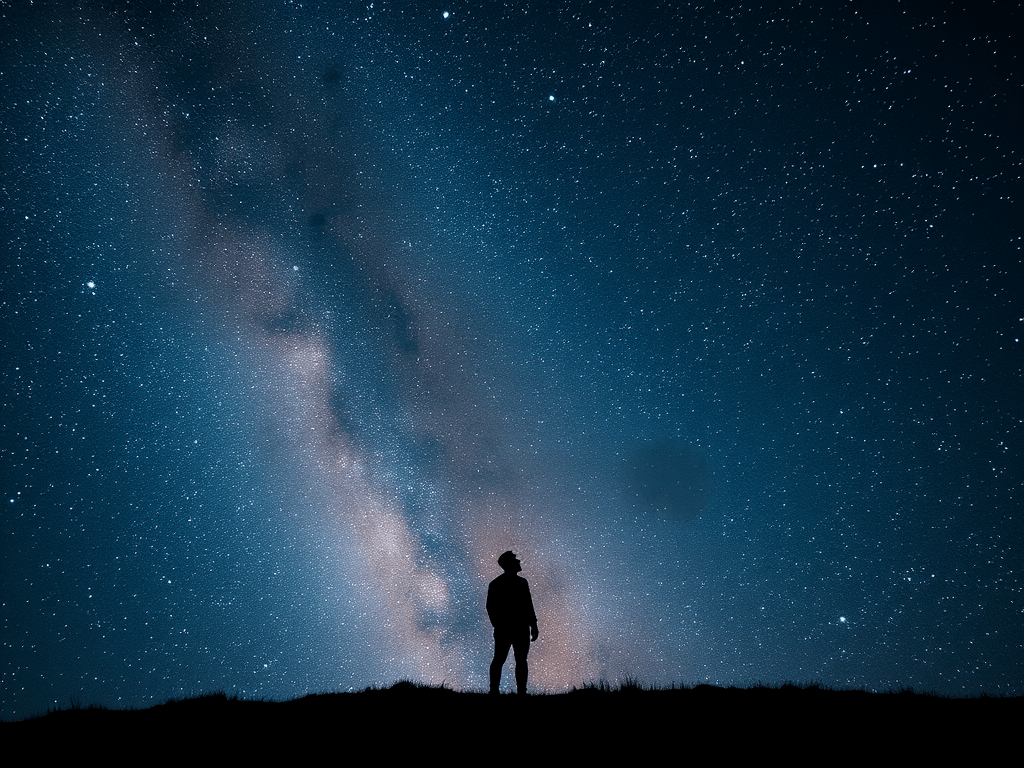
As I stand beneath the night sky, I gaze at the myriad stars that adorn the heavens. I am struck by the profound mystery of the universe. Each twinkling light represents a distant galaxy, a testament to the vastness and complexity of creation. In this moment of awe, I ponder the physical nature of the cosmos and its potential for consciousness. Could the universe be a conscious entity, aware of its existence and perhaps even of us within it?
The idea that the universe might possess consciousness is not new. Philosophers and scientists have explored this concept through various theories. One such theory is panpsychism, which suggests that consciousness is a fundamental aspect of reality. It is inherent in all matter. More specifically, cosmopsychism posits that the universe as a whole is conscious, a grand mind encompassing all that exists.
If the universe is conscious, what does this mean for our understanding of God? In traditional theistic views, God is often seen as a separate, transcendent being who created the universe. However, if the universe itself is conscious, might this consciousness be what we refer to as God?
This brings us to pantheism, the belief that God and the universe are identical. In this view, the conscious universe is God, and everything within it is a manifestation of the divine. Such a perspective encourages us to see the sacred in all things. It helps us to recognize that every star, planet, and living being is part of God.
There is also panentheism. It holds that while the universe is part of God, God is more than the universe. God encompasses and interpenetrates the universe but also transcends it. In this framework, the conscious universe is within God, the ultimate source of all consciousness.
Some propose that God is the field of consciousness within which the universe exists. Others suggest that the universe is a projection of God’s thoughts. Others see consciousness as a fundamental principle that drives the universe’s evolution, countering the entropy that leads to disorder.
These diverse perspectives highlight the complexity of the relationship between God, consciousness, and the universe. They challenge us to expand our understanding of the divine, to consider that God might be intimately connected to, or even identical with, the cosmos.
But what are the implications of such beliefs? If the universe is conscious and divine, does that mean it has intentions or purposes? Does it care about us, or is its consciousness so vast? Is it different from ours that it remains indifferent to our existence?
Moreover, how does this align with scientific understanding? While theories and hypotheses suggest the possibility of universal consciousness, it remains a topic of debate and speculation. Science has yet to provide conclusive evidence for or against this idea, leaving it in the realm of philosophy and theology.
As I reflect on these questions, I am reminded of Albert Einstein’s words, who spoke of a “cosmic religious feeling,” a sense of awe and wonder at the order and beauty of the universe. Perhaps this feeling is a glimpse into the consciousness of the cosmos, a connection to something greater than ourselves.
Ultimately, whether the universe is conscious or not, the night sky inspires and humbles me. It invites me to contemplate the mysteries of existence. I seek understanding and remain open to the possibility. The divine might be woven into the very fabric of reality.
This piece is a personal reflection inspired by Franciscan spirituality. This reflection is not meant to present official Catholic doctrine. It aims to share personal thoughts and questions about faith and the universe. For authoritative teachings, please refer to the Catholic Church’s Catechism or consult a qualified theologian.
Discover more from Chasing The Wild Goose
Subscribe to get the latest posts sent to your email.


Thank you for your consciousness…the birthing of the Christ is relentless…..a poem comes to mind:
This
never
arrives
never
leaves
never
ceases
coming
LikeLiked by 1 person