
By Mike Carsten, OFS, Ecumenical and Interreligious Animator, Divine Mercy Region
Introduction: A “Gospel to Life” Moment for Our Fraternity
Peace and All Good to you, my dear brothers and sisters of the Divine Mercy Region.
In these complex and often turbulent times, it is easy to feel overwhelmed by the political clamor that surrounds us. It can be tempting to retreat, to shield our hearts from the anxieties of the world. Yet, our Secular Franciscan vocation calls us to something more. It calls us to be present in the world, not as partisans, but as instruments of peace and witnesses to the Gospel. The Holy Spirit is giving our fraternity’s a profound invitation. This invitation urges us to live out our Rule in a concrete and challenging way. This is what our Rule means when it speaks of going “from gospel to life and life to the gospel”.1 We are called to be in the “forefront in the field of public life,” bringing the light of our charism to the most pressing issues of our day.4
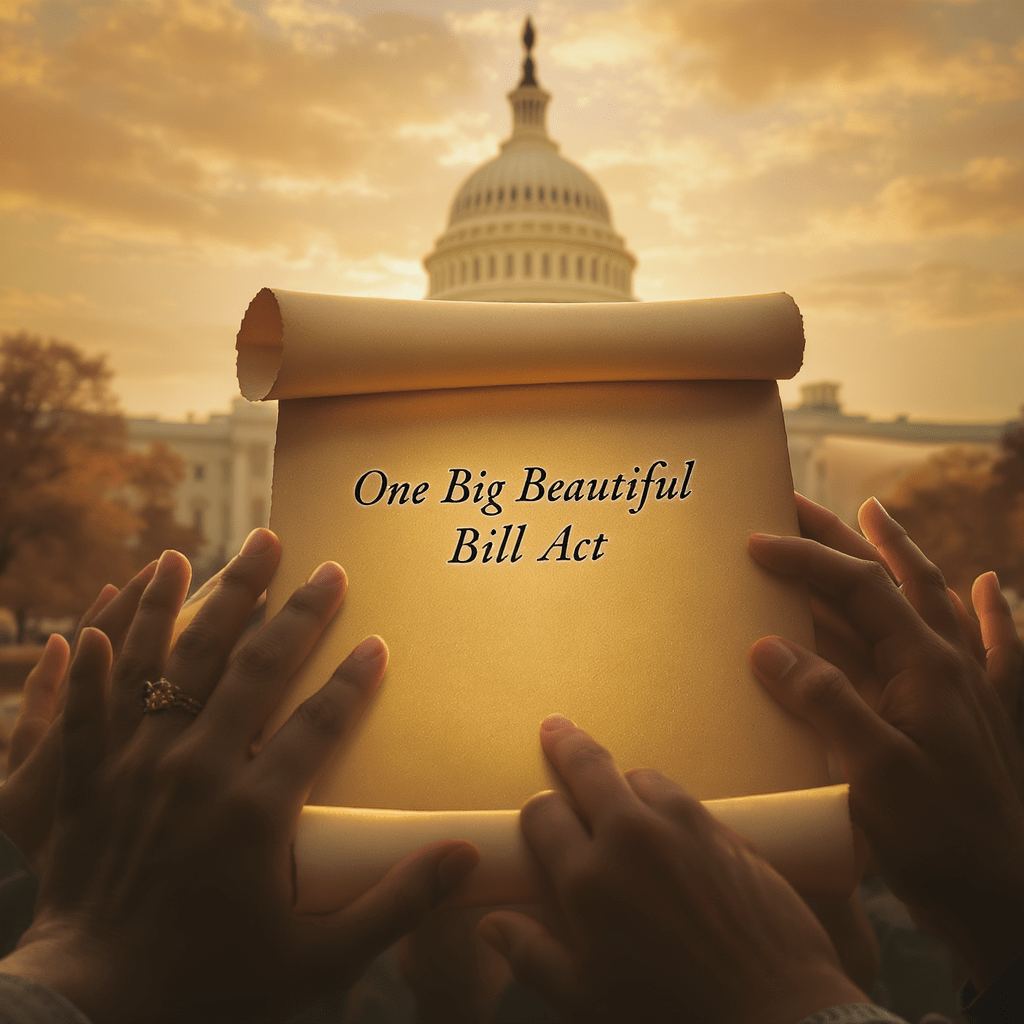
One such issue is now before the United States Senate: a massive piece of legislation known as the “One Big Beautiful Bill Act” (OBBBA). Its proponents promise it will unleash economic growth, secure our nation, and provide relief for working families.5 Yet, at the very same time, a powerful and diverse chorus of faith leaders, including 20 of our own U.S. Catholic bishops, has issued a stark and solemn warning. They have called the passage of this bill a “moral failure” that will harm the poor and vulnerable to the detriment of the common good.7
How do we, as followers of Francis and Clare of Assisi, navigate this stark contradiction? How do we discern the truth amid such conflicting claims? As your Ecumenical and Interreligious Animator, I offer this reflection not to provide easy answers, but to offer a framework for our shared discernment. My hope is that this article will serve as a resource for our personal prayer, our fraternal discussions, and our collective witness, helping us to find a unified, faith-filled response that is true to our Rule and our precious vocation to live the Gospel in the secular world.9
Part I: The Moral Test of a Nation: Unpacking the “One Big Beautiful Bill”
Before we can hold this legislation up to the light of the Gospel, we must first understand what it contains. Moving beyond the political slogans, we must examine its concrete provisions and their documented, human consequences. The bill’s proponents state its goals are to make the 2017 tax cuts permanent, provide full funding to secure the border, inject $150 billion into the military, and grow the American economy through tax relief for businesses and families.6 However, a closer look at the bill’s mechanics, as analyzed by non-partisan sources, reveals a profoundly different picture.
The Impact on “The Lowly”: A Reversal of the Beatitudes
The moral test of any society is how it treats its most vulnerable members. When we apply this test to the OBBBA, the results are deeply troubling.
Healthcare (Medicaid): The legislation proposes staggering cuts to Medicaid, the nation’s healthcare program for the poor, totaling between $793 billion and $880 billion over the next decade.7 This is not an abstract budget figure. The nonpartisan Congressional Budget Office (CBO) and other analysts estimate this will strip health coverage from as many as 10.9 million people.12 Among those losing coverage would be 1.3 million low-income seniors and people with disabilities who rely on Medicaid to afford their Medicare premiums and other essential care.13 The USCCB’s own letter warns that such cuts mean “millions of poor families will not be able to afford life-saving healthcare” and that “some rural hospitals will likely close”.15
Food Assistance (SNAP): The bill targets the Supplemental Nutrition Assistance Program (SNAP), formerly known as food stamps, with cuts of nearly $300 billion.12 These cuts are achieved through new, burdensome work requirements for families with children and by shifting costs to states, which the CBO estimates would force states to cut or eliminate benefits for 1.3 million people in an average month.17 This comes despite overwhelming evidence that SNAP is one of the most effective anti-poverty programs, reducing crime and improving long-term health and economic outcomes for children.17
The Economic Inversion: The combined effect of these cuts, when paired with the bill’s tax structure, creates what Archbishop John Wester of Santa Fe has called “the opposite of the Robin Hood effect”.19 The CBO’s analysis is stark and unambiguous: the legislation systematically transfers wealth from the poorest households to the wealthiest. By 2033, the CBO projects that households in the lowest income decile will see their available resources decrease by 4%, primarily due to the loss of Medicaid and SNAP benefits. Simultaneously, households in the highest income decile will see their resources increase by 2% due to tax cuts.20 Archbishop Timothy Broglio, president of the USCCB, summarized the bill’s effect with chilling clarity: “It takes from the poor to give to the wealthy”.15
This structure is not an accidental byproduct; it is the bill’s essential design. The massive tax cuts, which primarily benefit corporations and high-income earners, are paid for by equally massive cuts to the social safety net that sustains the poor.12 This reveals a moral vision embedded within the legislation itself—a vision that prioritizes the accumulation of wealth over the well-being of the vulnerable. For us as Franciscans, whose spirituality is founded on the “privilege of poverty” and a rejection of the systems of exploitation, this legislative vision is a direct antithesis to our way of life.23 It is not merely a political disagreement; it is a confrontation with a counter-Gospel.
Furthermore, the bill’s provisions create a devastating and mutually reinforcing cycle of poverty. The cuts are not isolated; they compound one another. A parent who loses Medicaid coverage is less able to stay healthy enough to meet a new work requirement to keep their family’s food assistance.13 A student from a low-income family who can no longer afford college because of changes to Pell Grant eligibility has one less pathway out of poverty.18 Archbishop Wester made this connection powerfully when he argued that forcing people deeper into poverty would likely increase the abortion rate, as women facing economic desperation feel they cannot afford to bring another child into the world.8 The bill does not simply fail to help the poor; it actively dismantles the very structures that provide stability and hope, creating the conditions for desperation.
The Impact on “The Stranger”: Building Walls, Not Bridges
Our faith calls us to welcome the stranger, seeing in them the face of Christ. The OBBBA proposes a radically different approach.
Massive Enforcement Funding: The bill allocates tens of billions of dollars to fund a “mass deportation campaign”.8 This includes funding to hire 10,000 new immigration enforcement officers and to expand the immigrant detention network to 100,000 beds—a 364% annual increase in the detention budget compared to fiscal year 2024.26
The Human Cost: This enforcement-only approach has a profound human cost that is already being felt in our communities. In their letter, the faith leaders state, “We have already witnessed a reduction in attendance at many of our religious services in our denominations, as the threat of enforcement has deterred many families from practicing their faith”.7 This is a direct assault on religious freedom, sowing fear in our parishes and neighborhoods. The bill also provides billions for a border wall, a policy which faith leaders warn will not create security but will “drive migrants into the most remote regions of the border and lead to an increase in migrant deaths”.19
The Impact on “Our Sister, Mother Earth”: Harming God’s Creation
In Laudato Si’, Pope Francis reminds us that a cry of the earth and a cry of the poor are one and the same. This bill harms both.
Rolling Back Protections: The legislation includes provisions that would repeal clean energy incentives, sunset clean electricity tax credits, and unlock more oil and gas development on federal lands.5
Consequences for the Poor: The USCCB letter correctly notes that these environmental cuts are not abstract. They will “lead to increased pollution that harms children and the unborn, stifle economic opportunity, and decrease resilience against extreme weather”.15 These consequences invariably fall hardest on the poor and marginalized communities who live in areas most vulnerable to pollution and climate-related disasters, making environmental justice an inseparable part of our preferential option for the poor.
Part II: A Prophetic Voice in Our Church: Two Letters, One Faith
The introduction of this bill prompted a rare and revealing moment in the life of the U.S. Church, with two distinct public responses from our bishops. Understanding the difference between these responses is crucial for our own discernment, not to sow division, but to learn about the different ways our faith can and must engage the world.
The Interfaith Letter: A Clarion Call of Conscience
Led by Archbishop John Wester of Santa Fe, a coalition of over 40 faith leaders, including 20 Catholic bishops like Cardinal Robert McElroy and Cardinal Joseph Tobin, and our own Archbishop Edward Weisenberger, issued a letter of profound moral clarity.7 Their language is direct and unambiguous. They do not ask for amendments or changes; they “write to ask for your opposition” to the bill.7 They state plainly that the proposed changes are “insufficient and do not significantly mitigate its adverse effects”.7 Their final judgment is a powerful indictment: the bill’s passage “would be a moral failure for American society as a whole”.7
The foundation of their argument is a single, powerful principle: “From our various faith perspectives, the moral test of a nation is how it treats those most in need of support”.7 This is the lens through which they evaluate the entire 1,000-page document. Because the bill so profoundly fails this test by harming the poor, immigrants, and creation, it is judged to be morally irredeemable.
As your Ecumenical Animator, I must emphasize the significance of this letter’s interfaith nature. The Catholic bishops stood shoulder-to-shoulder with leaders from the Episcopal, Baptist, AME, Presbyterian, Lutheran, Muslim, Jewish, and Evangelical traditions.19 This is a living example of our Franciscan call to “seek out ways of unity and fraternal harmony through dialogue” and to work with “all people of good will” to build a more fraternal world.4
The USCCB Statement: A Calculated Critique
The U.S. Conference of Catholic Bishops (USCCB), in a letter and statement from its president, Archbishop Broglio, took a different approach, described by news outlets as “firm but mixed”.19 The Conference rightly commended certain provisions, such as those they believe promote the dignity of human life by restricting funding to Planned Parenthood and those that support parental choice in education.7
At the same time, the USCCB’s critique of the bill’s other aspects was forceful. They called the cuts to programs for the poor “unconscionable and unacceptable” and stated that the bill “fails to protect families and children” and “harms God’s creation”.15 They called on Congress to make “drastic changes” to the legislation.15
The crucial difference lies in the ultimate conclusion. Where the interfaith letter called for the bill’s outright defeat, the USCCB stopped short, urging lawmakers to “pursue a better way forward” and “change the provisions that undermine these fundamental values”.7
This divergence in approach reveals two different models of Catholic public witness. The USCCB’s letter appears to follow a more transactional model, weighing the “good” provisions against the “bad” ones and arriving at a call for amendment. This is a common and often necessary strategy in political advocacy. The interfaith letter, however, embodies a more integral or holistic model of witness. It judges the entire bill based on its overall moral character and its fundamental orientation. For these 20 bishops and their interfaith partners, the profound and systemic harm the bill inflicts upon the poor and vulnerable so thoroughly poisons the legislation that its few praiseworthy elements cannot save it. It fails the most basic moral test.
This integral vision is deeply Franciscan. It reflects the spirit of Pope Francis’s encyclical Laudato Si’, which calls us to see the interconnectedness of social, economic, and environmental problems and to reject a “throwaway culture.” It resonates with our Rule’s call to build a “fraternal and evangelical world,” not simply to achieve piecemeal policy victories.3 The fact that many signatories of the stronger interfaith letter are bishops appointed by Pope Francis or his recent successor, Pope Leo XIV, is likely not a coincidence; it reflects this integral worldview that is so central to the Church’s social teaching today.19
Furthermore, the interfaith nature of the stronger letter is itself a powerful theological statement. By framing their opposition in universal terms—”the moral test of a nation”—the signatories elevated the debate beyond narrow, internal Catholic concerns. They appealed to the “divine seed in everyone” that our Rule calls us to recognize, demonstrating that care for the poor, the stranger, and creation is the common ground upon which we can build a more just society with all people of good will.9 This is the very essence of our ecumenical and interreligious mission.
Part III: From Gospel to Life: A Secular Franciscan Response
Now, we must turn from analyzing the world to examining our own hearts and our own Rule. How does our professed way of life call us to respond? When we hold this legislation up to the mirror of our Franciscan charism, the reflection is stark.
Article 4: “To observe the gospel of our Lord Jesus Christ…”
The very first article of our way of life states that our purpose is “to observe the gospel of our Lord Jesus Christ by following the example of Saint Francis of Assisi, who made Christ the inspiration and the center of his life with God and people”.2 We must therefore ask ourselves: Does this legislation reflect the Christ who chose for himself and his mother a poor and humble life?2 Does it reflect the Christ who identified himself completely with the “least of these” in Matthew 25?28 Does it reflect the Christ who proclaimed, “Blessed are you who are poor, for yours is the kingdom of God” (Luke 6:20)? The OBBBA, with its priorities of wealth accumulation and its marginalization of the poor, appears as a direct inversion of these core Gospel values.
Article 13: “…place themselves on an equal basis with all people, especially with the lowly…”
Our Rule commands us to accept all people as a gift and an image of Christ, and “with a gentle and courteous spirit,” to “place themselves on an equal basis with all people, especially with the lowly for whom they shall strive to create conditions of life worthy of people redeemed by Christ”.3 The OBBBA does the precise opposite. By systematically cutting healthcare, food assistance, and other essential supports, it actively dismantles the conditions of a dignified life for the poor and vulnerable.12 It is a legislative act of placing oneself above the lowly, not on an equal basis with them.
Article 11: “…stewards of the goods received for the benefit of God’s children.”
We are reminded that “according to the gospel they are stewards of the goods received for the benefit of God’s children” and are called to “purify their hearts from every tendency and yearning for possession and power”.2 The OBBBA’s tax structure, which lavishes benefits on the wealthiest individuals and largest corporations, actively promotes the very accumulation of possessions and power that our Rule warns against.20 It treats the nation’s common wealth not as a sacred trust to be used for the benefit of all God’s children, but as the private property of the powerful.
The Witness of Francis and Clare: Rejecting a System of Exploitation
We must remember that the choice of Francis and Clare for “Lady Poverty” was not just an act of personal asceticism. It was also a radical social critique. Furthermore, it served as an economic and spiritual critique of their society.31 They lived in a time, not unlike our own, of a rising merchant class and new forms of urban poverty.23 They saw clearly that the “cycle of exploitation and accumulation was the opposite of [Christ’s] self-emptying”.23 St. Clare fought popes for decades to preserve the “privilege of poverty” for her sisters, understanding that possessing property would inevitably draw them into this system of exploitation and distance them from the poor Christ.23 The OBBBA, with its systemic transfer of wealth and its assault on the social safety net, represents the very “economy of accumulation” that Francis and Clare rejected in favor of an “economy of poverty” characterized by sharing, solidarity, and mutual care.32
When we synthesize these points, a sobering conclusion emerges. The “One Big Beautiful Bill Act” presents us with what can only be described as a “Counter-Rule” to the Secular Franciscan way of life. Our Rule calls for simplicity; the bill promotes accumulation. Our Rule calls for solidarity with the lowly; the bill marginalizes them further. Our Rule calls for fraternity; the bill builds walls of fear and division. Our Rule calls for stewardship of creation; the bill promotes its exploitation. For a Secular Franciscan, then, opposing this legislation is not merely a political option; it is a matter of fidelity to our profession. To “live the gospel in the manner of Saint Francis by means of this rule” requires us to recognize and peacefully resist a public agenda that so profoundly contradicts it.3
This moment brings us face to face with the same choice that confronted the early Franciscan movement. As Fr. Richard Rohr, OFM, has noted, many friars after Francis’s death moved away from radical poverty because it placed them among the “minors”—the little ones, the powerless—rather than the “majors”—the powerful, the educated, the influential.24 The OBBBA is a legislative agenda written by and for the “majors.” Its benefits flow to large corporations, wealthy dynasties, and the powerful. Its immense costs are borne by the “minors”—the poor, the sick, the immigrant, the child, and our common home. The choice before us is the same one Francis faced. Do we align ourselves with the priorities of the “majors,” perhaps finding some good things to praise in their agenda? Or do we, like Francis and Clare, make a definitive choice to stand with and see the world from the perspective of the “minors”? The 20 bishops and their interfaith partners chose the latter, applying what one writer called the “hermeneutic lens of the poor” to the entire bill.32 This is the authentic Franciscan path.
Part IV: Where Do We Go From Here? A Path of Peace and All Good
Our discernment must not end in analysis; it must lead to conversion and action. Our Rule calls us to be “witnesses and instruments” of the Church’s mission.3 Here is a path forward for us, as individuals and as a fraternity, rooted in our charism.
The Way of Prayer: The Foundation of Action
All authentic Franciscan action begins in prayer.4 Before we speak or act, we must listen to God. I call on every member and every fraternity in the Divine Mercy Region to dedicate intentional time to prayer over this issue. Let us pray for the conversion of the hearts of our lawmakers, that they may see the faces of the poor and vulnerable who will be harmed by this bill. Let us pray in solidarity with those who are already suffering and those who live in fear of what is to come. And let us pray for ourselves, for the courage to be faithful witnesses, to be “bearers of peace which must be built up unceasingly”.4
The Way of Formation: From Information to Conversion
Knowledge must lead to a change of heart. I encourage every local fraternity to dedicate a meeting to studying and discussing this legislation in the light of our faith. Use this article as a starting point. Read the interfaith letter from the 20 bishops and the USCCB’s letter.15 Read Articles 11, 13, 14, and 15 of our Rule.3 Discuss the questions: How does this bill align with or contradict our professed way of life? What would Francis and Clare say to us in this moment? The goal of this formation is not simply to become better informed, but to undergo the “continual conversion” that is at the heart of our vocation.4
The Way of Action: Witness and Instruments of Mission
Our prayer and formation must bear fruit in action. We are called to “collaborate as much as possible for the passage of just laws and ordinances”.4 This is not an optional part of our Franciscan life; it is a duty of our vocation.
Personal Witness: Our first action is to live our Rule. Our commitment to a simple lifestyle (Article 11) is a powerful political and social statement in a culture of consumerism. By consciously reducing our own needs, we stand in solidarity with the poor and witness against the “throwaway culture” that this bill both reflects and reinforces.2
Public Witness: I urge every member of our Region to contact your two U.S. Senators. You can call their offices or send an email. You do not need to be a policy expert. Speak from your heart as a person of faith and a Secular Franciscan. Tell them you are praying for them. Tell them you believe the moral test of a nation is how it treats its most vulnerable members. Tell them that, based on your faith, you are asking them to oppose the “One Big Beautiful Bill Act” because it harms the poor, the stranger, and God’s creation. Your voice, rooted in faith, is powerful.
Fraternal Witness (The Animator’s Call): The 20 bishops have shown us the way by building a broad, interfaith coalition. As your Ecumenical and Interreligious Animator, I challenge our local fraternities to do the same. Reach out to the leadership of other churches, synagogues, and mosques in your town. Ask them if they are concerned about the impacts of this bill. Explore ways to collaborate in serving the poor and advocating for justice in your local community. This is how we live out our call to build “fraternal harmony through dialogue,” trusting in the “presence of the divine seed in everyone and in the transforming power of love and pardon”.9
Conclusion: Messengers of Perfect Joy
My dear brothers and sisters, the challenge before us is great, and the moral stakes are high. It is easy to feel discouraged. But we are not a people of despair. Our Rule reminds us that we are to be “messengers of perfect joy in every circumstance,” striving “to bring joy and hope to others”.3 Our witness is not rooted in political victory, but in the resurrection of Christ, “which gives true meaning to Sister Death” and allows us to “serenely tend toward the ultimate encounter with the Father”.3
Our ultimate trust is not in princes or presidents, not in political parties or legislative outcomes. Our trust is in the Lord Jesus Christ and in the “transforming power of love and pardon” that flows from his Sacred Heart.9 Let us go forth, then, with courage and with joy, to be the witnesses and instruments he has called us to be in this critical moment for our nation and our world.
May the Lord bless you and keep you.
May He show His face to you and be merciful to you.
May He turn His countenance to you and give you peace.
The Lord bless you. Amen.
Works cited
- Is the Secular Franciscan Order for you? FAQ, accessed June 28, 2025, https://queenofpeaceregion.org/is-the-secular-franciscan-order-for-you-faq
- The Rule of the Secular Franciscan Order | EWTN, accessed June 28, 2025, https://www.ewtn.com/catholicism/library/rule-of-the-secular-franciscan-order-11961
- THE RULE OF THE SECULAR FRANCISCAN ORDER, accessed June 28, 2025, https://secularfranciscansusa.org/wp-content/uploads/2017/07/RULE.pdf
- Secular Franciscan Order – Wikipedia, accessed June 28, 2025, https://en.wikipedia.org/wiki/Secular_Franciscan_Order
- The One, Big, Beautiful Bill – The White House, accessed June 28, 2025, https://www.whitehouse.gov/obbb/
- President Trump’s One Big Beautiful Bill Prevents the Largest Tax Hike in History and Unleashes Economic Growth – The White House, accessed June 28, 2025, https://www.whitehouse.gov/articles/2025/06/president-trumps-one-big-beautiful-bill-prevents-the-largest-tax-hike-in-history-and-unleashes-economic-growth/
- Catholic opposition grows to Trump’s big bill, accessed June 28, 2025, https://www.ncronline.org/catholic-opposition-grows-trumps-big-bill-bishops-conference-waffles
- 20 US bishops join interfaith effort opposing ‘Big Beautiful Bill’ – OSV News, accessed June 28, 2025, https://www.osvnews.com/20-us-bishops-join-interfaith-effort-opposing-big-beautiful-bill-as-moral-failure/
- Ecumenical / Interfaith Committee – Secular Franciscan Order – USA, accessed June 28, 2025, https://www.secularfranciscansusa.org/ecumenical-interfaith-committee-2/
- EN -GUIDE FOR FRATERNAL ANIMATORS OFS, accessed June 28, 2025, https://ciofs.info/wp-content/uploads/2024/10/EN-GUIDE-FOR-FRATERNAL-ANIMATORS-OFS.pdf
- Chairman Graham Releases Full Senate Text Of President’s One …, accessed June 28, 2025, https://www.budget.senate.gov/chairman/newsroom/press/chairman-graham-releases-full-senate-text-of-presidents-one-big-beautiful-bill
- The Implications of Federal SNAP Spending Cuts on Individuals with Medicaid, Medicare and Other Health Coverage | KFF, accessed June 28, 2025, https://www.kff.org/medicaid/issue-brief/the-implications-of-federal-snap-spending-cuts-on-individuals-with-medicaid-and-other-health-coverage/
- Medicaid Changes in House and Senate Reconciliation Bills Would Increase Costs for 1.3 Million Low-Income Medicare Beneficiaries | KFF, accessed June 28, 2025, https://www.kff.org/medicaid/issue-brief/medicaid-changes-in-house-reconciliation-bill-would-increase-costs-for-1-3-million-low-income-medicare-beneficiaries/
- The Senate is working to put Trump’s big bill back on track but hurdles remain, accessed June 28, 2025, https://apnews.com/article/trump-big-beautiful-bill-tax-cuts-snap-medicaid-salt-2c195fe68e849beaa681e3f75c8ed5ec
- US bishops’ conference calls for ‘drastic changes’ in Trump’s ‘Big Beautiful Bill’, accessed June 28, 2025, https://www.cathstan.org/us-world/us-bishops-conference-calls-for-drastic-changes-in-trumps-big-beautiful-bill
- How Medicaid and SNAP Cutbacks in the “One Big Beautiful Bill” Would Trigger Big and Bigger Job Losses Across States – Commonwealth Fund, accessed June 28, 2025, https://www.commonwealthfund.org/publications/issue-briefs/2025/jun/how-medicaid-snap-cutbacks-one-big-beautiful-bill-trigger-job-losses-states
- The One Big Beautiful Bill Act Would Gut Programs That Support Children, accessed June 28, 2025, https://www.americanprogress.org/article/the-one-big-beautiful-bill-act-would-gut-programs-that-support-children/
- 5 Ways Trump’s Big Beautiful Bill Will Undermine Public Safety | Vera Institute, accessed June 28, 2025, https://www.vera.org/news/5-ways-trumps-big-beautiful-bill-will-undermine-public-safety
- In rare move, Catholic leaders issue dueling letters criticizing GOP budget bill, accessed June 28, 2025, https://religionnews.com/2025/06/27/in-rare-move-catholic-leaders-issue-dueling-letters-criticizing-gop-budget-bill/
- Preliminary Analysis of the Distributional Effects of the One Big Beautiful Bill Act – Congressional Budget Office, accessed June 28, 2025, https://www.cbo.gov/system/files/2025-05/61422-Reconciliation-Distributional-Analysis.pdf
- Big Beautiful Bill House GOP Tax Plan: Details & Analysis – Tax Foundation, accessed June 28, 2025, https://taxfoundation.org/research/all/federal/big-beautiful-bill-house-gop-tax-plan/
- ATF Letter Opposing BBB – Americans For Tax Fairness, accessed June 28, 2025, https://americansfortaxfairness.org/atf-letter-opposing-bbb/
- St. Clare and feminism – CatholicPhilly, accessed June 28, 2025, https://catholicphilly.com/2018/03/commentaries/st-clare-and-feminism/
- The Legacy of Saint Clare | Franciscan Media, accessed June 28, 2025, https://www.franciscanmedia.org/franciscan-spirit-blog/the-legacy-of-saint-clare/
- National Faith Leaders’ Letter to U.S. Senators on HR1 Budget Bill – Archdiocese of Newark, accessed June 28, 2025, https://rcan.org/national-faith-leaders-letter-to-u-s-senators-on-hr1-budget-bill/
- What’s in and out of Trump’s big bill as Senate races to meet Fourth of July deadline, accessed June 28, 2025, https://apnews.com/article/trump-tax-cuts-bill-republicans-medicaid-snap-5106fb5d07a5675e01644aabde1f7df8
- Letter to Congress Regarding One Big Beautiful Bill Act, May 20, 2025 | USCCB, accessed June 28, 2025, https://www.usccb.org/resources/letter-congress-regarding-one-big-beautiful-bill-act-may-20-2025
- The Poverty of Christ | Franciscan Media, accessed June 28, 2025, https://www.franciscanmedia.org/franciscan-tradition-and-resources/the-poverty-of-christ/
- Distributional Effects of H.R. 1, the One Big Beautiful Bill Act | Congressional Budget Office, accessed June 28, 2025, https://www.cbo.gov/publication/61387
- Washington Roundup: Supreme Court concludes term, Senate weighs ‘Big Beautiful Bill’, accessed June 28, 2025, https://www.osvnews.com/washington-roundup-supreme-court-concludes-term-senate-weighs-big-beautiful-bill/
- Saint Francis of Assisi and His Love of Lady Poverty | Unleash the …, accessed June 28, 2025, https://www.unleashthegospel.org/2023/09/saint-francis-of-assisi-and-his-love-of-lady-poverty/
- Saint Francis and poverty | walk the way – WordPress.com, accessed June 28, 2025, https://walktheway.wordpress.com/2018/09/29/saint-francis-and-poverty/
- St. Clare of Assisi – FSPA Franciscan Sisters of Perpetual Adoration, accessed June 28, 2025, https://www.fspa.org/content/about/franciscan-heritage/clare-of-assisi
- Who are the Secular Franciscans, and what do they do? – St. Joseph Catholic Church | Charlton, MA, accessed June 28, 2025, https://www.stjosephscharlton.com/documents/2017/11/Who%20Are%20the%20Secular%20Franciscans%20and%20What%20do%20they%20Do.pdf
- St. Clare of Assisi teaches how to find more in less – U.S. Catholic, accessed June 28, 2025, https://uscatholic.org/articles/202410/st-clare-of-assisi-teaches-how-to-find-more-in-less/
Discover more from Chasing The Wild Goose
Subscribe to get the latest posts sent to your email.


Nice post
LikeLike