

By Mike Carsten, OFS
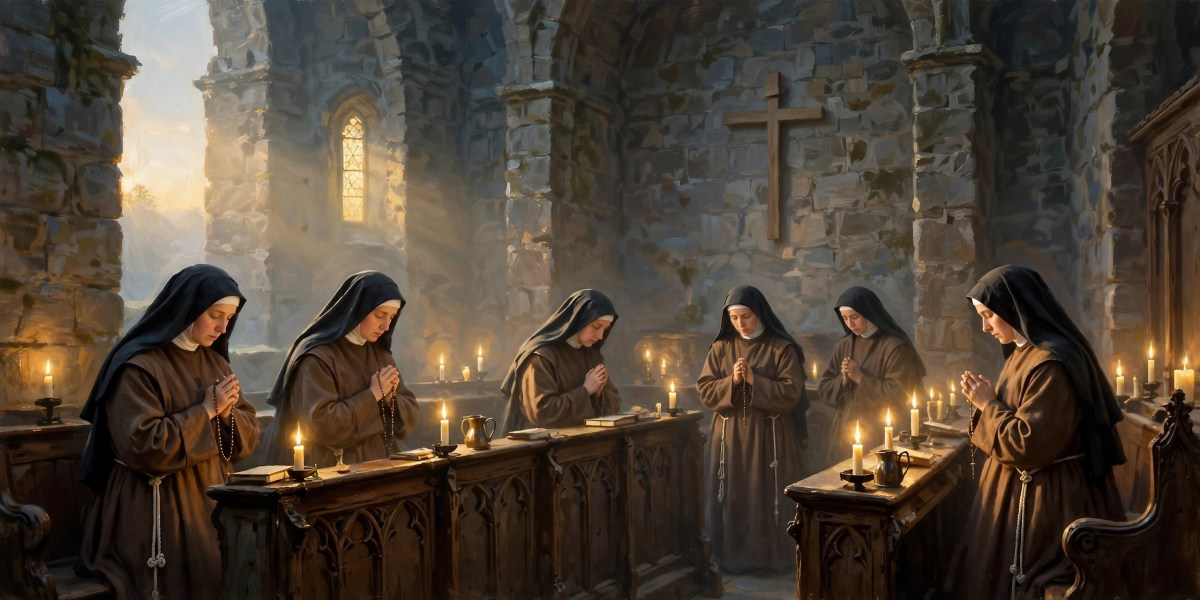
This Saturday, November 21, the Church keeps a day most of us have never heard of. It has a Latin name — Pro Orantibus Day, “for those who pray.” Pope Pius XII set it in the calendar in 1953, and in 1997 Saint John Paul II asked that it be observed by the whole Church, on the feast of the Presentation of Mary — the day the child Mary was brought to the Temple and gave herself entirely to God, as the cloistered give themselves still. It is observed to this day: the Vatican’s office for consecrated life still commends it to the Church, the American bishops’ conference carries resources for it, dioceses are commending it for this Saturday — and last November, parish bulletins across the country printed a small notice of it. A small notice, easily missed. Which is fitting, because the day is like the people it honors. Once a year, the Church asks us to do for the cloistered religious of the world what they do for us every single day of theirs: to pray for them, and to thank God for them.
For Franciscans, this day is not about strangers. It is about our own sisters — the Poor Clares, the Second Order of our family, the women whose hidden prayer has carried the Franciscan movement on its back for eight hundred years.
The woman at San Damiano
It begins, as so much in our family begins, with one person who would not let go of God. On the night of Palm Sunday in 1212, Clare of Assisi — eighteen years old, daughter of a noble house — slipped out of her father’s home and ran through the dark to the little chapel where Francis and his brothers were waiting. She traded her fine clothes for a rough habit, and her hair was cut, and within weeks she was settled at San Damiano, in a cloister she would not leave again for forty-one years.
What did she do in there? She prayed. She held to the “privilege of poverty” — owning nothing, not even as a community — and she and her sisters gave their whole lives to prayer for the Church and the world. Francis knew what he had in San Damiano. The friars went out two by two to preach because the sisters stayed, and their staying was not idleness: it was the root system of everything the friars planted.
Assisi learned that the hard way. In 1240, mercenary soldiers scaled the walls of San Damiano itself. Clare, already ill, had herself carried to the door with the Blessed Sacrament in her hands, and she prayed aloud — for her sisters, and for the city. The soldiers fled. The city was defended, in the end, by a sick woman’s prayer. It still is, more often than we know.
One family, three orders
Francis left the Church three orders: the friars, sent out into the world; the Poor Clares, hidden in the cloister; and the penitents — the Secular Franciscans, living the Gospel in homes and workplaces, which is to say, us. Three branches, one tree, and the roots of the tree are the ones nobody sees.
That is worth sitting with on Saturday. Our fraternities meet, serve, bury our dead, and try to love our neighbors, and all of it draws on a well we did not dig. While we sleep, somewhere a bell is ringing in a cloister and a sister is rising in the dark to pray the office — for the Church, for the world, for people she will never meet. Some of those prayers have our names on them. The cloister is not an escape from the world. It is a post, taken up and held for the world’s sake.
Our own region knows this at first hand. For years the Poor Clares prayed at Saginaw, in the heart of our region’s territory; since 2023 they have made their home with the Franciscan sisters at Wheaton in Illinois, and they are still, to us, the Saginaw sisters. Distance has not ended their work for us. It never could — prayer was never about distance.
What Saturday asks of us
Pro Orantibus Day is not a day for feeling vaguely grateful. Here are three small things any of us can do this Saturday:
- Pray for them by name and intention. At Mass or in your morning prayer, remember the cloistered — the Poor Clares, and every sister and brother who has given their life to hidden prayer. They carry our intentions all year. On Saturday, carry theirs.
- Send a word of thanks. Monasteries receive prayer requests every day of the year. On this one day, reverse the direction: a short note to a monastery, thanking the sisters for their prayers, costs ten minutes and will be read aloud in a refectory with more joy than we can imagine.
- Take one hidden hour yourself. Sometime this week, pray for an hour — or half of one — for someone who will never know you did it. It is the sisters’ whole trade. Learn it from the inside, once, and you will never think of the cloister the same way again.
The ones who pray for us
This region has had a full year: professions and visitations, gatherings and funerals, hard meetings and joyful ones. Through all of it, unseen, women we will never meet this side of heaven have been holding us before God in the night watches.
On Saturday the Church simply asks us to notice. So before the day gets busy, stop, and thank God for those who pray — and say the thank-you the way they themselves would say it: on your knees.
Mike Carsten, OFS
Discover more from Chasing The Wild Goose
Subscribe to get the latest posts sent to your email.
