
Week of Prayer for Christian Unity: A Franciscan Reflection

The Week of Prayer for Christian Unity, held annually from January 18 to January 25, invites global Christians to pray for unity. With themes focusing on justice and love, the Franciscan tradition emphasizes humility and reconciliation. The Joint Committee on Franciscan Unity promotes dialogue and collaboration among Franciscans, aiming for healing and inclusivity.

By Mike Carsten OFS

As Franciscans, we are called to live out the Gospel in humility, simplicity, and love for all creation. This spirit is critical during the Week of Prayer for Christian Unity. This annual event invites Christians worldwide to join in prayer and reflection for the unity of all believers in Christ.

Dates and Themes

The Week of Prayer for Christian Unity is observed from January 18 to January 25 each year. These dates were chosen to coincide with the feasts of the Confession of Saint Peter (January 18) and the Conversion of Saint Paul (January 25), symbolizing the unity and mission of the Church.

  • 2024 Theme: “Do Good; Seek Justice” (Isaiah 1:17). This theme calls us to reflect on our actions and attitudes towards justice, mercy, and reconciliation, echoing the Franciscan commitment to peace and social justice.
  • 2025 Theme: “Abide in My Love… You Shall Bear Much Fruit” (John 15:5-9). This theme emphasizes the importance of remaining in Christ’s love to bear the fruits of unity and peace in our communities and the world.

Historical Background

The Week of Prayer for Christian Unity was first proposed in 1908 by Father Paul Wattson, an Anglican priest who later became a Catholic. Since then, it has grown into a global ecumenical movement supported by the World Council of Churches and the Pontifical Council for Promoting Christian Unity.

Franciscan Participation

As Franciscans, we participate this week with a deep sense of our charism. Our founder, Saint Francis of Assisi, was a man of peace and reconciliation. His encounter with the Sultan during the Fifth Crusade is a powerful example of dialogue and mutual respect. Inspired by his example, we pray, dialogue, and act to promote unity among Christians and peace.

A Call for Healing Within Catholicism

In addition to fostering unity among different Christian denominations, there is a pressing need within Catholicism to bridge divides and bring healing to our polarized family. Pope Francis reminds us, “To understand one another, and to grow in charity and truth, we need to pause, to accept and listen to one another. In this way we already begin to experience unity”[1]. The Franciscan spirit of humility, dialogue, and reconciliation can guide us in addressing internal conflicts and fostering a more inclusive and compassionate Church. By embracing our shared faith and focusing on the love of Christ, we can work towards healing wounds and building a stronger, more united Catholic community.

Recognizing and Promoting Unity Within the Franciscan Family

It is also essential to recognize and celebrate the contributions of non-Catholic members of the Franciscan family. The Third Order Society of St. Francis (TSSF), the Order of Ecumenical Franciscans (OEF), and the Order of Lutheran Franciscans (OLF) all embody the Franciscan charism uniquely. Their commitment to living out the values of Saint Francis enriches the broader Christian community and strengthens our collective witness to the Gospel. Pope Francis encourages us, “Unity happens when we walk together”[2]. Let us walk together with our non-Catholic Franciscan brothers and sisters, united in our shared mission of peace, justice, and reconciliation.

The Joint Committee on Franciscan Unity, established in 2004, plays a crucial role in fostering this unity. This committee includes representatives from the Order of Secular Franciscans (OFS), the Third Order Society of St. Francis (TSSF), and the Order of Ecumenical Franciscans (OEF). The committee’s mission is to bear witness to the essential unity of the Church by working towards Franciscan unity in all its expressions[3].

The Joint Committee has organized numerous conferences and initiatives to bring together Franciscans from different traditions. These events focus on shared Franciscan principles and promote dialogue, understanding, and collaboration. By highlighting common values and fostering mutual respect, the committee helps to strengthen the bonds within the Franciscan family and advance the cause of Christian unity.

Promoting Unity Among All Franciscans

Promoting unity among all Franciscans, regardless of their specific traditions or affiliations, involves several key actions and attitudes:

  1. Embrace Common Values: Focus on the core Franciscan values that unite all branches of the Franciscan family, such as humility, simplicity, peace, and care for creation. These shared values can serve as a foundation for unity.
  2. Encourage Dialogue and Collaboration: Create opportunities for dialogue and collaboration among different Franciscan groups. This can include joint prayer services, retreats, and social justice initiatives. Open and respectful communication helps build mutual understanding and trust.
  3. Celebrate Diversity: Recognize and celebrate the diversity within the Franciscan family. Each branch brings unique perspectives and gifts that enrich the whole. We can foster a more inclusive and harmonious community by appreciating these differences.
  4. Shared Formation Programs: Develop shared formation programs that unite members from different Franciscan traditions. These programs can focus on Franciscan spirituality, history, and mission, helping to build a sense of shared identity and purpose.
  5. Joint Social and Environmental Initiatives: Collaborate on social and environmental projects that reflect Franciscan values. Working together on common causes, such as poverty alleviation, peacebuilding, and environmental stewardship, can strengthen bonds and demonstrate unity in action.
  6. Regular Communication: Regularly communicate through newsletters, social media, and other platforms. Sharing news, stories, and reflections from different Franciscan communities can help keep everyone connected and informed.
  7. Prayer for Unity: Incorporate prayers for unity into personal and communal prayer practices. Asking for God’s guidance and blessing on efforts to promote unity can be a powerful way to keep this goal at the forefront of our minds and hearts.
  8. Support from Leadership: Encourage leaders within the Franciscan family to actively promote unity. Their support and example can inspire others to work towards greater collaboration and understanding.
  9. Educational Resources: Develop and share resources highlighting Franciscans’ common heritage and mission. This can include books, articles, and online courses that explore the life and teachings of Saint Francis and the Franciscan tradition.
  10. Annual Gatherings: Organize gatherings or conferences that bring Franciscans from different branches together. These events can provide opportunities for learning, fellowship, and mutual support.

Catholic Church’s Teaching on Christian Unity

The Catholic Church’s teaching on Christian unity can be found in several key documents:

  • Unitatis Redintegratio (1964): This decree from the Second Vatican Council emphasizes the importance of ecumenism and the Church’s commitment to Christian unity. It states, “The restoration of unity among all Christians is one of the principal concerns of the Second Vatican Council”[4].
  • Ut Unum Sint (1995): Pope St. John Paul II’s encyclical on ecumenism reiterates the Church’s dedication to the ecumenical movement. He writes, “The Catholic Church embraces with hope the commitment to ecumenism as a duty of the Christian conscience enlightened by faith and guided by love”[5].
  • The Bishop and Christian Unity: An Ecumenical Vademecum (2020): This document from the Pontifical Council for Promoting Christian Unity provides bishops guidelines for promoting Christian unity. It highlights the bishop’s role in fostering ecumenism and states, “The bishop’s ecumenical engagement is not an optional dimension of his ministry but a duty and obligation”[6].

Conclusion

The Week of Prayer for Christian Unity is a time for us to unite as one body in Christ, seeking to overcome divisions and build a world of justice and peace. As Franciscans, let us embrace this opportunity with the same fervor and humility that characterized Saint Francis, working tirelessly for the unity and well-being of all God’s children. Pope Francis encourages us, “Unity happens when we walk together”[2]. Let us take this journey together, inspired by the love of Christ and the example of Saint Francis.


May this week be a blessed time of reflection, prayer, and action for all who seek the unity of Christ’s followers.

[1]: Pope Francis on Unity [2]: Pope Francis on Journeying Together [3]: Joint Committee on Franciscan Unity Report [4]: Unitatis Redintegratio [5]: Ut Unum Sint [6]: [The Bishop and Christian Unity: An Ecumenical Vademecum](http://www.christianunity.va/content/dam/unitacristiani/Documentazione%20generale/2020Vademecum/V


References

[1] UNITATIS REDINTEGRATIO – Vatican

[2] Unitatis redintegratio – Wikipedia

[3] Unitatis Redintegratio: A New Interpretation After 40 Years

[4] THE BISHOP AND CHRISTIAN UNITY: AN ECUMENICAL VADEMECUM

[5] The Bishop and Christian Unity: An Ecumenical Vademecum

[6] 2020 12 04 Vademecum online – christianunity.va

Franciscan Action Network: Revitalizing Secular Franciscan Dedication to justice and Harmony

As we begin a new week

Divine Presence,

In the face of violence and suffering that plagues our world, we come before You with humble hearts. We see the pain in Syria, where conflict continues to ravage lives. We see the struggles in Ukraine, where missiles and drones bring destruction and fear. We hear the cries of those in Gaza, where hospitals have become battlegrounds. We also see the faces of millions who go to bed hungry every night, their stomachs empty and their hope dwindling.


We pray for the leaders of nations, that they may find the wisdom to seek peace and justice. We pray for the innocent victims, that they may find solace and strength. We pray for the refugees, that they may find safety and a new home. We pray for those who suffer from hunger, that they may receive the nourishment they need to live and thrive.


May the light of love shine in the darkest corners of our world. May the spirit of compassion guide our actions. May the bonds of faith and understanding bring us together, transcending the barriers of religion and culture.


Grant us peace O Divine One.

Peace in our hearts, peace in our homes, and peace in our world. May we be instruments of Your peace, spreading love and kindness wherever we go. May we stand together, united in our quest for a better tomorrow, where no one goes hungry and all are cared for.

Amen.


Franciscan Action Network: Revitalizing Secular Franciscan Dedication to Justice and Harmony

The Franciscan Action Network (FAN) is a collective that unites the Franciscan Family to address social and environmental issues through advocacy rooted in Gospel and Franciscan values. Since its founding in 2007, FAN has empowered Secular Franciscans to engage in advocacy, emphasizing justice, peace, and ecological stewardship amidst political polarization.

The Franciscan Action Network (FAN) emerges as a formidable catalyst uniting the expansive Franciscan Family to confront our era’s intricate social and environmental dilemmas. Grounded in the principles of the Gospel and illuminated by the teachings of St. Francis and St. Clare, FAN is an intersection of faith and active advocacy, championing causes like social equity, ecological stewardship, and safeguarding human dignity.

For Secular Franciscans (OFS) in the United States, including regions such as Divine Mercy, FAN offers a tangible pathway to embodying their Gospel mission amidst societal fragmentation.

This exploration delves into FAN’s history, ongoing initiatives, and political engagements. It explains why the Secular Franciscan Order-USA and Divine Mercy Region must reinvigorate their allegiance to this pivotal movement.


Defining the Franciscan Action Network

The Franciscan Action Network is a spiritually anchored advocacy collective that fosters justice, peace, and environmental care. Founded in 2007, FAN emerged from a profound need to unify the Franciscan Family—friars, sisters, secular Franciscans, and laity—around addressing critical societal quandaries.

Its mission involves transforming the Franciscan charism into actionable initiatives deeply aligned with Catholic Social Teaching and Gospel tenets. FAN is a conduit for collaborative efforts, equipping its members with strategic resources, platforms, and opportunities to effect meaningful change.


Strategic Placement of FAN

FAN’s epicenter is strategically positioned near Capitol Hill in Washington, D.C. This locale enables FAN to engage directly with policymakers, advocacy networks, and legislative frameworks. By operating from this nucleus of influence, FAN amplifies the Franciscan voice within pivotal national dialogues.


FAN’s Engagement with Political Authorities

FAN’s interaction with the political sphere constitutes a cornerstone of its mission. It employs lobbying, advocacy, and public mobilization to infuse Gospel ethics into policymaking.

  • Cultivating Relationships with Policymakers
    FAN nurtures respectful and collaborative alliances with legislators across ideological spectrums, appealing to their intrinsic moral and ethical compass. This bipartisan strategy ensures that FAN’s ethos resonates broadly.
  • Advocacy Events
    Through annual Advocacy Days, FAN invites Franciscans to interact with elected representatives and voice concerns on pivotal issues like climate justice, immigration reform, and economic inequality.
  • Policy Contributions
    FAN articulates the Franciscan ethos through comprehensive policy briefs and legislative recommendations, providing ethical roadmaps grounded in Catholic Social Teaching.
  • Coalition Synergy
    Collaborating with other faith-based and secular coalitions, FAN magnifies its impact by uniting efforts toward shared objectives.
  • Empowering Advocates
    FAN equips its members through educational resources—workshops, toolkits, and webinars—instilling confidence and proficiency in advocacy efforts.

Historical Genesis of FAN

  • The Founding Aspiration
    Established in 2007, FAN sought to unify the Franciscan commitment to justice and peace by providing an organized platform to voice their Gospel-centered concerns in public discourse.
  • Early Achievements
    FAN’s initial campaigns—championing comprehensive immigration reform, combatting poverty, and safeguarding the environment—illustrated its capacity to embody Franciscan values within tangible societal actions.

FAN’s Contemporary Role for Secular Franciscans

  • Embodying the Franciscan Spirit
    FAN offers Secular Franciscans a concrete avenue to fulfill their Rule, particularly the mandate to spearhead efforts promoting justice. Members enact their Gospel vocation by engaging with FAN to address societal crises.
  • Advocacy Training and Resources
    FAN’s extensive repository of advocacy tools, webinars, and materials empowers Secular Franciscans to champion their causes effectively.
  • Bridging Political Rifts
    In an increasingly divided sociopolitical landscape, FAN’s Gospel-rooted ethos provides a cohesive foundation transcending political affiliations, uniting Franciscans around justice and compassion.

The Imperative of Supporting FAN

  • Confronting Pressing Challenges
    Addressing critical global crises such as environmental degradation, systemic poverty, and social inequities necessitates a coordinated Franciscan response. FAN offers the structure and expertise essential for these efforts.
  • Reclaiming the Prophetic Legacy
    Through FAN, Secular Franciscans can embody St. Francis’s radical vision, advocating for the marginalized and championing justice as a testament to their faith.

Practical Steps to Renew Support

  • Financial Backing
    Sustained funding underpins FAN’s mission. Local and regional fraternities can allocate budgetary support or organize fundraisers to bolster FAN’s initiatives.
  • Active Participation
    Secular Franciscans can engage directly by attending FAN events, hosting educational sessions, or spearheading local advocacy campaigns.
  • Fostering Collaborative Ties
    Regions like Divine Mercy can formalize partnerships with FAN, designating liaisons to foster communication and coordinate mutual efforts.

Navigating Challenges

  • Overcoming Political Polarization
    With many U.S. Catholics influenced by partisan dynamics, FAN’s nonpartisan commitment offers a model for uniting diverse perspectives under the common goal of Gospel-centered justice.
  • Raising Awareness
    Informational campaigns—via newsletters, fraternity presentations, or guest appearances by FAN representatives—can amplify understanding of FAN’s mission.

Conclusion

The Franciscan Action Network is a luminous beacon amidst societal fractures, embodying justice, peace, and care for creation—the essence of Franciscan spirituality. For Secular Franciscans, recommitting to FAN profoundly expresses their Gospel mandate.

The Secular Franciscan Order-USA and Divine Mercy Region can magnify their influence, deepen their dedication to justice, and honor St. Francis’s transformative legacy by re-establishing their partnership with FAN. Now is the time to act decisively, bringing the light of the Gospel into the shadows of modern society.


Frequently Asked Questions

  1. What is FAN?
    FAN is a Franciscan-inspired advocacy network prioritizing justice, peace, and environmental care.
  2. Where is FAN located?
    FAN operates from Washington, D.C., strategically near Capitol Hill.
  3. How does FAN engage politically?
    FAN integrates Gospel values into legislative efforts through lobbying, Advocacy Days, policy proposals, and coalition partnerships.
  4. Why is FAN significant for Secular Franciscans?
    FAN enables Secular Franciscans to fulfill their Rule by providing platforms for advocacy aligned with Franciscan principles.
  5. How can Secular Franciscans support FAN?
    By offering financial aid, participating in initiatives, and raising awareness within their fraternities.

Traversing the Depths of Belief:

Vatican II, Secular Franciscanism, and Contemporary Dilemmas

Emerging from the shadows of Vatican II, my relationship with the Catholic faith has been a profound confluence of revelation and introspection. The Council, which boldly championed harmonizing tradition with the contemporary pulse, laid the foundation of my early spiritual encounters. It was a chapter steeped in renewal, with the Church seemingly embracing a more expansive and empathetic vision.

As I matured, my devotion pulled me towards the Secular Franciscan Order. The Franciscan path, with its heart anchored in humility, simplicity, and a reverence for creation, struck a resonant chord in me. It provided a spiritual sanctuary aligned with the ethos of Christ’s teachings. Yet, this path has not been devoid of turbulence, especially in an era where Catholic fundamentalism and Christian nationalism cast long shadows across the landscape of the US Catholic Church.

Vatican II: A Turning Point of Renewal

The Second Vatican Council remains a pivotal watershed in Catholic history, an era when the Church sought to engage with the evolving world rather than retreat. The reforms it initiated were profound, forever altering the Church’s posture:

  • The introduction of vernacular languages into the Mass.
  • Greater involvement of laypeople within the sacred liturgy.
  • A renewed pursuit of social justice and interfaith harmony.

For those of us nurtured in this post-Vatican II environment, the Church felt alive—an entity that was evolving and adaptive to the needs of its congregants and the wider world. It was a time when faith and reason engaged in a harmonious dialogue, fueling a spirit of optimism and inclusivity.

Walking the Franciscan Path

My steps naturally led me to embrace the Secular Franciscan life, a call to embody the Gospel in the tapestry of everyday existence. St. Francis of Assisi’s teachings, with his deep love for all creatures and unwavering commitment to justice and peace, offered a compelling blueprint for holiness.

In this path, I discovered a community of like-minded souls bonded by a shared pursuit of simplicity and compassion. Together, we worked to manifest our faith through charity, stewardship of the environment, and advocacy for the disenfranchised. This collective pursuit of purpose fortified my spiritual journey, anchoring me in knowing that our faith could be lived out tangibly in the world.

The Rise of Rigidity: Fundamentalism and Nationalism

Yet, in recent times, the face of the US Catholic Church has morphed into something dissonant. The rise of Catholic fundamentalism and Christian nationalism has introduced discord into my spiritual path. These movements, steeped in rigid dogmatism and often entwined with political fervor, stand in stark opposition to the inclusive, compassionate spirit of Vatican II and the Franciscan way.

Catholic fundamentalism clings to a stringent interpretation of tradition, often stifling dialogue and critical reflection. This rigidity creates an environment where dissent is unwelcome, and those who question or seek broader interpretations of faith are marginalized.

Christian nationalism, on the other hand, entwines faith with national identity, promoting an exclusionary vision of America that distorts the universal message of love and unity that the Church ought to represent. This fusion of religion and politics turns the Church into an instrument of partisan ideologies, undermining its role as a beacon of justice and compassion.

A Beacon of Hope Amidst Trials

Despite the turbulence these movements have introduced into the modern Church, I remain unwavering in my devotion. The values of Vatican II and the Franciscan tradition continue to illuminate my path, reminding me that at the heart of Christianity lies a profound commitment to love, mercy, and service.

In these challenging times, holding fast to these core principles is essential. By nurturing dialogue, embracing the richness of diversity, and championing justice, we can help the Church reflect the transformative message of the Gospel.

While my journey as a child of Vatican II and a Secular Franciscan has been marked by joy and sorrow, I face the future with hope and resilience. Against the rising tide of fundamentalism and nationalism, I find solace in the enduring legacy of Vatican II and the timeless wisdom of St. Francis. These pillars remind me that, ultimately, love will triumph.

Peace

Mike

Embracing the Call for Religious Harmony:

 A Message from the Divine Mercy Region Ecumenical & Interreligious Animator

As Secular Franciscans, we are called to live out the Gospel daily, fostering peace, understanding, and cooperation among all people. Recently, Pope Francis took a significant step in this direction by signing the Istiqlal Joint Declaration 2024 titled “Fostering Religious Harmony for the Sake of Humanity.”   during his visit to the Istiqlal Mosque in Jakarta, Indonesia, on September 5, 2024 [1] [2].

Key Points of the Istiqlal Joint Declaration 2024

  1. Promotion of Human Dignity: The declaration emphasizes the inherent dignity of every human being, urging religious leaders to work together to uphold and protect this fundamental value [1].
  2. Interreligious Dialogue: It calls for increased dialogue and cooperation between faith communities to foster mutual understanding and respect [2].
  3. Condemnation of Religious-Based Violence: The document strongly condemns any form of violence carried out in the name of religion, advocating for peaceful resolutions and harmony [1].
  4. Environmental Protection: Recognizing the urgent need to address climate change, the declaration encourages religious communities to actively participate in environmental conservation efforts [4].

Action Items for Our Fraternities

To bring the spirit of this declaration into our daily lives and communities, we propose the following action items for our fraternities:

  1. Organize Interfaith Dialogues: Host regular meetings with local religious leaders and communities to discuss common values and address shared concerns. This can help build bridges and foster mutual respect.
  2. Educational Workshops: Conduct workshops on human dignity and the importance of interreligious dialogue. These can be open to the public to spread awareness and understanding.
  3. Community Service Projects: Collaborate with other faith communities on service projects, such as environmental clean-ups or social justice initiatives, to demonstrate our commitment to the common good.
  4. Prayer and Reflection: Dedicate time during our gatherings to prayer and reflection on the declaration’s themes. This can help us internalize these values and inspire us to live them out.
  5. Advocacy: Advocate for policies and practices that promote human dignity, environmental protection, and peaceful coexistence within our local and broader communities.

We can contribute to a world where peace, understanding, and cooperation prevail by embracing these actions. Let us take inspiration from Pope Francis and the Grand Imam’s example and work tirelessly to promote harmony and respect among all people.

[1]: Pope Francis and Grand Imam Sign Joint Declaration at Indonesia Mosque [2]: Pope Francis to sign tolerance document in Indonesia [4]: Pope and Indonesia’s grand imam sign declaration to fight climate change

May the peace and love of Christ guide us in all our endeavors.

In Franciscan Peace,

Mike Carsten OFS

Ecumenical and Interreligious Animator

 Divine Mercy Region

Blazing Hearts

The Solemnity of Pentecost

Introduction

Heads up, folks! We’re embarking on a spiritual journey that leads us to the very heart of the Catholic faith. We’re about to delve into a compelling aspect of Catholicism: The Solemnity of Pentecost. This celebration holds a special place in the liturgical calendar, and it’s packed with profound spiritual insights, historical significance, and ritualistic practices that capture the essence of the Catholic faith.

The Solemnity of Pentecost

Understanding the Basics

The Solemnity of Pentecost is like the grand finale of the Easter season in the Catholic Church. It’s a celebration that marks the coming of the Holy Spirit upon the Apostles fifty days after Easter. This event, my friends, is considered the birthday of the Church. It’s a day of renewed faith when the flame of the Holy Spirit sets our hearts ablaze.

Historical Roots

The roots of the Solemnity of Pentecost can be traced back to the Jewish feast of Shavuot. This feast, also known as the Feast of Weeks, was a harvest festival celebrated fifty days after Passover. The Apostles were celebrating this feast when the Holy Spirit descended upon them, marking the inception of the Church.

The Significance of the Solemnity of Pentecost

The Coming of the Holy Spirit

It’s a big deal, you see. As narrated in the Acts of the Apostles, the coming of the Holy Spirit marked a transformational moment for the early Church. It empowered the Apostles to go out into the world and preach the Gospel, thus setting the ball rolling for the spread of Christianity.

A Celebration of Unity

Moreover, the Solemnity of Pentecost is a celebration of unity. The Holy Spirit descended upon the Apostles in the form of tongues of fire, enabling them to speak in different languages. This miraculous event symbolizes the Church’s unity, transcending all language and culture barriers.

The Liturgical Practices

The Color Red

In the Catholic Church, red is associated with the Solemnity of Pentecost. It signifies the fire of the Holy Spirit and the courage of the martyrs. So, there is much red during the Pentecost Mass – from the clergy’s vestments to the church’s decorations.

The Sequence of Pentecost

The liturgical celebration includes the Sequence of Pentecost, a hymn chanted or recited before the Gospel reading. It’s an eloquent invocation of the Holy Spirit, expressing the deep longing for divine guidance and grace.

Customs and Traditions

Pentecost Novena

The nine days between Ascension Thursday and Pentecost Sunday are traditionally observed as the Pentecost Novena. It’s a time of fervent prayer, invoking the Holy Spirit to renew the face of the earth.

Whitsunday

In some regions, Pentecost is known as Whitsunday, derived from “White Sunday”. The name refers to the ancient practice of baptizing catechumens, who would be dressed in white baptismal robes on this day.

The Solemnity of Pentecost in Contemporary Times

In today’s fast-paced, digital-dominated world, the Solemnity of Pentecost serves as a poignant reminder of our faith’s enduring legacy. It’s a call to pause, reflect, and reconnect with the core values of the Church. As we celebrate Pentecost, we rekindle the fire of faith, hope, and charity.

Pentecost – An Invitation to Spiritual Renewal

The Breath of Life

The Solemnity of Pentecost is not just about commemorating a historical event. It’s an invitation to experience the breath of life the Holy Spirit brings. As we celebrate Pentecost, we are called to open our hearts to the Spirit, to let it guide us and empower us in our spiritual journey.

A Call to Witness

Pentecost also calls us to witness the Gospel, just like the Apostles. It’s a summons to live our faith with courage and conviction, to be the bearers of Christ’s love in the world.

Frequently Asked Questions

  1. What is the Solemnity of Pentecost? The Solemnity of Pentecost is a significant Catholic feast celebrating the Holy Spirit’s coming upon the Apostles fifty days after Easter. It is considered the birthday of the Church.
  2. Why is the Solemnity of Pentecost important? The Solemnity of Pentecost marks a transformative moment in the history of the Church. The descent of the Holy Spirit empowered the Apostles to preach the Gospel, setting the stage for the spread of Christianity.
  3. How is the Solemnity of Pentecost celebrated? The Solemnity of Pentecost is celebrated with a special Mass featuring the Sequence of Pentecost, a hymn invoking the Holy Spirit. The liturgical color for Pentecost is red, symbolizing the fire of the Holy Spirit and the courage of the martyrs.
  4. What is the significance of the color red in Pentecost? Red is the liturgical color for Pentecost. It signifies the fire of the Holy Spirit that descended upon the Apostles and the courage of the martyrs who gave their lives for their faith.
  5. What is the Pentecost Novena? The Pentecost Novena is a period of prayer that spans the nine days between Ascension Thursday and Pentecost Sunday. It is a time to invoke the Holy Spirit and seek divine guidance.
  6. How is the Solemnity of Pentecost relevant in contemporary times? The Solemnity of Pentecost is a call to spiritual renewal and unity. It invites us to open our hearts to the Holy Spirit, live our faith with courage, and witness the Gospel daily.

Conclusion

As we wrap up our journey into the heart of the Solemnity of Pentecost, let’s take a moment to reflect on its profound spiritual significance. The Solemnity of Pentecost isn’t just a date on the liturgical calendar; it’s a vibrant, living tradition that breathes life into our faith.

This Pentecost, let’s open our hearts to the Holy Spirit.

Holy Spirit: Set our hearts ablaze, renew our faith, and empower us to be witnesses to the Gospel!

Wishing you Peace and all Good

Mike

Mental Health Awareness Month

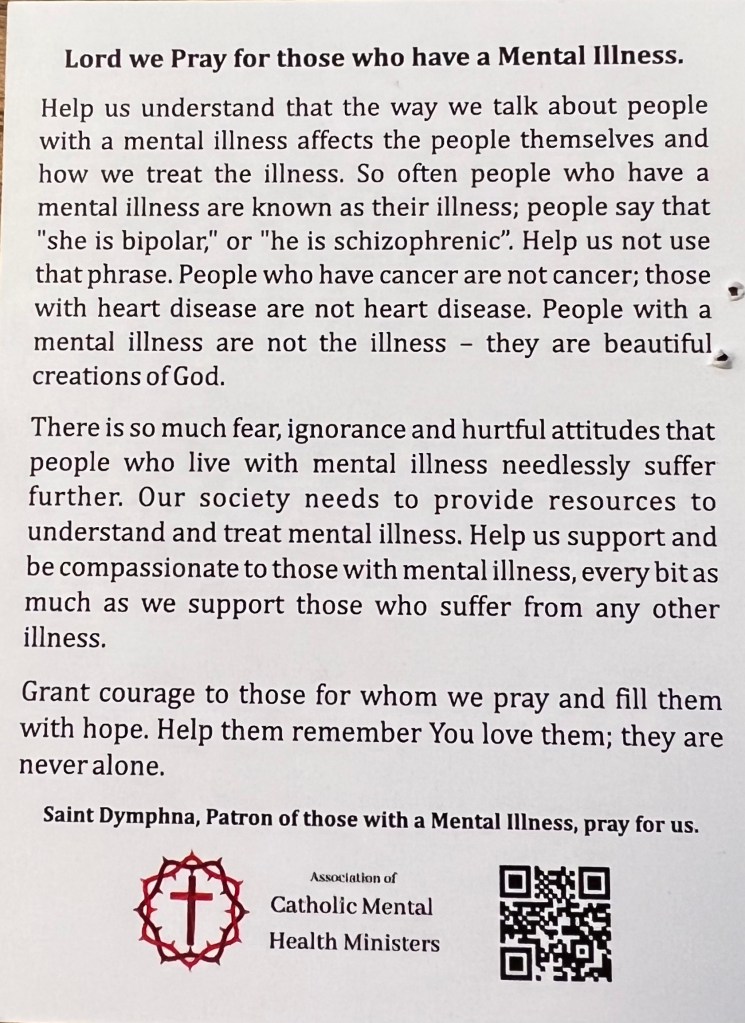
St. Dymphna: Patron Saint of Mental Illness and Emotional Distress

St. Dymphna’s life is a source of inspiration for many, particularly those who suffer from mental illness and emotional distress. Born in Ireland in the 7th century, Dymphna grew up in the Christian faith under the guidance of her mother. However, her life took a tragic turn when her mother passed away, and her father, consumed by grief, developed an unhealthy obsession with his daughter. He demanded that she marry him, and when she refused, he became enraged and threatened to kill her.

Fleeing with her confessor, St. Gerebernus, Dymphna settled in the town of Geel in Belgium, where she dedicated her life to serving the poor and the sick. She used her wealth to build a hospital and a church and became known for her charity and compassion. However, her father eventually tracked her down in Geel and demanded that she return with him and marry him. When she refused, he killed her and St. Gerebernus.

St. Dymphna’s legacy lives on to this day as a powerful intercessor for those who suffer from mental illness and emotional distress. Her story reminds us that even in the darkest moments of our lives, we can find hope and solace in our faith.

As Franciscans, we are called to follow in the footsteps of St. Francis and embrace a life of poverty, humility, and service. St. Dymphna’s example reminds us that we can use our own gifts and resources to make a difference in the lives of others, even in the face of adversity.

Importance of Mental Health Support

St. Dymphna’s story is particularly relevant today, as mental illness and emotional distress affect millions in the United States. Her life teaches us about the importance of caring for the emotional and spiritual needs of those around us as well as their physical needs. We must be willing to lend a listening ear, offer comfort and encouragement, and provide support and resources to struggling people.

We must educate ourselves and others about mental health issues to follow in St. Dymphna’s footsteps. By breaking down the stigma surrounding mental illness and promoting open and honest conversations, we can create a more inclusive environment for those facing these challenges.

Advocating for accessible mental health care and resources within our communities is another way to honor St. Dymphna’s legacy. As Franciscans, we are called to work towards social justice and equality, and ensuring that everyone has access to the care and support they need is a crucial part of this mission.

The Power of Resilience and Faith

St. Dymphna’s life also teaches us about the power of resilience and the transformative impact of faith. Despite her challenges and obstacles, St. Dymphna remained steadfast in her commitment to serving others and trusting God’s plan. As Franciscans, we, too, are called to persevere in our faith and trust in God’s love, even when faced with adversity.

Through her example, St. Dymphna continues to inspire us to live lives of humility, compassion, and faith. By putting these principles into action, we can make a lasting impact on the lives of those around us and honor the memory of this remarkable saint.

Conclusion

St. Dymphna’s life inspires and guides many, particularly those struggling with mental illness and emotional distress. Her example reminds us of the importance of caring for the emotional and spiritual needs of those around us, advocating for accessible mental health care and resources, and relying on our faith to overcome adversity. May we all strive to follow St. Dymphna

St. Dymphna, pray for us.

My Franciscan Heart

Filled with love, joy, and peace

As a Franciscan at heart, I cannot help but feel drawn to the simplicity, humility, and compassion at the core of the Franciscan way of life. Whether it is through the teachings of St. Francis of Assisi or the actions of the Franciscan friars and sisters, the Franciscan message of love and peace has always resonated with me. In this article, I will explore what it means to have a Franciscan heart and how we can all embody the spirit of St. Francis in our daily lives.

What is a Franciscan Heart?

At its core, a Franciscan heart is filled with love, humility, and compassion. It is a heart that seeks to serve others, find joy in simplicity, and live in harmony with nature. St. Francis of Assisi, the founder of the Franciscan order, lived these values in his own life, and his teachings continue to inspire us today.

The Simplicity of St. Francis

St. Francis lived a life of simplicity, rejecting the material wealth and luxury that were so common in his time. He chose instead to live a life of poverty, relying on the generosity of others to support his ministry. This simplicity allowed him to focus on what truly matters, like serving others and deepening his relationship with God.

The Humility of St. Francis

St. Francis was known for his humility, demonstrated through his interactions with others. He saw himself as a servant of all and treated everyone he met with kindness and respect. He also recognized his shortcomings and weaknesses and was not afraid to ask for help or admit when he was wrong.

The Compassion of St. Francis

Perhaps most importantly, St. Francis was a man of great compassion. He saw the suffering of others and was moved to act. Whether caring for the sick and dying or preaching to the birds and other creatures of the natural world, St. Francis saw the value and beauty in all of God’s creation.

Embodying the Franciscan Spirit

While we may not all be called to live a life of poverty and service like St. Francis, we can all strive to embody the spirit of the Franciscan way of life. Here are some ways we can do that:

Practice Simplicity

We can start by simplifying our own lives. This may mean decluttering our homes, reducing our consumption of material goods, or finding ways to live more sustainably. By doing so, we free ourselves from the distractions and burdens of excess and create more space for what truly matters.

Cultivate Humility

Humility is a virtue that can be difficult to cultivate, but it is essential for living a Franciscan life. We can start by recognizing that we are not the center of the universe and are all connected to something greater than ourselves. We can also learn to listen more than we speak and to be open to the perspectives and experiences of others.

Show Compassion

Finally, we can show compassion to others by looking for ways to serve and care for those around us. This may mean volunteering at a local shelter or food bank or simply taking the time to listen and be present for someone who is going through a difficult time. Doing so can help alleviate suffering and create a more loving and compassionate world.

Conclusion

In conclusion, having a Franciscan heart means living a life of simplicity, humility, and compassion. It means valuing what truly matters and striving to serve others in love.

While it may not always be easy to embody the spirit of St. Francis, the rewards of doing so are immeasurable. Think of all the money you’ll save by not buying unnecessary things! After all, who wouldn’t want to live a life filled with love, joy, and peace?

But in all seriousness, the Franciscan way of life is not just about living frugally and being kind to others. It’s about seeing the divine in all things and recognizing our interconnectedness with the world. It’s about being fully present in each moment and finding beauty and grace in even the most mundane aspects of life.

So, whether you’re a Franciscan or want to live a more fulfilling and meaningful life, take a page from St. Francis’s book and practice simplicity, humility, and compassion. Your heart – and the world – will thank you for it.

FAQs

  1. Who was St. Francis of Assisi?
  2. St. Francis of Assisi was an Italian Catholic friar and preacher who founded the Franciscan order.
  3. What is the Franciscan way of life?
  4. The Franciscan way of life is based on the teachings of St. Francis of Assisi and emphasizes simplicity, humility, and compassion.
  5. Do I have to be Catholic to live a Franciscan life?
  6. No, the Franciscan way of life can be practiced by people of all faiths (or no faith).
  7. How can I learn more about the Franciscan Movement?
  8. You can visit the official websites of the
  • Secular Franciscan Order
  • The Poor Clares
  • The Friars of the Third Order Regular
  • The Franciscan Friars, OFM, OFM Capuchin, OFM Conventual
  • The Brothers and Sisters of the Franciscan Federation
  • The Order of Ecumenical Franciscans
  • The Third Order Society of St. Francis (Anglican)
  • The Order of Lutheran Franciscan
  • The Joint Committee on Franciscan Unity

9. Are there any modern-day examples of Franciscans?

  • Yes, many modern-day examples of Franciscan-hearted people, including Pope Francis himself, took his papal name in honor of St. Francis of Assisi.

Uplifting Lives:

St. Al’s Comprehensive Approach to Serving the Underserved

Kathleen V. Carsten OFS & Michael Carsten OFS

St. Aloysius Detroit’s Commitment to Prolife Values and Social Outreach

St. Al’s commitment to serving the poor is rooted in its pro-life beliefs, which prioritize the dignity and worth of every human life. This includes not only the unborn but also those marginalized and vulnerable in society, such as the poor, the homeless, the sick, and the elderly.

Defining St. Al’s as a church of and for the poor means its mission and ministry are centered on serving those most in need—our sisters and brothers, regardless of social or economic status. This means that everyone who seeks assistance or support from the church is welcomed and treated with compassion and respect.

To champion those in need, St. Al’s offers a range of programs designed to provide essential supplies, companionship, and assistance.

Empowering Families: Essential Supplies for Children and Seniors

One of the key initiatives at St. Al’s is to provide indispensable items such as infant formula, diapers, clothing, winter coats, cribs, and other essential supplies to those in need. By collaborating with local organizations and offering direct assistance, the ministry ensures families can access crucial resources for their well-being.

St. Al’s also supports seniors who are raising their grandchildren, providing food, beds, clothing, and winter gear to keep them comfortable and warm.

Truck Ministry: Compassionate Care for the Homeless and Mentally Ill

The Truck Ministry, now in its 12th year at St. Aloysius, offers care, warmth, and support to the homeless and mentally ill living on Detroit’s streets. This initiative fosters fellowship and provides winter survival gear, sleeping bags, coats, hats, gloves, clean socks, hot chocolate, coffee, and sandwiches every Wednesday morning to those unable to reach the church.

Wednesday Morning Breakfast Ministry: A Sanctuary of Friendship and Support

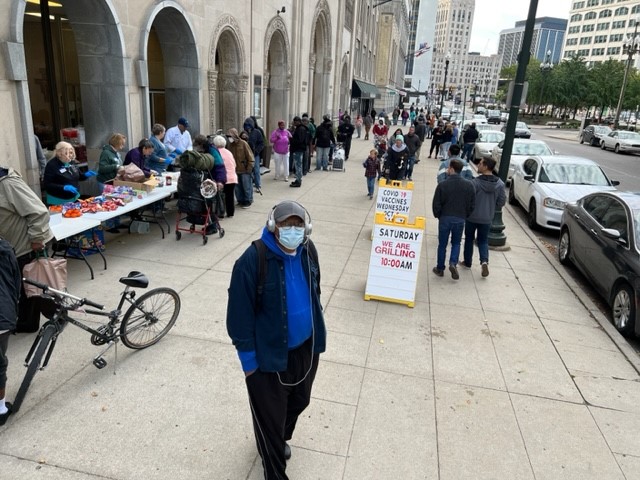
For 14 years, the Wednesday Morning Breakfast Ministry has provided food, clothing, and companionship to those in need. In front of the Parish Office, visitors enjoy hot egg McMuffin sandwiches and fresh fruit, with volunteers granting full access to the ministry’s supplies storeroom. During summer, a sidewalk café ambiance is created with tables and chairs, offering a warm and inviting experience.

Thursday Morning Old Timers Breakfast Ministry: Fostering Community Connections

A community staple for 15 years, the Thursday Morning Old Timers Breakfast Ministry serves sandwiches, hot coffee, hot chocolate, fresh fruit, and essential supplies to those in need. Like the Wednesday Morning Breakfast Ministry, a sidewalk café is set up during summer, promoting a sense of connection and camaraderie. Health care and emergency support are readily available for those who require them.

Saturday BBQ: A Weekend Social Event for Everyone

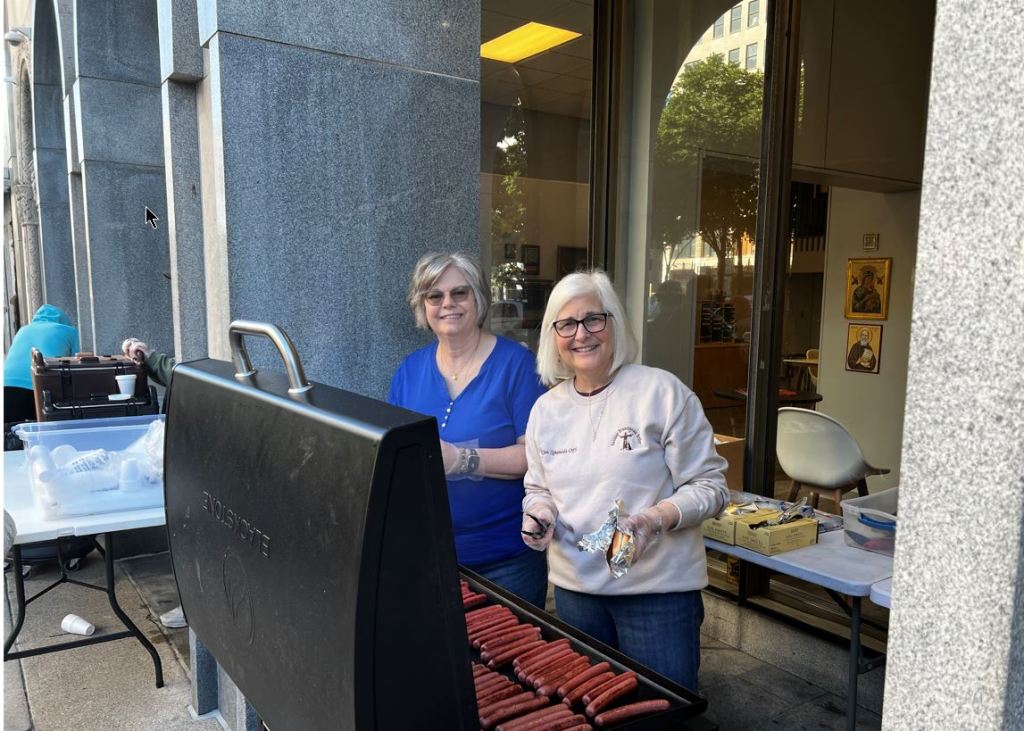
Every Saturday morning, St. Al’s hosts a breakfast barbecue featuring hot dogs, hamburgers, hot chocolate, hot coffee, bottled water, potato chips, cookies, and sweet desserts for the entire community.

Additional Outreach Programs at St. Aloysius

Going deeper still into the needs of the community and addressing these needs, St. Aloysius continues to offer the following:

  1. For 24 years, Whole Health Ministry/Faith Community Nurse
    • Focuses on wholistic health (mind, body, and spirit) for individuals and the community
    • Offers health assessments, counseling, referrals, education, visitations, and advocacy for social justice and systemic change
    • For 20 years, and close to 600 nursing students later, St. Al’s serves as a student nurse community health clinical site (Wayne State, UDM, and others)
  2. Weekly Grocery Ministry
  3. Senior Program
    • S.H.A.R.E. (Seniors for Health, Advocacy, Reform, and Education) meets every Thursday morning, beginning with prayer and continuing with health education, self and group advocacy, and support
    • Trips outside the downtown area
    • Offers ecumenical scripture study for community seniors led by police chaplains
    • Weekly walks in the downtown community with Detroit police

New Ministries Developed by Co-Directors of Evangelical Charity 

Through our leadership as Co-Directors of Evangelical Charity for our family of parishes, namely Resurget Cineribus, the development of two new ministries:

  1. Mental Health Ministry, start-up, August 2022
    • The mission of the Mental Health Ministry (paraphrased) is to provide a trusted atmosphere where isolation and stigma dissipate as a supportive community is created.
  2. Snack Pack Ministry: Nurturing Detroit’s Youth
    • In partnership with the Detroit Interfaith Outreach Network (DION), the Snack Pack Ministry provides supplemental food and hygiene supplies to students in need at Detroit Central High School. Acknowledging students’ challenges during weekends away from school, the ministry collects, packages, and delivers food and hygiene items to support their well-being. Plans are underway to expand this program to more high schools in the near future.

Embodying Pro-life Values through Service and Advocacy

At the heart of St. Al’s dedication to serving the poor is the belief that all people are created in the image of God and, as such, deserve love, respect, and dignity. By serving and advocating for the poor, St. Al’s seeks to embody pro-life values of compassion, justice, and solidarity, ultimately uplifting lives and fostering a more inclusive community.


Please let us know if you would like more information on how you might join us in this good work.

carsten.kathleen@staloysiusdetroit.com

carsten.michael@staloysiusdetroit.com